
14 min read
Banking in Nicaragua has come a long way from its reputation as difficult or unpredictable. Today, most people find it a manageable part of relocating, with established local banks and modern tools working together to cover everyday needs — making banking in Nicaragua for expats one of the more practical steps toward settling in with confidence.
……………………………..
If you’ve spent any time researching banking in Nicaragua, you’ve probably noticed the advice online is either outdated, overly cautious, or from sources who have never actually opened an account there.
After comparing banking in Nicaragua against banking systems across Mexico, Colombia, Ecuador, and Panama, one thing stands out:
Nicaragua is workable, but it’s quirky in ways that most guides don’t explain well.
Before you dig into banking specifics, it’s worth starting with our living in Nicaragua hub page for the broader context on cost, safety, and lifestyle — this post assumes you’re already sold on the country and just need the financial logistics sorted out.
In this guide we breakdown real hybrid setups — the combinations of local banks, fintech tools, and habits that expats actually use day to day — organized by who you are and what you need.
Retirees banking in Nicaragua have different priorities than digital nomads. Long-term expats have different needs than someone running a small business. We’ll cover all four.
Table of Contents
Banking in Nicaragua for Expats: The Reality Check Most Guides Skip
Understanding the reality of banking in Nicaragua starts with letting go of assumptions from other countries.
Nicaragua still runs on a cash-heavy culture.
Even in 2026, plenty of everyday transactions — market purchases, small vendors, some utility payments — happen in physical córdobas or dollars rather than through apps or cards.
Digital banking has improved, but there are still real gaps compared to what you’d expect from a fully cashless system.
The Banco Central de Nicaragua oversees monetary policy and the broader financial system that local banks operate within, while day-to-day supervision of individual banks falls to SIBOIF — together they form the regulatory backbone behind banking in Nicaragua.
If you’re used to tapping your phone for everything, banking in Nicaragua will require a mental adjustment.
Compared to Mexico, Colombia, or Ecuador, the bureaucracy around opening an account is slower and less standardized. In Mexico, a passport and proof of address will often get you a basic account within a day. In Nicaragua, the process depends heavily on which branch you walk into, which employee you talk to, and whether you show up with a local reference in tow.
What actually moves the needle isn’t your immigration status — it’s whether you show up with a complete document set and, ideally, a personal reference who’s a Nicaraguan in good standing to vouch for you.
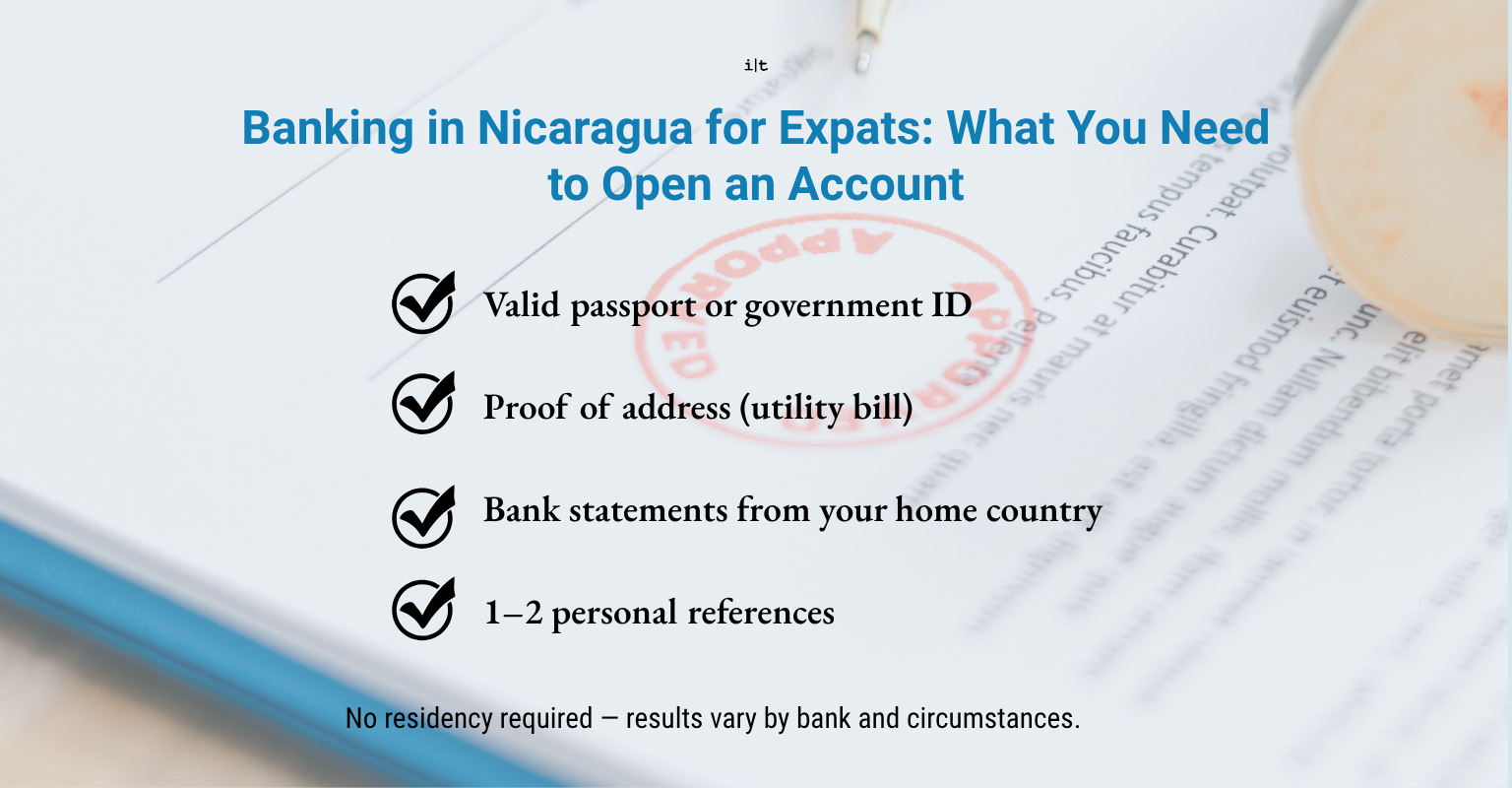
The four things to bring when opening a bank account in Nicaragua — timing varies by bank and circumstances.
The residency question is the one that trips up most people, so let’s be precise about it.
You do not need residency to open a bank account in Nicaragua — but it’s fair to say doing so without it is possible, not easy.
It requires showing up in person at a local branch, and most non-residents who arrive without a complete file get turned away. Banks generally expect extensive documentation to make an exception: a valid passport, proof of income, foreign bank statements, and two local references.
Bureaucratic friction is baked into banking in Nicaragua at a structural level — expect paperwork, expect a second visit, and expect that speed will vary bank to bank. That comparative friction is one of the clearest signals of how different banking in Nicaragua feels day to day versus its regional neighbors.
Banks in Nicaragua lean on personal trust networks more than a purely paperwork-driven system would.
If you’re also working through your immigration paperwork at this stage, our guide on How to Get Residency in Nicaragua 2026 covers the process in detail, and even if you’re not pursuing residency yet, our free Latin America Residency Map breaks down country-by-country eligibility so you can compare Nicaragua against your other options at a glance.
Here’s the document set to bring, based on real account-opening experiences:
- Valid passport or government ID
- Proof of address (a utility bill works)
- Bank statements from your home country
- One to two personal references
Our Recommended Hybrid Banking Stack for Nicaragua
Building a reliable system for banking in Nicaragua usually means combining one local bank with at least one fintech tool, rather than relying on a single account for everything.
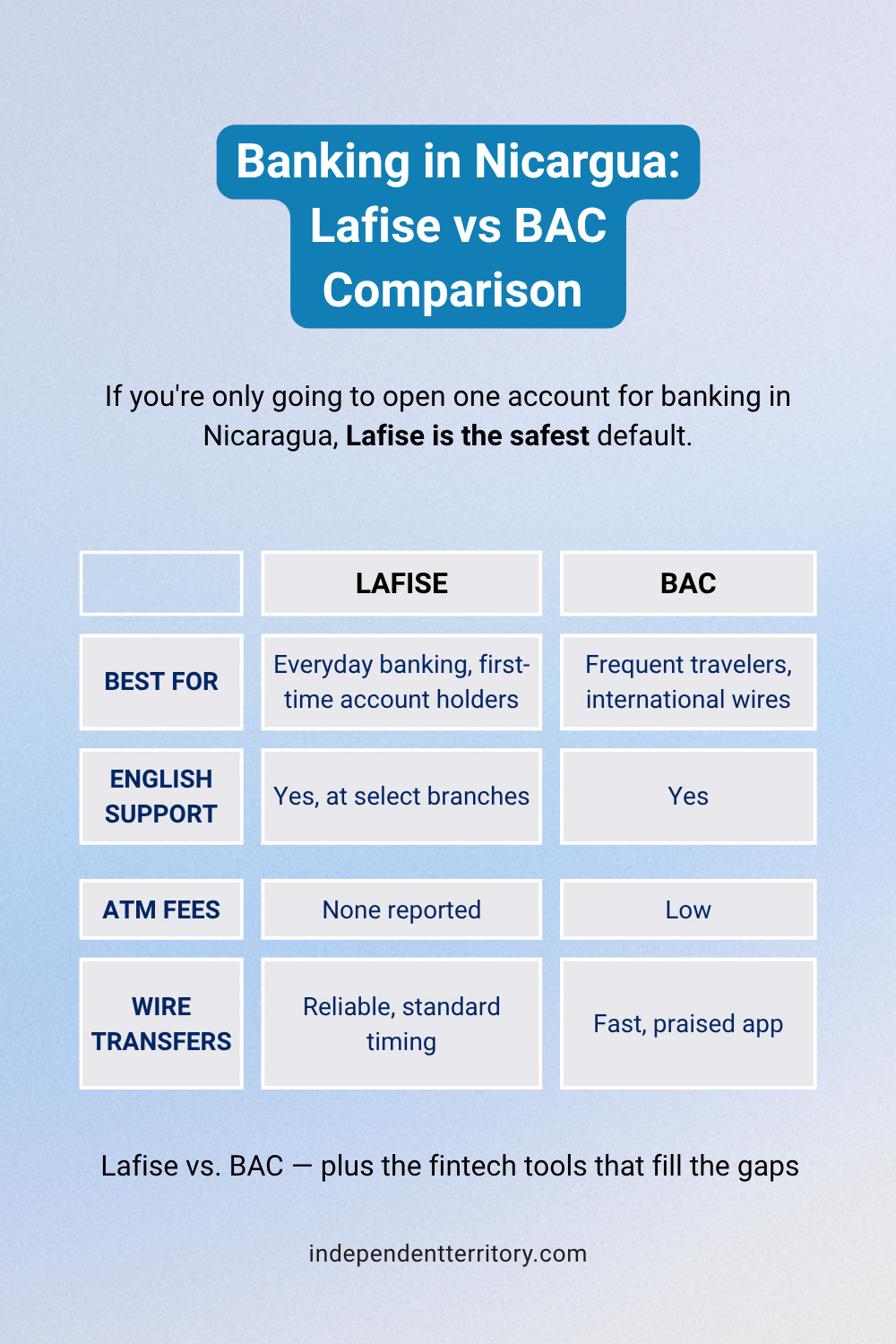
Core local banks for banking in Nicaragua
- Lafise (Bancentro) consistently comes out on top among expats who’ve lived in Nicaragua for years. Account holders describe stretches of 8, sometimes close to 20 years, without a single complaint — ATMs used regularly with no fees attached, dependable service, and a debit card setup that splits automatically into both USD and córdobas right when the account opens. English-speaking staff show up at certain branches too, a real plus if your Spanish is still a work in progress. For anyone narrowing down to just one bank for banking in Nicaragua, Lafise is the low-risk pick.
- BAC lands as the runner-up, particularly worth considering if international travel or regular wire transfers are part of your routine. People who’ve banked with BAC for ten-plus years describe smooth card use while traveling abroad, no hiccups receiving international wires, and repeatedly single out the mobile app and payment tools as standout features.
- Banpro and Banco Bisa come up occasionally as solid options, but without the depth of testimony behind Lafise or BAC. Worth asking about locally if neither of the top two fits your situation, but they shouldn’t be your starting point.
Fintech layer
Pairing a local bank with a fintech transfer tool solves the single biggest friction point in banking in Nicaragua: getting money in and out quickly without losing a chunk to fees or delays.
This fintech layer is arguably the single most underrated piece of banking in Nicaragua that most guides skip entirely.
Remitly is a proven combination — instant card-to-card transfers that expats use directly alongside their Lafise accounts. If you’re keeping a home-country anchor account for backup access, a no-foreign-transaction-fee card (Charles Schwab’s debit card is a common expat choice for ATM fee reimbursement) is worth having as a parallel option, separate from your Nicaraguan accounts.
Starter setup: what banking in Nicaragua actually looks like
Here’s a real account-opening experience, start to finish: about an hour and a half on day one with all documents in hand, a return trip the next day for about an hour, and no issues along the way.
The person walked out with two debit cards — one in dollars, one in córdobas — and added a beneficiary to the account on the spot. They were also told they’d need to provide documentation for large purchases like a car, which brings us to a rule that applies across every bank: transfers or withdrawals involving large sums typically require you to explain the reason.
Recommended order of operations:
- Gather your documents (passport, proof of address, bank statements, references) before you ever walk into a branch.
- Secure a personal reference if you can — even a loose connection through a Nicaragua expat Facebook group can help.
- Visit your chosen branch and expect the possibility of a second trip to finish the process.
- Set up your mobile/online banking access immediately — both Lafise and BAC apps are functional and comparable to what you’d use at home.
- Add a fintech layer (Remitly or similar) for fast, low-cost transfers between accounts.
Real costs to expect when banking in Nicaragua
Monthly account fees are generally modest compared to a lot of Latin American banks, though it’s worth confirming current figures directly with your chosen bank since these change.
ATM usage is where Nicaragua actually shines — several long-term account holders report using ATMs multiple times a week with zero fees. International wire transfers cost more and take longer than local transfers, which is exactly why the fintech layer matters for anyone doing regular cross-border transfers.
If you’re still narrowing down your budget, our Cost of Living in Nicaragua (2026): Compare Cities & Find Your Best Budget guide is the natural next stop.
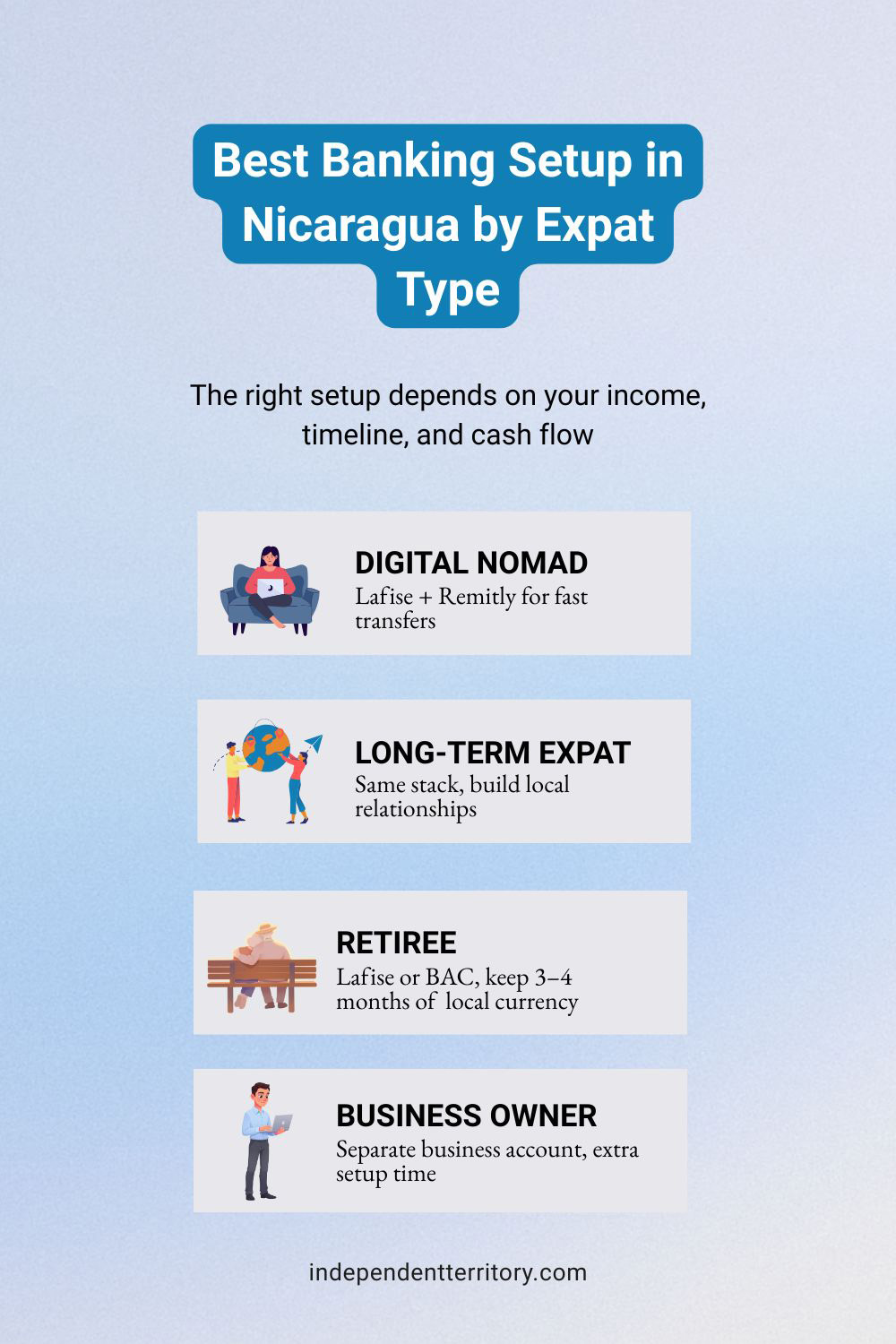
Banking in Nicaragua for Expats: Setups by Profile
No single approach to banking in Nicaragua fits every expat — your ideal setup depends heavily on your income pattern, how long you plan to stay, and how much cash flow you’re moving across borders.
Retirees: Banking in Nicaragua for Expats in Retirement
For retirees focused on receiving pension or Social Security deposits and minimizing trips to the bank, a straightforward Lafise or BAC account covers the basics well. One seasoned expat’s rule of thumb is worth adopting here: never hold more than three to four months of living expenses in a Nicaraguan bank account at any given time. This isn’t a red flag about the banks themselves — it’s a sensible risk-management habit that applies to banking in almost any country where you’re not fully settled long-term, and it’s especially relevant for anyone new to banking in Nicaragua specifically.
If you’re still deciding where in the country to settle, our guide to the Best Places to Live in Nicaragua for Expats can help you narrow that down before you pick a branch location.
Long-Term Expats & Families Banking in Nicaragua
The longer you’re in the country, the more the personal-relationship side of Nicaraguan banking works in your favor. Long-term account holders consistently report smoother service over time, in part because they’ve built rapport with specific branches or bankers. For families handling school payments, medical bills, or larger transactions, the same 3–4 month cash-reserve discipline applies, alongside the “provide a reason for large transfers” expectation mentioned earlier.
If you’re still weighing whether Nicaragua is the right long-term fit, our breakdown of the Pros and Cons of Living in Nicaragua covers this beyond just the banking angle.
Small Business Owners Banking in Nicaragua
Business accounts in Nicaragua follow a similar overall process to personal accounts — the same core categories of documentation apply — but the specific requisites differ, and you shouldn’t assume a personal account and a business account are interchangeable — this is one area of banking in Nicaragua where it pays to ask upfront rather than assume. If you’re receiving payments from international clients or running payroll locally, plan for a separate account-opening process, and budget extra time for it the same way you would for your personal account.
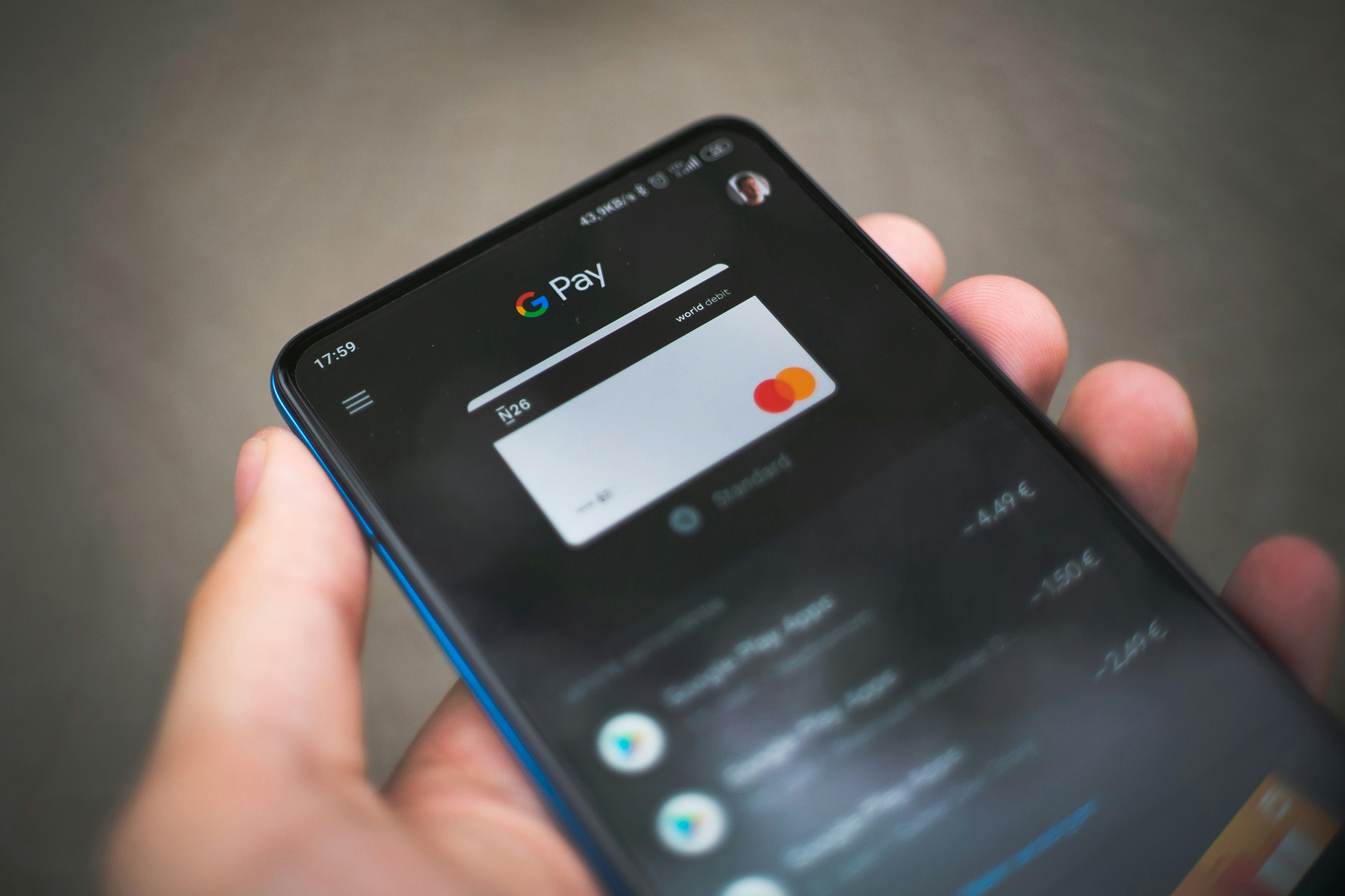
Day-to-day banking in Nicaragua for expats is easier than expected, with Lafise and BAC both offering reliable mobile apps.
Advanced Tactics for Banking in Nicaragua Most Expats Learn the Hard Way
These are the practical tactics that separate someone comfortable with banking in Nicaragua from someone still fighting the system after a year in the country.
- USD vs. Nicaraguan córdoba strategy: Because most banks issue a dual-currency debit card at account opening, the classic “which currency should I exchange into” question matters less than it used to. You can hold both and use whichever makes sense for a given transaction, which simplifies day-to-day banking in Nicaragua considerably compared to countries where you’re stuck picking one currency. It’s one of the more expat-friendly design choices in the whole banking in Nicaragua system.
- Mobile apps for banking in Nicaragua: Both the Lafise and BAC apps function reliably and hold up well against banking apps you’d use in the US, Canada, or Europe — this isn’t a case where you need to lower your expectations. Online bill payments, transfers, and account monitoring all work as expected.
- Transfer timing: A detail that rarely makes it into generic guides: the first time you send money to a new recipient account, expect the transfer to take longer to clear. Once that recipient account is established in the system, subsequent transfers to the same account are typically same-day. Plan your first transfer to any new account with a buffer of a few extra days.
- Large transaction rule: This one applies across every bank in the country, not just one: if you’re moving a large sum in or out — buying a car, making a real estate down payment, anything sizable — expect to provide documentation or a reason for the transfer. This isn’t unique to Nicaragua; it’s standard anti-money-laundering practice, and Nicaragua’s SIBOIF (the government body that regulates and supervises the country’s banks) enforces these standards as part of its oversight of the financial system.
- Regional differences in banking in Nicaragua: Managua, as the capital, has the highest branch density and the best odds of finding English-speaking staff. Granada, with its larger expat population, also has solid banking infrastructure. Beach towns and smaller communities will have fewer branches and less English support, so plan your account-opening trip around a visit to a larger city if you’re settling somewhere remote. Regional access is one more reason banking in Nicaragua rewards a bit of upfront planning.

The real red flag in banking in Nicaragua for expats isn’t fraud — it’s inconsistent information from bank staff.
Banking in Nicaragua for Expats: Lessons Learned & Red Flags
Here’s the most useful thing this section can tell you about banking in Nicaragua: the actual data doesn’t support a dramatic “red flags” narrative.
Long-term account holders across multiple banks report years of trouble-free banking — no fraud, no frozen accounts, no instability. If you came here looking for horror stories, they’re mostly absent.
The real issue is subtler and more common: inconsistency of information.
It’s not unusual to get conflicting answers within the same bank chain, and sometimes even from the same employee on different visits. This is the actual thing to watch for — not fraud, not risk to your money, just unreliable or contradictory guidance during the account-opening process.
The fix is patience and persistence: don’t treat the first answer you get as final, verify anything that seems off with a second staff member, and bring a Nicaraguan reference if you can arrange one.
Beyond that, the 3–4 month cash-reserve rule is worth repeating as a long-term optimization tactic for banking in Nicaragua, not a panic response. It’s simply prudent to avoid concentrating too much of your net worth in any single foreign bank, regardless of how well that bank has treated you so far.
One more thing worth flagging if you’re a US citizen or green card holder: once your combined foreign account balances (across any country, including Nicaragua) exceed $10,000 at any point in the year, you’re required to file an FBAR with the US Treasury’s FinCEN — the IRS has a full breakdown of who qualifies and how the filing works. It’s a disclosure requirement, not a tax, but the penalties for skipping it are steep enough that it’s worth building into your annual routine from day one.
If I were moving tomorrow, here’s my checklist:
- Gather documents before I land: passport, proof of address, home bank statements, references.
- Line up a Nicaraguan reference in advance if at all possible.
- Open a Lafise account first, add Remitly as the transfer layer.
- Keep no more than 3–4 months of expenses in the local account at any time.
- Track FBAR thresholds if I’m a US person.
Country Comparison: Paraguay vs. Belize vs. Nicaragua Banking
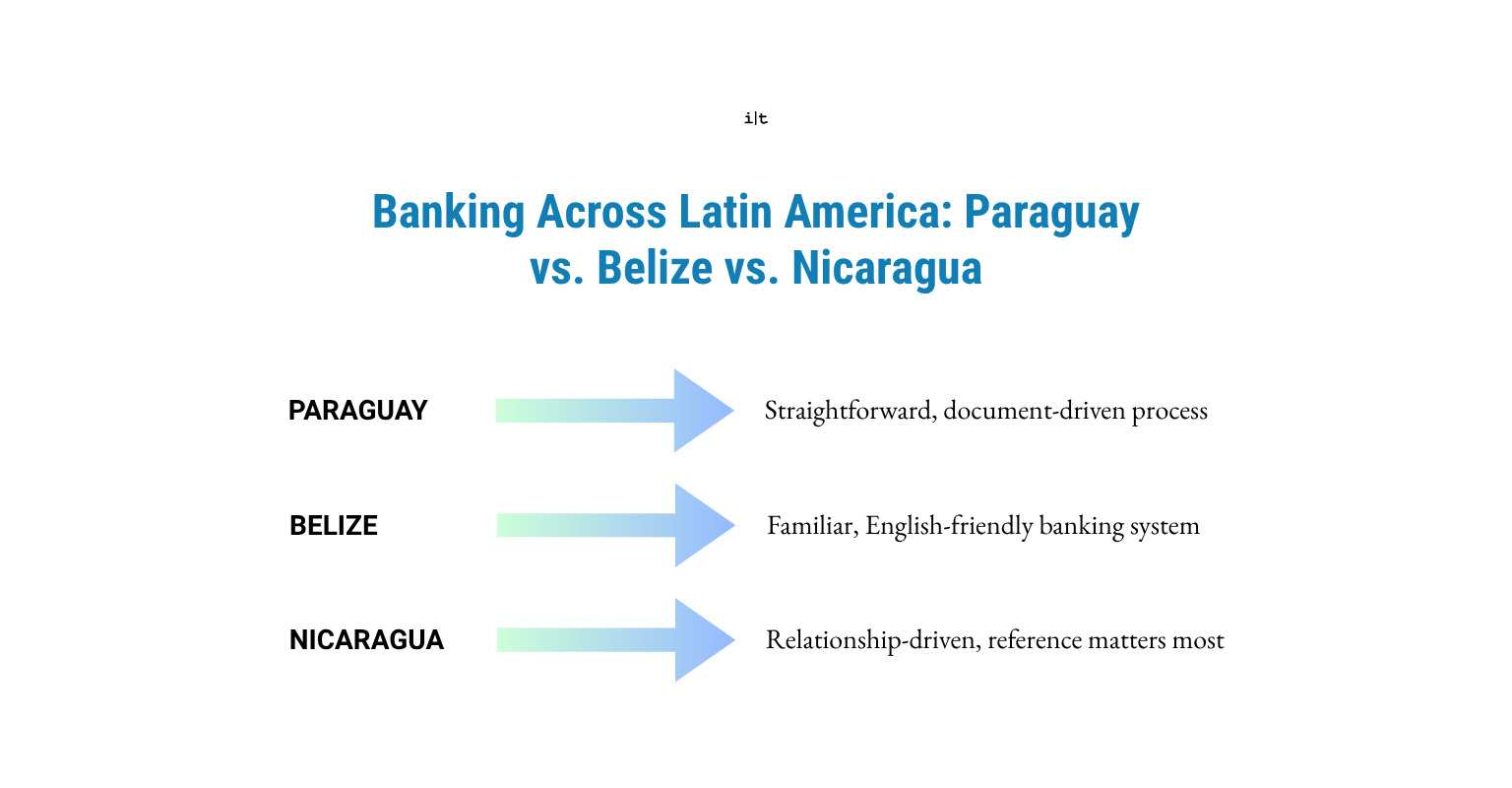
How Nicaragua’s banking process compares to two other popular expat destinations.
Banking in Nicaragua sits in an interesting middle ground compared to our current country focus. If you’re weighing Nicaragua against Paraguay or Belize for your relocation, the account-opening process here is more relationship-driven (reference-based) than strictly document-gated, which is a meaningfully different experience than what you’ll find in the other two countries. For a full side-by-side breakdown of cost of living, residency paths, and lifestyle — not just banking — see our comparison piece, What $1,500 a Month Actually Gets You in Latin America (Paraguay, Belize & Nicaragua Compared).
Final Thoughts on Banking in Nicaragua for Expats
Banking in Nicaragua for expats isn’t the minefield some forum threads make it sound like, and it isn’t the effortless plug-and-play system other guides oversell either.
The bottom line on banking in Nicaragua for expats in 2026: pick the right bank, pair it with a fintech layer, and manage your local cash reserves sensibly.
The honest picture: Lafise plus a fintech layer like Remitly is the right default setup for almost anyone relocating here, BAC is the upgrade if you’re traveling heavily or relying on frequent international wires, and the real risk to manage isn’t fraud — it’s getting inconsistent information during setup and not holding too much cash locally long-term.
If you haven’t already, Download our free Latin America Residency Map before you go further —
it lines up residency eligibility across the region so you can see exactly where Nicaragua fits into your broader plan.
✔ No Spam
✔ Instant Access
✔ Free Download
Frequency asked questions about banking in Nicaragua
Can I do banking in Nicaragua without residency?
Yes. Expats have opened accounts without residency status as recently as 2023, and this has been consistent for over a decade. Residency helps but isn’t required — a complete document set and a personal reference matter more.
What documents do I need for banking in Nicaragua as an expat?
A valid passport or ID, proof of address (a utility bill), bank statements from your home country, and one to two personal references.
Is Lafise or BAC better for expats banking in Nicaragua?
Both are strong choices. Lafise is the more commonly recommended default, with long-term users reporting years of trouble-free service and no ATM fees. BAC is the better fit if you travel internationally often or rely on frequent wire transfers.
How much money should I keep in a Nicaraguan bank account?
A common rule of thumb among experienced expats is to hold no more than three to four months of living expenses locally at any given time, as a general risk-management practice.
Disclaimer: This article is for informational purposes only and does not constitute financial, legal, or tax advice. Banking requirements in Nicaragua can change and vary by bank and individual circumstances. Experiences described are based on general expat reports and may not reflect every case. Always confirm details directly with the bank or a qualified professional before making financial decisions.