

21 min read
Living in Latin America on $1500 a month can stretch far beyond what the same budget would allow in North America, Europe, or Australia—but how far depends on where you base yourself and the lifestyle you expect. In some places, it creates real breathing room; in others, it still comes with trade-offs.
……………………………..
Table of Contents
Living in Latin America on $1500: What to Expect
Living in Latin America on $1500 a month sounds like the dream—but in 2026, it’s no longer a guaranteed win.
In North America, Europe, or Australia, $1,500 a month barely covers rent in many cities—let alone a full lifestyle.
That’s exactly why more people are starting to look into the real advantages of living in Latin America as a serious alternative—not just a backup plan.
But here’s the reality most skip: living in Latin America on $1500 a month isn’t one-size-fits-all.
In some countries, that budget still gives you freedom and flexibility. In others, it can feel tight if you choose the wrong location—or expect a Western-standard lifestyle without the price tag.
But cost and lifestyle are only part of the equation. One of the biggest concerns people have is safety, which is why understanding whether Latin America is actually safe for expats is just as important before making a move.
Cost estimates from tools like Numbeo can give you a rough benchmark, but they don’t show how far your money actually goes on the ground. That’s where most people miscalculate.
In this guide, we break down what living in Latin America on $1500 a month really looks like in Paraguay, Belize, and Nicaragua—three countries with very different costs, lifestyles, and trade-offs.
If you’re seriously considering living in Latin America, this comparison will help you understand what your money actually buys—before you make a move.
Want to skip the guesswork? Download the Latin America Residency Map to quickly compare countries, visa options, and find out which destinations match your budget and lifestyle.

Eating out can quickly impact your budget when living in Latin America on $1,500 a month.
Can You Really Live in Latin America on $1500 a Month?
Yes, you can live in Latin America on $1,500 a month—but only in the right countries and with realistic expectations.
In affordable destinations like Paraguay and Nicaragua, $1,500 can cover rent, food, transport, and basic healthcare comfortably. In higher-cost countries like Belize, it requires trade-offs, especially with housing and imported goods.
Living in Latin America on $1500 a month won’t give you a luxury lifestyle. You’re not looking at beachfront condos, constantly dining out, or high-end imported goods. But it’s also far from a survival budget.
In the right area, $1,500 can cover your essentials and still allow for a comfortable lifestyle—with some room for extras if you manage your spending wisely.
Real-world cost breakdowns vary widely depending on lifestyle and location, which is why many expats rely on aggregated data in the Expatistan cost comparisons.
This is where many people get it wrong.
They assume income is the deciding factor, when in reality, location matters more than income.
The difference between countries—and even cities within the same country—can completely change what $1,500 gets you. For example, choosing a smaller city or less touristy area can stretch your budget significantly.
In countries like Paraguay or Nicaragua, living outside the capital or major expat hubs often means lower rent, cheaper food, and a slower pace of life that naturally reduces spending.
On the other hand, places with strong tourism demand or limited infrastructure—like parts of Belize—can quickly eat into your budget.
There’s also a major difference between city living and small-town living. Cities offer convenience, better healthcare access, and more amenities—but at a higher cost. Smaller towns are more affordable and often feel more authentic, but you may sacrifice things like reliable services, variety, or ease of transportation.
So yes—you can live on $1,500 in Latin America. But whether that feels comfortable or restrictive depends almost entirely on where you base yourself and how you choose to live.
What “Comfortable” Living in Latin America on $1500 a Month Really Means
When people talk about living in Latin America on $1500 a month, the word “comfortable” gets thrown around a lot—but it rarely gets defined.
At this budget, comfortable living typically means covering your core expenses without constant financial pressure. That includes a modest apartment, local groceries with occasional meals out, basic transportation, and enough flexibility to handle everyday costs without stress.
It’s a stable lifestyle—but not a high-end one.
Typical monthly expenses like rent, groceries, and transport vary widely across the region, which is why many expats compare real data before choosing a destination.
Rent will usually take the biggest share of your budget. In more affordable areas, you can expect a simple one-bedroom apartment, often furnished, but not luxurious.
Food costs stay manageable if you rely mostly on local markets and avoid imported goods.
Transportation is generally inexpensive, especially if you’re using public transport or walking instead of owning a car.
Where expectations need to shift is lifestyle comparison. This is different from a Western middle-class standard.
You’re trading space, convenience, and sometimes reliability for lower costs and a slower pace of life. Things like air conditioning, imported products, or living in prime locations can quickly push you beyond the $1,500 range.
That said, many expats find that this version of “comfortable” feels more than enough—especially when daily life is less rushed and overall expenses are easier to manage.
The key is aligning your expectations with what $1,500 realistically supports. Before anything else, ask yourself—what does $1,500 a month actually get you back home? That’s the reality your expectations should be built on.

Lower-cost neighborhoods can stretch your budget—but they’re not for everyone.
Cost of Living in Latin America on $1500 a Month (Real Breakdown)
Understanding if you can live on $1,500 in Latin America, most expats start with breaking down where their money actually goes each month. While $1,500 can provide a comfortable baseline in many parts of the region, how far it stretches depends on how you allocate it across key expenses.
At a high level, most budgets will be split between housing, food, transport, and healthcare, which can vary significantly depending on the country and city. Many expats reference global databases like Numbeo’s country rankings to compare cost between countries.
These core categories determine whether your lifestyle feels stable or restrictive. The biggest mistake people make is underestimating one category—usually rent or imported goods—which can quickly throw off the entire budget.
Before comparing countries like Paraguay, Belize, and Nicaragua, it’s important to understand these baseline costs. Once you see how each category works, it becomes much easier to spot where your money will go further—and where it won’t.
Housing Costs When Living in Latin America on $1500 a Month
When you’re living in latin America on $1500 a month, housing will almost always be your largest monthly expense, and it’s also where the biggest regional differences show up.
In larger cities or capital areas, rent prices are naturally higher—especially in neighborhoods popular with expats. You’re paying for convenience, infrastructure, and proximity to services. In contrast, smaller cities and rural areas offer significantly lower rent, often with more space but fewer amenities.
Another key factor is whether you rent furnished or go local. Furnished apartments are easier for expats and short-term stays, but they come at a premium. Renting—unfurnished and through local contacts—can reduce costs, but it requires more effort and flexibility.
This is where many people either stretch their budget too far or find real savings. Choosing the right location and type of housing can easily make or break a $1,500 monthly plan.
Food and Grocery Costs on a $1500 Budget
Food costs in Latin America are highly flexible—and largely within your control.
If you shop at local markets and eat seasonal, locally produced food, your grocery bill stays relatively low. Fresh produce, staples, and locally sourced meat are often affordable, especially outside major cities.
The cost rises when you shift toward imported goods or try to maintain a Western-style diet. Items like packaged foods, specialty products, and certain brands can be surprisingly expensive depending on the country.
Eating out also varies. Local restaurants and street food are usually budget-friendly, while international or upscale dining can quickly add up. The more you adapt your eating habits to the local environment, the further your $1,500 will go.

In the right location, $1,500 can still afford a high-quality lifestyle.
Transport and Mobility Costs in Latin America
Transportation is one of the more affordable aspects of living in Latin America on $1500 a month—but your choices still matter.
Public transportation is widely used and inexpensive in most countries. Buses, shared taxis, and informal transit systems can cover most daily needs at a low cost. In many smaller cities, you may find that walking becomes part of your routine, reducing transport expenses even further.
Owning a car, on the other hand, changes your budget completely. Fuel, maintenance, insurance, and import costs (in some countries) can significantly increase monthly expenses. For most expats living on $1,500, relying on public transport or choosing walkable locations is the more sustainable option.
Mobility is less about cost and more about lifestyle preference—how much convenience you want versus how much you’re willing to spend.
Healthcare Costs When Living in Latin America on $1500 a Month
Healthcare is one area where expats often approach budgeting differently—and for good reason.
Many Latin American countries offer both public and private healthcare systems. Public healthcare is either free or low-cost, but it may come with longer wait times and varying standards depending on the location. Private healthcare, on the other hand, is generally affordable compared to Western countries and offers faster access and more consistent quality.
Healthcare quality and access vary by country, which is why many expats review the World Health Organization health systems data before deciding where to live.
Because of this, many expats choose to pay out-of-pocket for routine care or take out private health insurance for peace of mind. This adds a layer to the budget that locals may not prioritize in the same way.
Average Monthly Budget for Living in Latin America on $1500 a Month
| Category | Typical Monthly Spend | What This Covers |
| Housing | $500–$700 | Rent (varies by city, furnished vs local) |
| Food | $250–$350 | Groceries + occasional eating out |
| Transport | $50–$150 | Public transport, taxis, minimal travel |
| Healthcare | $50–$150 | Private care, insurance, or out-of-pocket |
| Lifestyle/Other | $150–$300 | Internet, entertainment, extras |
Planning for healthcare isn’t just about cost—it’s about access, reliability, and understanding the broader realities.

Paraguay offers a slower, more relaxed lifestyle at a lower cost.
Living in Paraguay on $1500 a Month: What You Get
For anyone looking at the cost of living in Paraguay for expats, the country consistently stands out as one of the most financially sustainable options in Latin America.
At the $1,500 level, Paraguay doesn’t just “work”—it gives you breathing room.
Compared to more expensive destinations in the region, your money stretches further here because the cost structure is fundamentally lower. Housing is affordable, locally produced food is inexpensive, and day-to-day expenses don’t carry the same inflation pressure seen elsewhere.
But the real advantage isn’t just cost—it’s stability.
Paraguay has a reputation for steady pricing, fewer economic shocks, and a slower pace of change, which matters if you’re planning long-term rather than just passing through.
This is one of the few places where a $1,500 monthly budget can still feel predictable.
To understand how that translates into real life, it helps to see what living in Paraguay as an expat actually looks like day to day, from routines to lifestyle pace.
Rent and Housing in Paraguay on $1500 a Month
Housing is where Paraguay immediately separates itself from higher-cost countries.
Compared to Belize, Paraguay offers significantly lower housing and everyday costs, making it a much easier place to maintain a comfortable lifestyle on a $1,500 monthly budget.
In the capital, Asunción, you can still find modern apartments at prices that would be considered unusually low by regional standards—especially outside the most upscale neighborhoods.
Move beyond the capital, and rental costs drop even further, often giving you more space for significantly less money.
Furnished apartments are available, but like anywhere, they come at a premium. Expats who take the time to rent unfurnished—can reduce housing costs dramatically and stay well within budget.
At the $1,500 level, this means:
- You’re not forced into shared housing
- You’re not limited to undesirable areas
- You still have flexibility in location and lifestyle
That’s a major contrast to countries where rent alone can consume most of your income. If you’re comparing locations, the best places to live in Paraguay will give you a clearer picture of where your budget stretches the furthest.
Daily Life When Living in Paraguay on $1500 a Month
Day-to-day living in Paraguay is where the financial advantages really show up.
Unlike Nicaragua, Paraguay provides a more stable infrastructure and a slightly more predictable long-term living environment, which appeals to expats planning to settle rather than just minimize costs.
Groceries are affordable if you stick to local markets and seasonal products. Fresh produce, meat, and staples are widely available at low prices, allowing you to maintain a consistent food budget without cutting corners.
Eating out is also accessible. Local restaurants remain inexpensive, and while international options exist, they’re not something you’ll rely on daily if you want to stay within budget.
Transportation is simple and low-cost. Public transport and taxis are widely used, and in many areas, daily life doesn’t require owning a car—keeping your monthly expenses under control.
Healthcare is another area where Paraguay remains accessible. Many expats rely on private clinics for faster service and consistent care, often at a fraction of Western prices.
But if you adapt—even slightly—$1,500 is more than enough to live comfortably.
If you’re curious about the lifestyle beyond the numbers, take a closer look at what everyday life in Paraguay is really like and how the slower pace shapes the expat experience.

Local markets keep food costs low across much of Latin America.
Who Paraguay Is Best For When Living In Latin America on $1500 a Month
Paraguay isn’t for everyone—and that’s exactly why it works so well for the right type of person.
It’s best suited for:
Remote workers: If your income is coming from abroad, Paraguay allows you to reduce expenses without sacrificing stability. You’re not chasing deals—you’re operating in a naturally low-cost environment.
Long-term settlers: This is where Paraguay stands out. If you’re thinking beyond short-term travel and looking for a base, the combination of affordability and consistency makes it one of the more practical choices in the region.
People prioritizing cost control over lifestyle variety: Paraguay offers simplicity, not stimulation. If your goal is to lower your cost of living, build savings, or step away from high-pressure environments, it delivers.
Want a deeper breakdown? Expand to see daily life living in Latin America on $1,500 budget Paraguay style.
Reality Check: Living in Paraguay on $1500 a Month
If you’re expecting:
- fast-paced city life
- endless entertainment
- Western-level infrastructure everywhere
Paraguay will feel limiting.
But if your priority is:
- financial breathing room
- predictability
- long-term sustainability
Then Paraguay is one of the strongest options in Latin America at the $1,500 level.
While Paraguay offers stability and low costs, Belize sits on the opposite end of the spectrum—where lifestyle comes at a premium.
Not sure how Paraguay compares to other countries? The Latin America Residency Map helps you see your best options at a glance.

Belize offers lifestyle—but often at a higher price.
Living in Belize on $1500 a Month: What to Expect
For anyone looking into the cost of living in Belize for expats, the reality is very different compared to lower-cost countries like Paraguay, especially once you factor in housing and imported goods.
At first glance, Belize is appealing—Caribbean coastline, English-speaking environment, and a laid-back lifestyle. But that lifestyle comes at a cost.
At the $1,500 level, living in Belize is possible—but it requires far more trade-offs.
Unlike mainland countries with strong local production, Belize relies heavily on imports, which drives up everyday expenses across multiple categories.
This isn’t a place where your money stretches easily—it’s a place where you need to manage it carefully.
Rent and Housing in Belize on $1500 a Month
Housing is the biggest pressure point for expats in Belize.
In popular areas like Ambergris Caye or Placencia, rental prices are significantly higher due to demand, tourism, and limited supply. These are the locations most people picture when they think about living in Belize—but they come at a premium.
Even modest apartments in these areas can take up a large portion of a $1,500 monthly budget, especially if you’re looking for something furnished or close to the beach.
Moving inland or away from expat-heavy zones can reduce costs, but it also changes the experience. Infrastructure, accessibility, and lifestyle convenience can vary more than many expect.
At this budget level, housing often forces a compromise:
- Location vs affordability
- Comfort vs cost
- Convenience vs space
To understand how that plays out across the country, exploring the best places to live in Belize gives you a clearer picture of where expats settle and how costs vary by location.

Imported goods in Belize can quickly increase your monthly budget.
Food Costs When Living in Belize on $1500 a Month
Food is where living in Belize quietly becomes expensive.
While local produce and basic staples are available, the country’s reliance on imports means many everyday items—especially anything resembling a Western diet—carry noticeably higher prices.
Groceries like packaged foods, dairy products, and specialty items can cost significantly more than expected. Over time, this adds consistent pressure to your monthly budget.
Eating out follows a similar pattern. Local spots can still be affordable, but restaurants in tourist areas or coastal towns are priced for visitors, not long-term residents.
Many expats track global cost comparisons through platforms like Numbeo, where Belize often ranks higher than expected for food and consumer goods relative to the region.
To stay within $1,500, most people need to:
- prioritize local foods
- limit imported products
- be selective about dining out
Not sure if it’s the right fit? The real pros and cons of living in Belize highlight what expats love—and where the challenges start to show.
Lifestyle Trade-Offs on a $1500 Budget in Belize
Belize isn’t expensive by accident—it’s expensive because of the lifestyle it offers.
You’re paying for:
- Caribbean access
- slower pace of life
- natural surroundings
- English-speaking convenience
But those benefits come with trade-offs.
Living in coastal or island areas means higher prices, fewer options, and less competition—which keeps costs elevated. Infrastructure can also be inconsistent depending on location, which affects everything from internet reliability to healthcare access.
Healthcare, in particular, is something expats evaluate carefully. While basic services are available locally, more complex care often requires travel.
At $1,500 per month, Belize becomes a balancing act:
- You can have the lifestyle—but not without limits
- You can live comfortably—but not without awareness
- You can make it work—but not passively
For a broader view, it also helps to see what living in Belize as an expat actually looks like, from lifestyle expectations to day-to-day realities.
Not all countries stretch your budget the same way—click below to expand to see the cost realities in Belize.
Reality Check: Living in Belize on $1500 a Month
If your goal is:
- maximizing savings
- maintaining a Western-style lifestyle
- minimizing financial stress
Belize at $1,500 will feel restrictive.
But if your priority is:
- location
- lifestyle
- environment
and you’re willing to adjust your spending habits, it can still work.
Compared to Nicaragua, Belize offers a more familiar, English-speaking environment—but at a significantly higher cost.

Nicaragua offers some of the best value for budget-conscious expats.
Living in Nicaragua on $1500 a Month: What You Get
For expats focused purely on affordability, the cost of living in Nicaragua for expats is among the lowest in Latin America, making it one of the most accessible entry points into the region.
At the $1,500 level, Nicaragua offers something that’s becoming increasingly rare in the region—true financial flexibility. Unlike higher-cost destinations where your budget feels managed, here it can feel surplus.
But that affordability comes with trade-offs, particularly around infrastructure, consistency, and long-term reliability.
Nicaragua is simpler and cheaper—that distinction matters.
For the right person, this is where $1,500 goes the furthest.
Rent and Housing in Nicaragua on $1500 a Month
Housing is one of Nicaragua’s biggest advantages.
In cities like Granada or San Juan del Sur, rental prices remain low compared to most of the region, especially outside the most tourist-driven areas.
It’s still possible to find comfortable apartments or small homes well within budget, even allowing room for better locations or additional space. Furnished rentals are available in expat-friendly areas, but going local—unfurnished and longer-term—can reduce costs even further.
At $1,500 per month, this typically means:
- You can live independently without financial pressure
- You have flexibility in choosing location
- Housing won’t dominate your budget
Compared to Belize, where rent often dictates your lifestyle, Nicaragua gives you far more control.
Once you understand your budget, exploring the best places to live in Nicaragua for expats makes it easier to match your lifestyle with the right location.
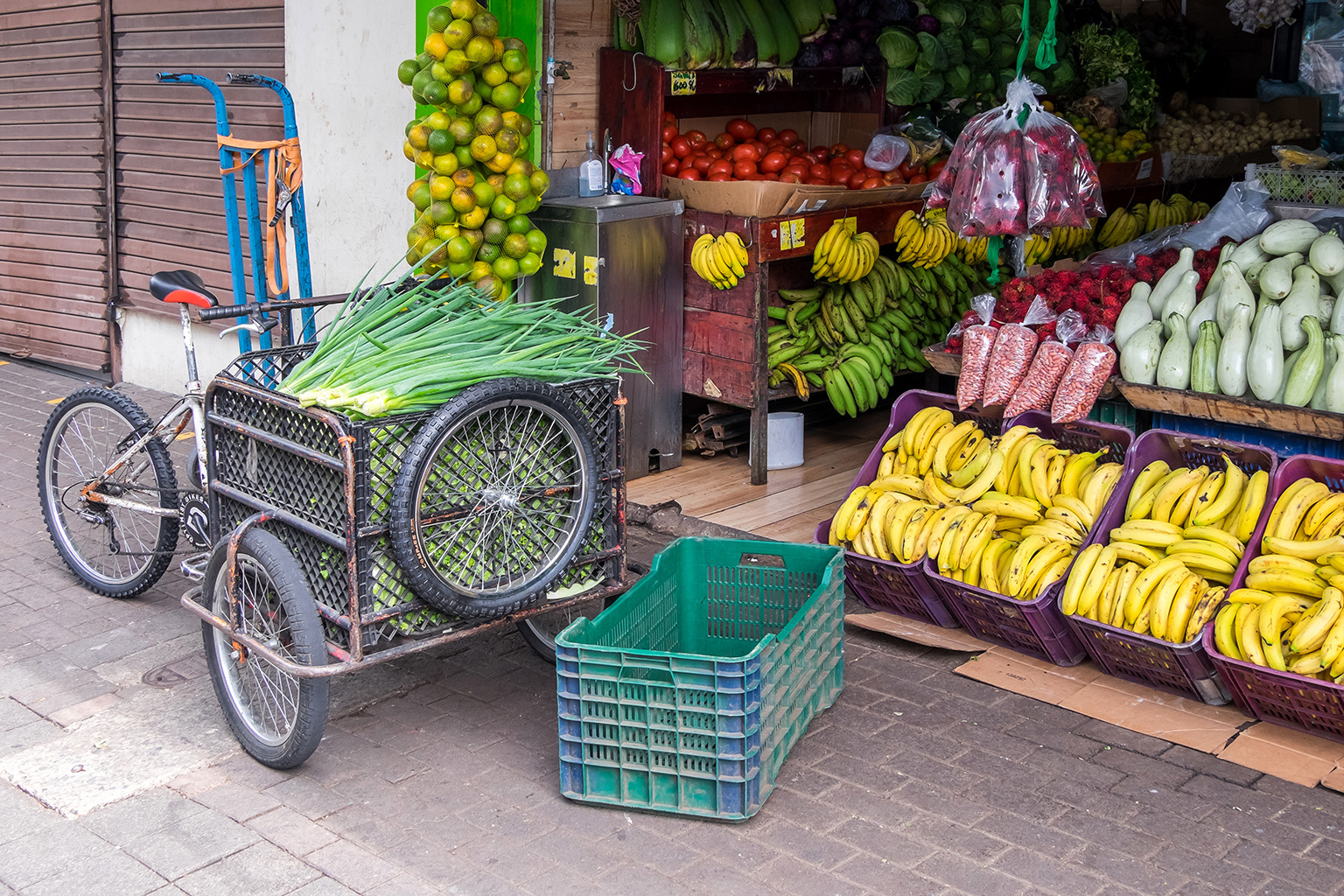
Everyday costs in Nicaragua are among the lowest in the region.
Everyday Costs When Living in Nicaragua on $1500 a Month
Day-to-day expenses in Nicaragua are where the country stands out most.
Food, transport, and basic services are consistently low-cost—especially if you adopt local habits. Markets offer affordable produce and staples, and eating locally keeps your monthly food spend predictable.
Transport is inexpensive and widely used. Buses and taxis cover most needs, and in smaller towns, walking is often part of daily life.
However, affordability depends on expectations.
Imported goods, reliable internet, and certain conveniences can be inconsistent or more expensive than expected.
This creates a split experience:
- Live locally → very low costs
- Live “internationally” → costs rise quickly
Many expats compare regional affordability using tools like Numbeo, where Nicaragua consistently ranks among the more budget-friendly options.
Healthcare is accessible but varies in quality depending on location. For serious or specialized care, expats often plan alternatives or travel. Global benchmarks from the World Health Organization can help put these differences into perspective.
To see how that translates beyond the numbers, it helps to understand what living in Nicaragua as an expat actually looks like on a day-to-day basis.
Who Nicaragua Is Best For
Nicaragua is best suited for expats who prioritize cost above everything else.
Budget-first expats: If your main goal is to reduce expenses and stretch your income as far as possible, Nicaragua is one of the strongest options available.
Remote workers with flexibility: If you don’t rely heavily on high-speed infrastructure or constant connectivity, Nicaragua can work well. But if your work depends on consistency, this is something to evaluate carefully.
Long-stay minimalists: Those who are comfortable adapting to local conditions—and don’t need a Western-style lifestyle—tend to do well here.
If you want a deeper look at routines, culture, and pace of life, take a closer look at what everyday life in Nicaragua is really like.
Expand below to see if Nicaragua is a good choice for you.
Reality Check: Living in Nicaragua on $1500 a Month
If you’re expecting:
- highly reliable infrastructure
- fast internet everywhere
- consistent services across the country
Nicaragua may feel unpredictable.
But if your priority is:
- minimizing expenses
- maximizing financial freedom
- living simply
Then this is where $1,500 stretches the furthest.
Unlike Belize, Nicaragua gives you far more flexibility on a lower budget, but that comes with trade-offs in infrastructure and consistency.
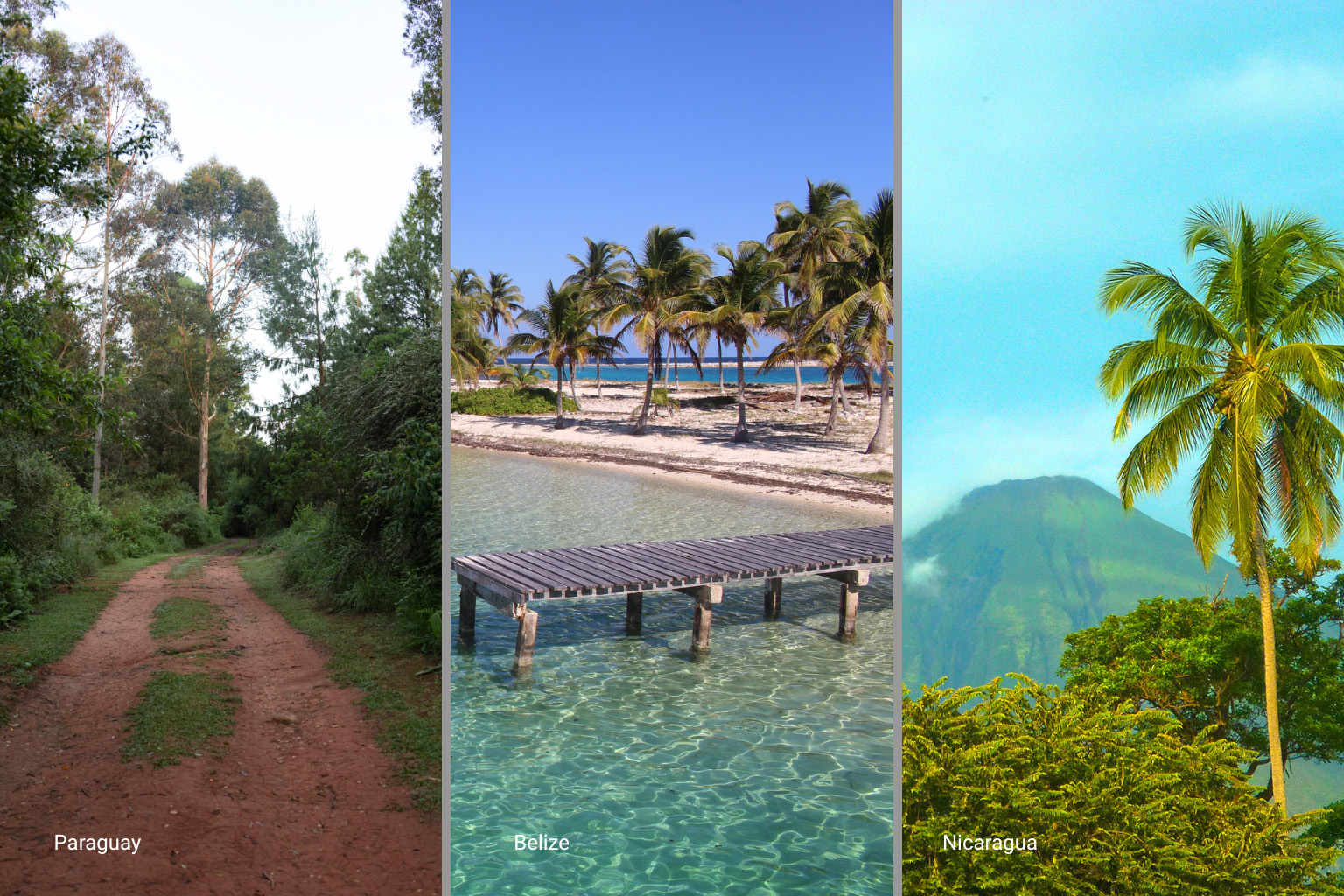
Three countries, three very different lifestyles on the same budget.
Living in Latin America on $1500 a Month: Paraguay vs Belize vs Nicaragua
At the $1,500 level, all three countries—Paraguay, Belize, and Nicaragua—offer very different experiences.
This isn’t about which country is “best.”
It’s about which one aligns with your priorities—cost, lifestyle, or stability.
If you’ve read through each breakdown, the differences are already clear. This section simplifies those differences so you can make a confident decision.
Monthly Cost Comparison for Living in Latin America on $1500 a Month
Before diving into the details, here’s a simple side-by-side comparison of how $1,500 typically stretches across Paraguay, Belize, and Nicaragua.
| Category | Paraguay | Belize | Nicaragua |
| Housing | Low, stable | High (coastal premium) | Very low |
| Food | Affordable | Expensive (imports) | Very affordable |
| Transport | Low | Moderate | Very low |
| Healthcare | Affordable private | Limited, can be costly | Low cost, variable quality |
| Overall Budget Fit | Comfortable | Tight | Flexible |
This quick snapshot shows you where your budget feels comfortable, where it becomes tight, and where it goes the furthest overall.
Lifestyle vs Cost When Living in Latin America on $1500 a Month
Each country represents a different balance between cost and lifestyle.
- Paraguay offers the most balanced option. You get affordability without sacrificing too much stability or predictability.
- Best aligned with long-term planning and consistent living.
- Best aligned with long-term planning and consistent living.
- Belize is lifestyle-first. You’re paying for environment—Caribbean access, English-speaking convenience—but your budget is under more pressure.
- Best suited for those willing to trade financial flexibility for location.
- Best suited for those willing to trade financial flexibility for location.
- Nicaragua is cost-first. It gives you the most room financially but requires the most adaptation in terms of infrastructure and expectations.
- Best for those comfortable with simplicity and variability.
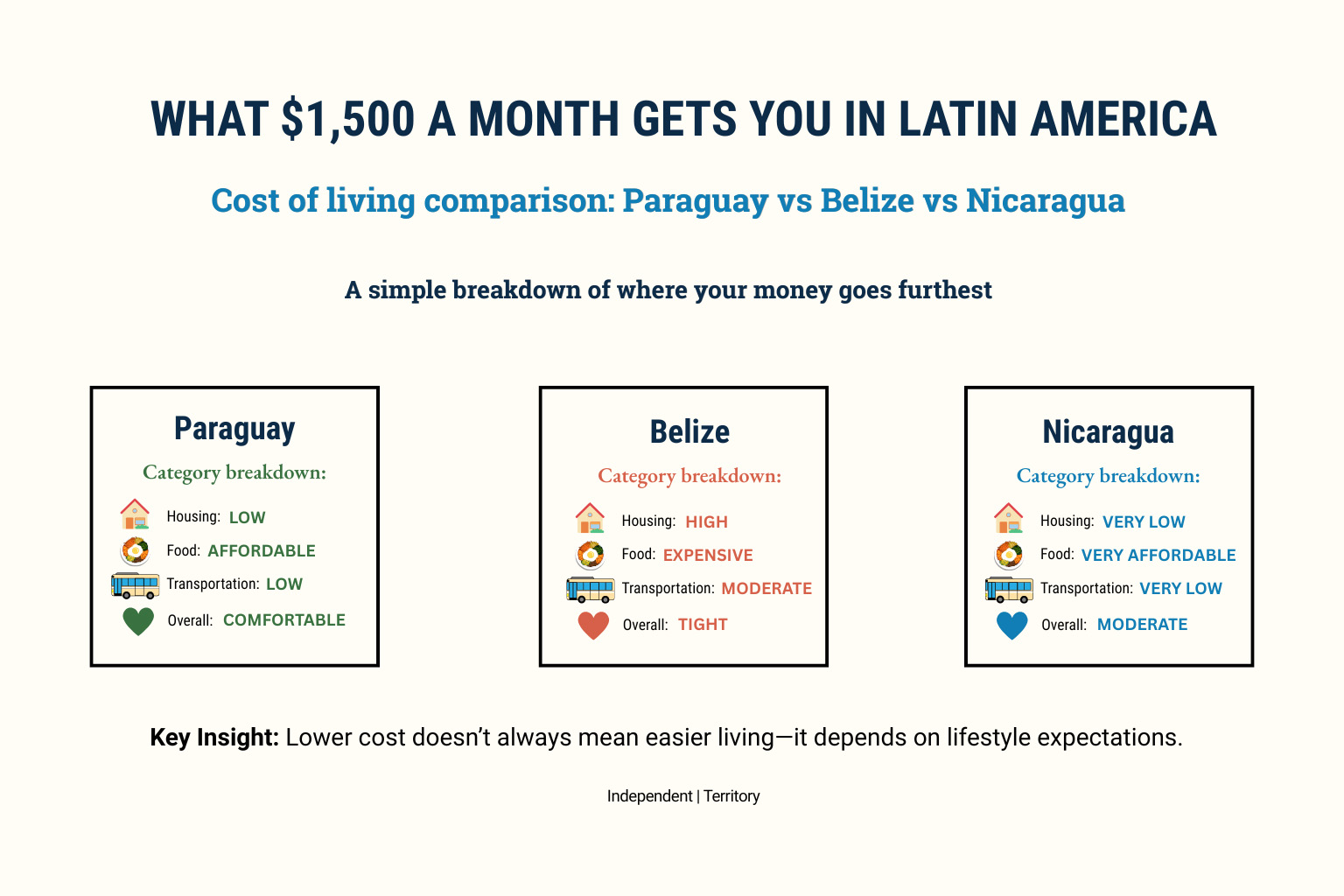
A quick breakdown of where your $1,500 budget goes further.
Which Country Is Best for Living in Latin America on $1500 a Month?
Instead of overthinking the numbers, it comes down to how you want to live.
Choose Paraguay if you want:
- stability
- predictable costs
- a long-term base
Choose Belize if you want:
- Caribbean lifestyle
- English-speaking environment
- coastal living
Choose Nicaragua if you want:
- maximum affordability
- minimal financial pressure
- simple living
Here’s a simple breakdown to help you decide which country aligns best with your lifestyle, flexibility, and budget expectations.
| Country | Best For | Lifestyle Fit | Budget Fit | Key Trade-Off |
| Paraguay 🇵🇾 | Remote workers, digital nomads, retirees, older nomads, couples | Balanced, quiet, stable | Comfortable on $1,500 | Less entertainment, slower pace |
| Belize 🇧🇿 | Couples, adventurers, lifestyle-focused expats, remote workers | Caribbean, scenic, relaxed | Tight on $1,500 | High rent, imported goods, tourism pricing |
| Nicaragua 🇳🇮 | Budget-focused remote workers, digital nomads, retirees, long-term settlers | Simple, local, low-cost | Very comfortable on $1,500 | Infrastructure inconsistency, variability in services |
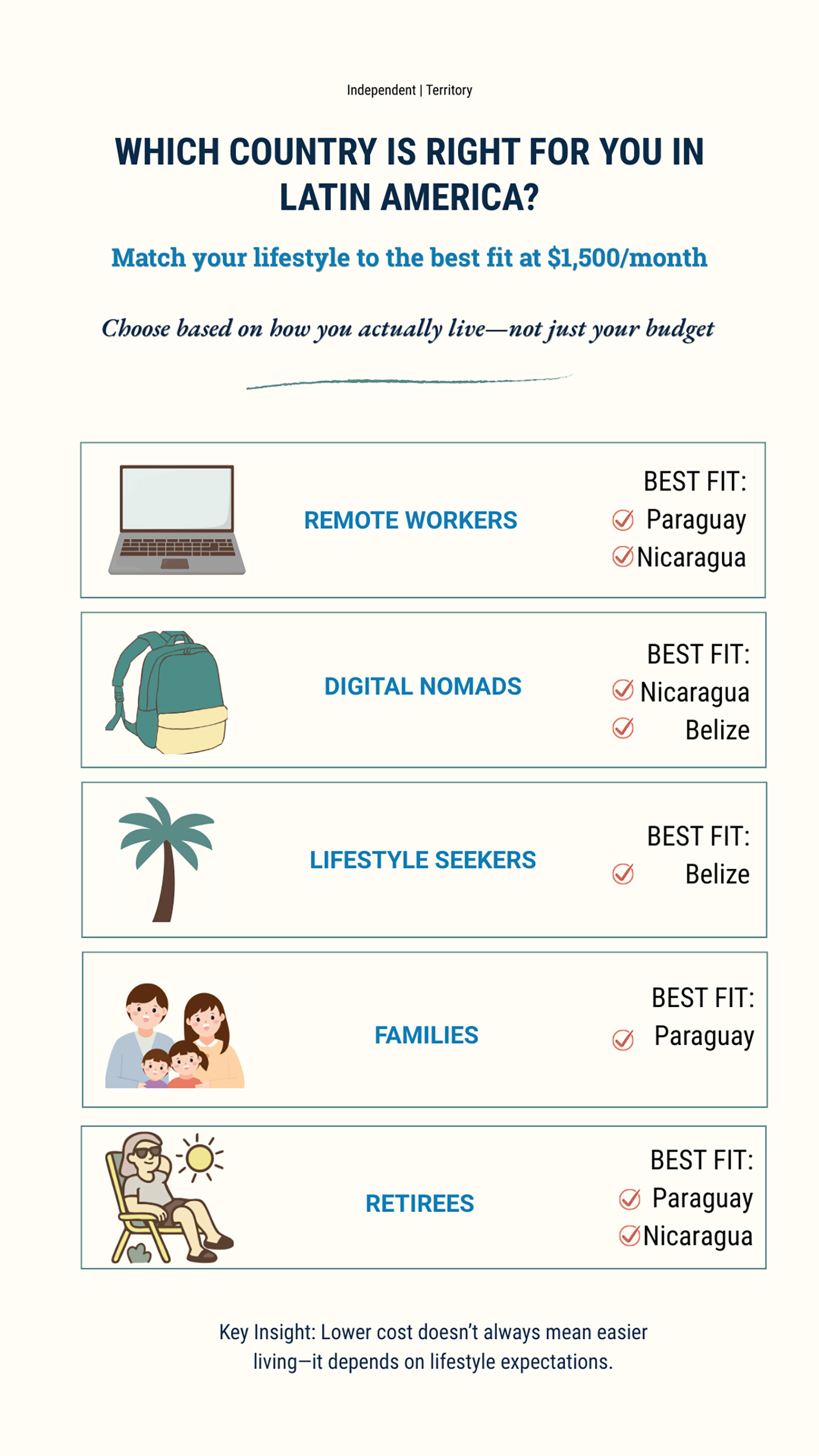
Not every country fits every lifestyle—choose based on your priorities.
Final Thoughts on Living in Latin America on $1500 a Month
A $1,500 monthly budget in Latin America is no longer a one-size-fits-all answer—it’s a sliding scale that depends entirely on where you choose to live and how you structure your lifestyle.
In Paraguay, that budget can still feel balanced and stable, giving you room to live independently without constant financial pressure.
In Nicaragua, it stretches even further, offering one of the most affordable long-term lifestyles in the region—though with clear trade-offs in infrastructure and consistency.
In Belize, the same budget becomes more restrictive, but you gain access to a very different lifestyle shaped by the Caribbean environment and expat coastal living.
The people who succeed in Latin America aren’t the ones earning the most—they’re the ones choosing the right country for their budget, priorities, and expectations.
Get that decision right, and $1,500 can still buy you freedom. Get it wrong, and it turns into a constant compromise.
The opportunity is still there—but it requires a strategic approach, not guesswork.
If you’re ready to take this seriously, the Latin America Residency Map helps you compare countries, residency options, and lifestyle fit—so you can make the right move with confidence.
FAQ: Living in Latin America on $1500
These quick answers to some of the most common questions about living in Latin America on $1,500 a month will help clarify expectations.
Can you live comfortably on $1,500 in Latin America?
Yes—but it depends on where you live and your lifestyle. In lower-cost countries like Nicaragua or Paraguay, $1,500 can go far. In places like Belize, it requires more trade-offs.
Which Latin American country is cheapest to live in?
Nicaragua is one of the most budget-friendly options, followed by Paraguay. Both offer low rent and affordable daily expenses compared to more developed or tourist-heavy countries.
Is $1,500 enough for a retiree in Latin America?
For many retirees, yes. If you choose the right location and avoid high-cost areas, $1,500 can cover housing, food, healthcare, and a comfortable day-to-day lifestyle.
What expenses surprise expats the most?
Rent in expat areas, imported goods, and private healthcare are the biggest surprises. These can quickly push your budget higher if you’re not paying attention.
What is the average rent in Latin America for expats?
Rent varies widely, but most expats pay between $300 and $1,000 per month depending on the country, city, and whether the property is furnished.