

16 min read
Nicaragua has a way of pulling people in—volcanoes on the horizon, long stretches of untouched coastline, and a slower pace that feels increasingly rare. It’s easy to see why so many expats start thinking about owning a piece of it, and whether buying land in Nicaragua could be both a lifestyle move and a smart long-term investment.
……………………………..
Buying land in Nicaragua is something many expats consider once they start looking beyond short-term stays. The appeal is obvious—lower prices, more space, and the freedom to build something on your own terms.
But this is where many buyers get it wrong.
Buying land in Nicaragua isn’t as straightforward as it seems, and what looks cheap upfront often becomes expensive once the realities set in.
This guide breaks down 10 essential costs, risks, and hard truths you need to understand before buying land in Nicaragua. If you’re serious about making a long-term move, this isn’t about chasing a deal—it’s about avoiding costly mistakes.
Here’s a clear breakdown of the key realities you need to understand about buying land in Nicaragua as an expat.
Before going further, it’s worth stepping back and understanding the bigger picture of what day-to-day life actually looks like—start with your guide to living in Nicaragua to put everything into context.
Table of Contents
Before diving into the details, here’s a clear breakdown of the key realities you need to understand about buying land in Nicaragua as an expat.
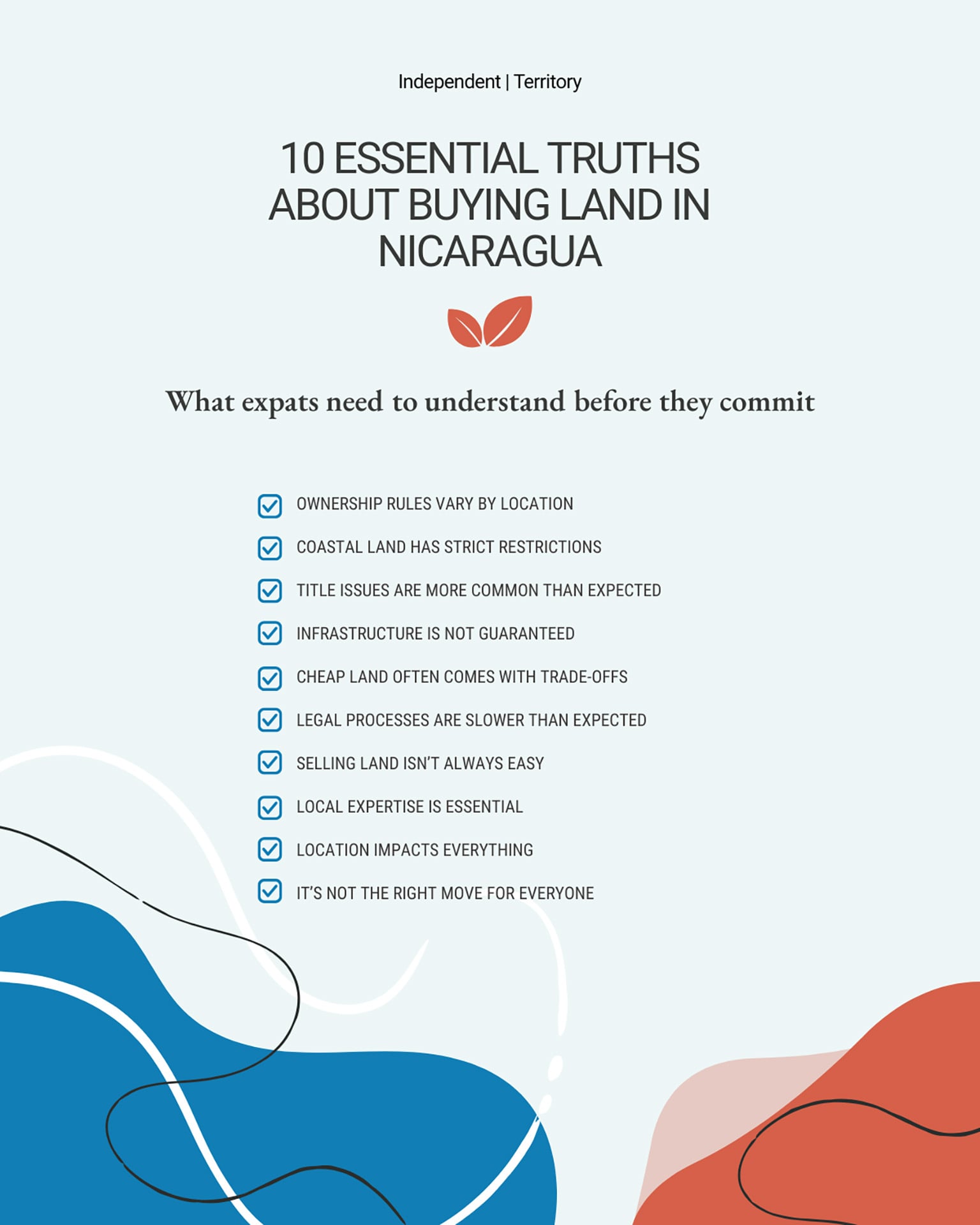
A quick overview of the most important realities expats should understand before buying land in Nicaragua.
Can Foreigners Buy Land in Nicaragua? (What Expats Need to Know)
The short answer is yes—expats can legally buy land in Nicaragua.
Foreigners can purchase and hold titled land (escritura) in most of Nicaragua with the same rights as Nicaraguan citizens. However, significant restrictions apply in coastal zones and border areas.
This is where many buyers get it wrong. They assume that buying land in Nicaragua works the same everywhere, only to find out later that the type of land—and where it’s located—changes everything.
The reason the term “foreigners” matters here is because it’s how the law is written and enforced. While you may identify as an expat, legally you’re treated as a foreign buyer, which means certain rules apply differently depending on the property.
Understanding those limitations early is critical, especially if you’re looking at high-demand areas like San Juan del Sur, where beachfront land often comes with additional layers of regulation.
Buying land doesn’t give you the right to stay, so understanding how to get residency in Nicaragua should be part of your plan from day one.
1. Not All Land Is Equal (Ownership vs Concessions)
Not all land in Nicaragua is owned the same way—and this distinction can have serious long-term consequences.
In many coastal areas, including around San Juan del Sur, what looks like prime beachfront property may actually fall under a concession system, not full ownership. This means you’re essentially leasing the land from the government rather than owning land in Nicarauga.
What looks like a great deal upfront can come with hidden limitations:
- Usage restrictions
- Renewal uncertainty
- Limited control over the property
Coastal property in Nicaragua for expats is governed by Ley 690 (Ley de Costas), which establishes that the first 50 meters from the high-tide line is public domain and cannot be privately owned. Many beachfront areas, including parts of San Juan del Sur, fall into a concession zone rather than full ownership.
Additionally, the 2025 Border Territory Law (Ley 1258) declared land within 15 kilometers of the borders with Honduras and Costa Rica as state-controlled territory, which can create risks of restrictions or seizures.
If your goal is long-term stability or building a home, this is a critical detail you can’t afford to overlook.
2. Titled Land Matters More Than Price
When buying land in Nicaragua, the single most important factor isn’t price—it’s whether the land is properly titled.
Titled land (escritura) gives you legal ownership that is recognized and enforceable.
Without it, you may be dealing with:
- Informal ownership agreements
- Possession rights instead of legal title
- Increased risk of disputes
What looks cheap upfront often becomes expensive when ownership isn’t clear. Resolving title issues can take time, money, and in some cases, may not be possible at all.
For most expats, paying more for properly titled land is the smarter—and safer—decision.
If you’re planning to stay long-term, your residency options matter just as much as the property itself—use the Latin America Residency Map to quickly see which visas you qualify for across Nicaragua and beyond.
For many expats, owning land here represents a long-term lifestyle shift—not just a financial decision.
The Real Risks of Buying Land in Nicaragua
This is where buying land in Nicaragua shifts from opportunity to reality. The upside is clear—but the risks are often underestimated, especially by expats coming in with expectations shaped by more structured markets.
If you’re still weighing your options, this breakdown of the essential pros and cons of living in Nicaragua will help you understand what to realistically expect.
3. Title Issues Are More Common Than You Think
Title problems are one of the biggest risks when buying land in Nicaragua—and they’re far more common than most buyers expect.
The U.S. Embassy in Nicaragua advises extreme caution when considering property purchases, especially coastal land, and recommends thorough due diligence and competent local legal representation.
This isn’t just a formality. Title history in Nicaragua can be incomplete, inconsistent, or disputed.
It’s not unusual to encounter:
- Overlapping ownership claims
- Missing or poorly documented transfers
- Conflicting records across registries
Property rights and enforcement are notoriously unreliable in Nicaragua. Conflicting land title claims are abundant, and the government has confiscated privately owned land without due process or compensation in some cases.
This is where many buyers get it wrong. They assume that if a property is listed and looks legitimate, the legal side must be in order. In reality, verifying full title history isn’t optional—it’s critical.
If you’re still exploring your options, take a look at the best places to live in Nicaragua for a broader comparison across the country.
Reselling land can take time, especially outside established expat or tourist areas.
4. Infrastructure Isn’t Guaranteed
One of the most overlooked risks when buying land in Nicaragua is assuming that basic infrastructure is already in place.
In many areas—especially outside established expat zones—land may not have:
• Reliable water access
• Electricity connections
• Stable internet
Road access is another major issue that often gets ignored. What looks like a simple dirt road during the dry season can become impassable during the rainy months.
What looks cheap upfront often becomes expensive when you factor in the cost of bringing in utilities, improving access, or dealing with ongoing limitations.
If you’re planning to build or live on the land, these aren’t minor details—they directly impact your day-to-day life.
For many expats, living in Nicaragua means balancing cost savings with private healthcare options. Healthcare in Nicaragua varies by provider, but private care is accessible and affordable.
5. Selling Land Can Be Slow and Difficult
Buying land is one decision—selling it later is another reality entirely.
The resale market for land in Nicaragua is limited, particularly outside high-demand areas.
That means:
- Fewer qualified buyers
- Longer time on the market
- Less pricing power when you want to exit
This is where expectations can quickly break down. Many buyers assume that because land is cheap, it will be easy to resell. In practice, liquidity is low and holding periods are often longer than anticipated. If your plan depends on flexibility or a quick exit, this is a risk you need to factor in early.
6. The Legal Process Is Slower Than Expected
The process of buying land in Nicaragua is rarely fast—and rarely straightforward.
Expect:
- Bureaucratic delays
- Paperwork that moves slowly
- Heavy reliance on lawyers and notaries
Even when everything is done correctly, timelines can stretch beyond what most expats are used to. There’s also a level of dependency on local professionals that can feel unfamiliar if you’re coming from a more transparent system.
This isn’t necessarily a deal-breaker—but it does require patience and realistic expectations. The mistake many buyers make is assuming the process will follow a predictable timeline. In Nicaragua, it often doesn’t—and that uncertainty needs to be built into your decision from the start.
Not sure if Nicaragua is your best option? Use the Latin America Residency Map to quickly discover which countries you qualify for based on your income, citizenship, and lifestyle goals.
Cost of Land in Nicaragua (2026 Overview)
On the surface, land in Nicaragua looks incredibly cheap—and in many cases, it is. But price alone doesn’t tell you much unless you understand what’s driving it.
Land value here is shaped by a few key factors:
- Location (coastal vs inland, proximity to cities or expat hubs)
- Accessibility (road quality, distance to services)
- Infrastructure (water, internet availability)
- Expat demand (areas where foreigners are already buying)
For example, high-demand areas like San Juan del Sur command significantly higher prices due to tourism, lifestyle appeal, and an established expat presence. Meanwhile, inland regions can offer dramatically lower prices—but often with trade-offs that aren’t obvious at first glance.
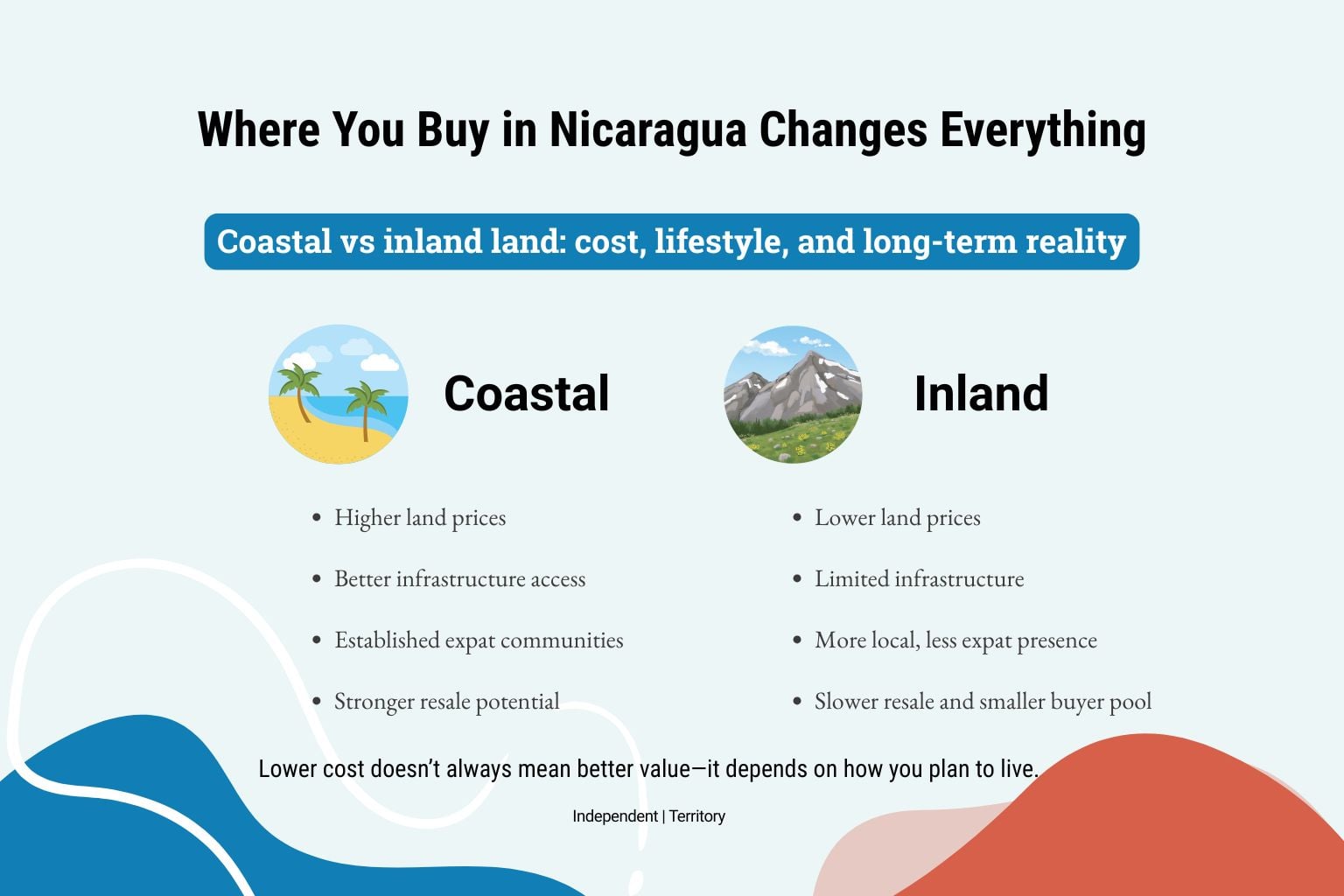
Land prices and lifestyle in Nicaragua vary significantly between coastal areas like San Juan del Sur and inland regions.
If you’re comparing costs broadly, it’s worth grounding your expectations with a full breakdown of the cost of living in Nicaragua and how different regions stack up. The reality is, cheap land doesn’t always translate into a cheap or easy lifestyle.
7. Cheap Land Often Comes With Trade-Offs
There’s a reason some land in Nicaragua is priced far below what you’d expect.
In most cases, lower prices reflect:
- Remote or hard-to-reach locations
- Lack of basic infrastructure
- Limited or no road access
- Minimal nearby services or amenities
This is where buyers can get caught off guard. A low purchase price can quickly be offset by the cost—and effort—required to make the land usable.
Bringing in utilities, improving access roads, or simply managing day-to-day logistics in a remote area can turn a “cheap” investment into a complex, ongoing project.
If you’re considering low-cost land, the real question isn’t just what it costs to buy—but what it takes to make it livable.
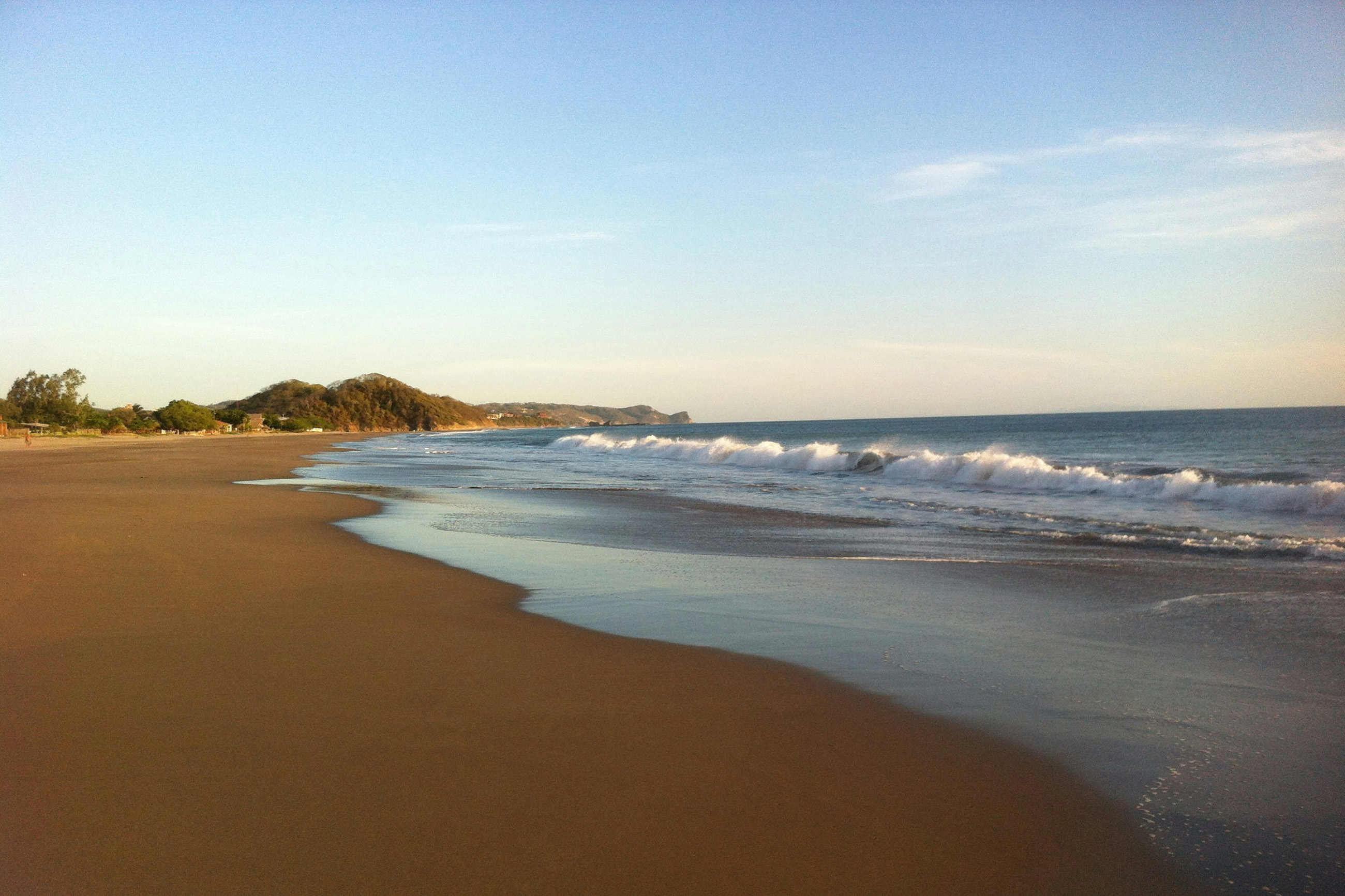
Coastal land offers strong appeal—but higher prices and additional restrictions are common.
8. Location Drives Everything
In Nicaragua, location isn’t just a factor—it’s the factor.
Prices vary significantly depending on where you buy:
- Coastal areas tend to be more expensive due to tourism and expat demand
- Popular hubs like San Juan del Sur attract higher prices and more competition
- Inland regions offer better value but often come with fewer services and less infrastructure
This creates a clear trade-off between lifestyle and cost. Coastal properties may offer convenience, community, and rental potential—but at a premium. Inland land can offer space and affordability—but requires more independence and long-term planning.
Before making a decision, it’s worth diving deeper into specific regions and understanding how they compare—not just in price, but in livability, access, and long-term potential.
Because in Nicaragua, two pieces of land at very different prices aren’t just priced differently—they offer completely different realities.
Choosing the wrong location is one of the most expensive mistakes buyers make, which is why exploring where expats live in Nicaragua is critical before committing.
How Buying Land in Nicaragua Actually Works
On paper, the process of buying land in Nicaragua looks straightforward. In reality, it’s slower, more manual, and heavily dependent on local systems that don’t always operate predictably.
This isn’t a plug-and-play transaction.
It’s a process where details matter—and where small oversights can turn into expensive problems later.
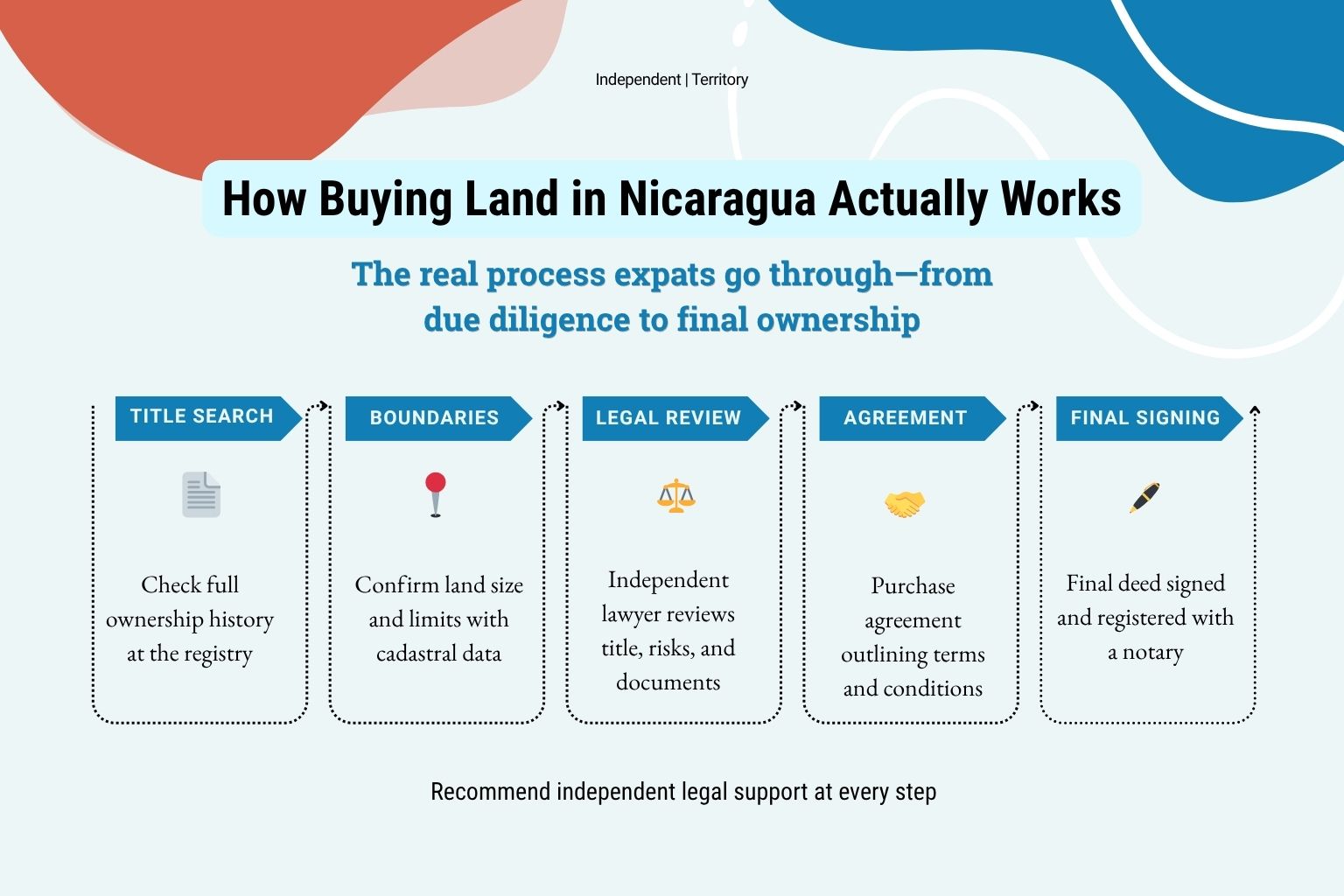
The step-by-step process of buying land in Nicaragua, from title verification to final property registration.

Buying land in Nicaragua requires more than a handshake—legal checks and professional guidance are essential.
9. You’ll Need to Rely on Local Experts
If you’re buying land in Nicaragua, you’re not navigating the process alone—you’re relying on local lawyers, notaries, and government registries to get it right.
And that’s exactly where things can either go smoothly—or fall apart.
The actual buying process involves several critical steps: conducting a full title search at the Registro Público de la Propiedad, verifying boundaries and cadastral data with INETER, obtaining a clean history of the property to avoid overlapping claims, drafting a promesa de venta, and finally executing the escritura pública before a notary.
Even seemingly clean deals can hit delays or issues due to registry backlogs or boundary mismatches.
This is where the “theory vs reality” gap shows up.
In theory, the system works.
In practice, you’re depending on:
- The accuracy of historical records
- The efficiency of government offices
- The competence and integrity of your legal team
That’s why engaging an independent lawyer (not recommended by the seller) is non-negotiable. Cutting corners here is one of the fastest ways to end up in a dispute—or worse, owning land you can’t legally defend.
If you’re unsure whether Nicaragua is even your best option, the Latin America Residency Map lets you quickly compare where you actually qualify to live long-term.
Due Diligence Checklist
✅ Full title history from Registro Público
✅ Cadastral survey and boundary verification with INETER
✅ Search for liens, mortgages, or disputes
✅ Independent legal review
✅ Physical site visit (especially for road access and infrastructure)

Done right, land ownership can be rewarding—but it’s rarely a quick or simple process..
Is Buying Land in Nicaragua a Good Idea for Expats?
This is where most people need to slow down and get honest about their situation.
Buying land in Nicaragua can absolutely work—but it’s not a universally good idea. It depends entirely on your expectations, your timeline, and how much uncertainty you’re willing to accept.
This isn’t a market where you assume stability and figure things out later. It’s a market where you need to go in clear-eyed from the start.
10. It Only Makes Sense for the Right Type of Buyer
Buying land in Nicaragua makes sense—but only for a specific type of expat.
Official U.S. guidance emphasizes that investing in Nicaraguan real estate carries notable risks due to unreliable property rights enforcement and occasional arbitrary actions.
That’s not something to gloss over. It should shape how you approach the decision.
This works best for buyers who:
- Have a long-term mindset (think 5–10+ years, not quick flips)
- Are comfortable navigating uncertainty and slower systems
- Plan to use the land personally (build, live, or hold strategically)
- Understand that flexibility and liquidity are limited
This is not ideal for buyers who:
- Want a quick resale or investment return
- Expect a predictable, structured buying process
- Aren’t prepared to deal with legal complexity or delays
- Need strong legal protections similar to the U.S., Canada, or Europe
This is where a lot of expats get it wrong—they treat Nicaragua like a lower-cost version of a Western property market.
It’s not.
The opportunity is real, but so is the trade-off.
If your goal is lifestyle, long-term positioning, or securing land in a place that still offers freedom and affordability, it can make sense.
If your goal is efficiency, security, and short-term upside—you’re looking in the wrong market. And that distinction is what ultimately determines whether buying land in Nicaragua is a smart move—or a costly mistake.
Alternatives to Buying Land in Nicaragua
Before committing to buying land in Nicaragua, it’s worth stepping back and considering lower-risk ways to approach the country.
For most expats, jumping straight into land ownership isn’t the smartest first move.
Renting first gives you flexibility. It allows you to experience day-to-day life, understand different regions, and avoid locking yourself into a decision too early. If you’re still figuring out what living in Nicaragua actually feels like, this is the safest place to start.
Buying an existing home is another practical alternative. In many cases, it removes a lot of the uncertainty around infrastructure, access, and legal complexity that comes with raw land. What you see is much closer to what you get.
And then there’s the simplest—but most overlooked—strategy: try different regions before committing.
Nicaragua isn’t one-size-fits-all.
Coastal areas, inland cities, and rural regions all offer completely different lifestyles. Spending time in multiple locations—and digging into detailed area guides—will give you a far clearer picture than any listing ever could.
The biggest mistake isn’t choosing the wrong property.
It’s choosing too quickly.
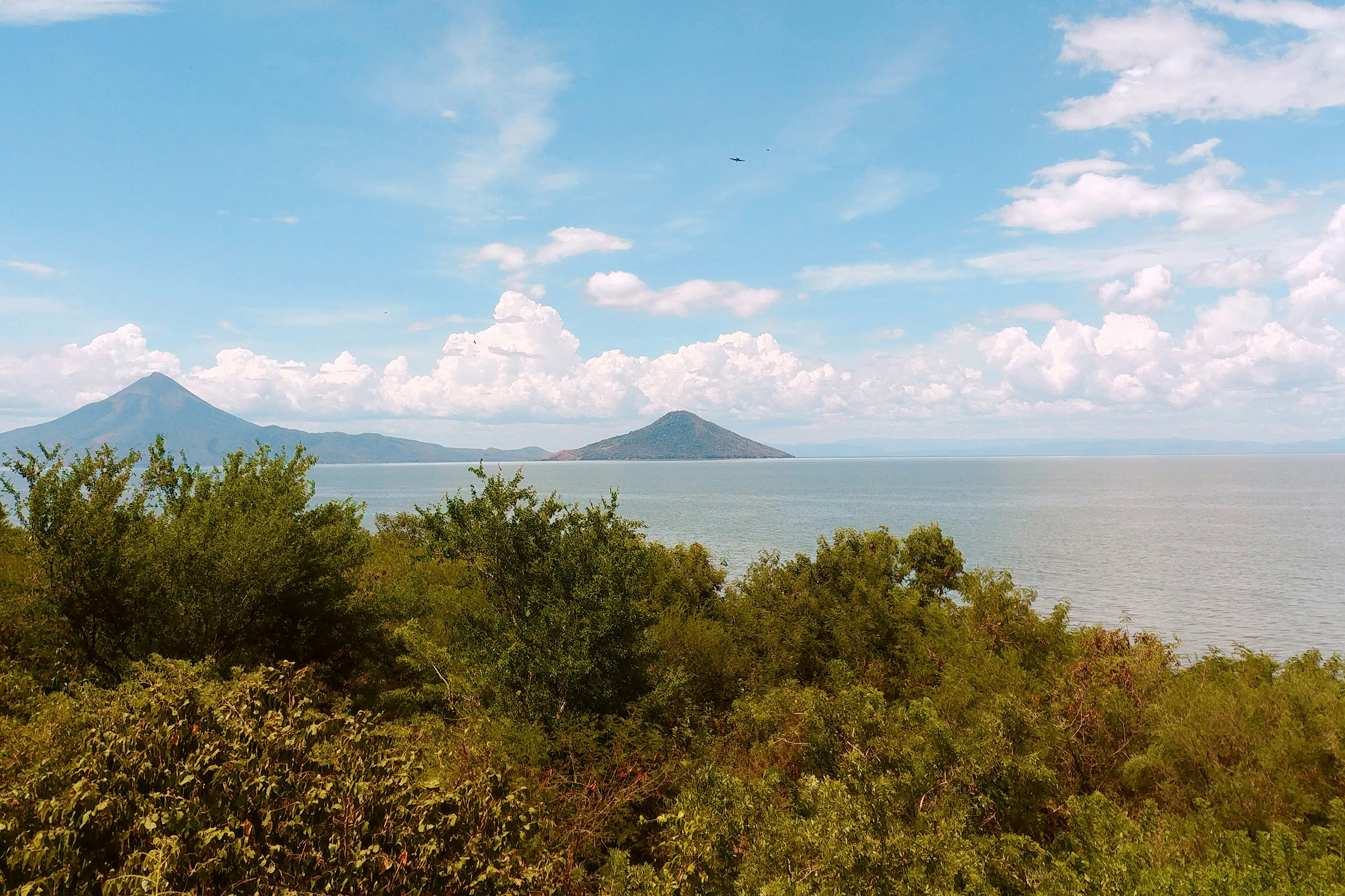
Nicaragua’s landscapes are a major draw—but location and infrastructure matter just as much as scenery.
Final Thoughts on Buying Land in Nicaragua
Buying land in Nicaragua sits in that space between opportunity and risk—and both sides are real.
Yes, foreigners can buy land.
Yes, prices can be attractive.
Yes, there’s long-term potential.
But alongside that:
- Title issues are common
- Legal enforcement can be inconsistent
- Infrastructure isn’t guaranteed
- Selling isn’t always easy
- Processes take longer than expected
None of this makes it a bad decision—it just makes it a decision that requires a different mindset. If you approach it with patience, proper due diligence, and a long-term view, it can absolutely work in your favor.
If you rush in, assume everything will function like a Western market, or skip steps to “save time,” you’re increasing your risk—significantly. The opportunity is there. But it rewards people who move carefully, not quickly.
Explore Residency Options Before You Commit
Before buying land in Nicaragua, it’s worth understanding where you actually have the best long-term options. Residency rules vary across Latin America, and choosing the right country can make a significant difference.
Before you commit to buying land, make sure your long-term plan works—the Latin America Residency Map helps you avoid getting locked into the wrong country.
Frequently Asked Questions About Buying Land in Nicaragua
Can foreigners legally buy land in Nicaragua?
Yes, foreigners can legally buy land in Nicaragua and hold titled property (escritura) with the same rights as locals in most parts of the country. However, restrictions apply in coastal zones and border areas, where ownership structures can be more complex.
Is buying land in Nicaragua safe for expats?
Buying land in Nicaragua can be safe—but only with proper due diligence. Title disputes, unclear ownership history, and inconsistent enforcement of property rights mean buyers need to verify everything carefully before purchasing.
What is the biggest risk when buying land in Nicaragua?
The biggest risk is unclear or disputed land titles. Overlapping claims, incomplete records, and unreliable enforcement can lead to legal disputes—even after a purchase is completed.
Can foreigners own beachfront property in Nicaragua?
Not always. Much of Nicaragua’s beachfront land falls under concession systems due to coastal laws. This means you may not fully own the land, even if you have usage rights.
How much does land cost in Nicaragua in 2026?
Land prices vary widely depending on location, infrastructure, and demand. Coastal areas like San Juan del Sur are significantly more expensive, while inland or remote areas offer lower prices but often come with trade-offs like limited access or utilities.
Is it better to buy land or a house in Nicaragua?
For most expats, buying an existing home is often the safer option. It reduces uncertainty around infrastructure, access, and legal complexity compared to purchasing undeveloped land.
How long does it take to buy land in Nicaragua?
The process can take anywhere from a few weeks to several months, depending on title verification, legal checks, and registry timelines. Delays are common, especially if issues arise during due diligence.
Do I need a lawyer to buy land in Nicaragua?
Yes—working with an independent local lawyer is essential. They handle title searches, verify legal ownership, and guide you through the process. Using a lawyer recommended by the seller is not advised.
Is buying land in Nicaragua a good investment?
It can be—but only for long-term buyers who understand the risks. Nicaragua is not a liquid or highly predictable real estate market, so it’s better suited for lifestyle-driven purchases rather than short-term investment strategies.
Should I visit Nicaragua before buying land?
Absolutely. Visiting in person allows you to verify the property, assess infrastructure, and explore different regions. Many buyers who skip this step end up choosing the wrong location—or overlooking major issues.
Sources & Further Reading
This article reflects conditions as of mid 2026. Laws and enforcement can change, so always verify the latest information directly with official sources and consult qualified professionals before making any purchase.
- U.S. Embassy in Nicaragua – Property Investment Concerns (August 21, 2025): https://ni.usembassy.gov/message-for-u-s-citizens-property-investment-concerns-in-nicaragua-august-21-2025/
- U.S. State Department – 2025 Nicaragua Investment Climate Statement: https://www.state.gov/reports/2025-investment-climate-statements/nicaragua
- U.S. Embassy – Buying Property and Property Disputes: https://ni.usembassy.gov/buying-property-and-property-disputes-in-nicaragua/
Additional balanced overviews of foreigner rights and coastal/border restrictions can be found on specialized expat investment sites.