

11 min read
Nicaragua is still incredibly beautiful and one of the most affordable places in the region. But in 2026, “safety” means something a little different than it used to. If you’re asking, is Nicaragua safe in 2026, the answer depends on what kind of risk you’re measuring. Violent crime remains lower than in much of Central America—including the Northern Triangle (Guatemala, Honduras, and El Salvador). Today, the bigger consideration isn’t street danger but regulatory and political sensitivity. Petty theft exists, but staying organized, low-profile, and apolitical dramatically reduces problems.
……………………………..
Is Nicaragua safe in 2026? Yes for street-level violent crime — Nicaragua maintains one of Central America’s lowest homicide rates (~6 per 100,000 per InSight Crime data, with government claims consistent but low transparency). Expats in Granada, León, or Pacific coast areas often report calmer daily life than many Western cities.
But Nicaragua safety 2026 goes beyond stats. US State Department Level 3 advisory highlights arbitrary law enforcement, wrongful detention risks, limited healthcare, and political scrutiny.
Living in Nicaragua, physical safety is high if compliant and low-profile; administrative and expression risks are the real trade-offs for freedom-seekers escaping high taxes/overreach. This guide covers Nicaragua crime 2026, expat realities, health/disasters, and comparisons to Paraguay/Belize.
If you’re considering moving to Nicaragua, our guide helps you explore your options, take a look at the Best Places to Live in Nicaragua for Expats.
Table of Contents
Nicaragua Crime Rate 2026: Violent vs. Petty Crime
Nicaragua crime rate 2026 shows low violent crime regionally (no major gang presence like Northern Triangle neighbors). Petty theft (phone snatching, pick-pocketing, motochorros) are the main expat issues, especially in markets, bus terminals, or nightlife.
- Violent crime against foreigners: Rare in expat hubs.
- Petty theft mitigation: Avoid displaying valuables, use secure transport at night, choose gated/secure housing.
Is Nicaragua safe for expats? Yes with awareness—long-term integrated expats report feeling safer than short-term tourists.
For context:
- Paraguay sees moderate urban petty crime, but generally lower administrative scrutiny; read our breakdown of the safest places to live in Paraguay for expats.
- Belize reports higher urban homicide rates and localized gang activity; see our guide to safety in Belize for expats for details.
This sets the stage: physically, Nicaragua is relatively safe, but true safety includes legal and bureaucratic realities.

San Juan del Sur by day—relaxed, walkable, and generally safe, with petty theft risk increasing during peak tourism seasons.
Street Safety by Region in 2026
Safety varies by location so you need to break it down by city and lifestyle to answer the question, is Nicaragua safe in 2026?
Here’s what that looks like on the ground.
| Region | Daytime Safety | Nighttime Risk | Primary Concern | Best For |
| Managua | Moderate | Higher (theft/robbery) | Petty crime, taxi kidnappings | Structured living with proximity to services |
| Granada & León | High | Moderate (bars/street) | Pickpocketing, transport risks | Retirees/remote workers because it’s a walkable culture |
| Emerald Coast / San Juan del Sur | High (gated) | Low-Moderate (tourist zones) | Seasonal petty theft | Gated communities with a beach lifestyle |
For a broader breakdown of lifestyle logistics see our guide about neighborhoods in Granada, Nicaragua and if you’re deciding between colonial cities, see the comparison: León vs Granada Nicaragua 2026 guide, which also addresses livability and environment differences that affect daily safety perception.

In 2026, safety isn’t only about crime—regulatory compliance and strict enforcement shape the expat experience.
Political & Administrative Risk in 2026
Street crime is only half the equation when asking yourself, is Nicaragua safe in 2026?
The more serious risk for expats today is political and administrative—not everyday violence, but regulatory enforcement, legal rigidity, and the expectation of strict compliance.
For freedom-oriented families, remote workers and retirees leaving high-tax Western systems, this is where the real trade-off appears.
- Avoid political commentary, activism, or social media criticism (even pre-arrival posts can trigger scrutiny/entry denial).
- Low-profile rule: Stay compliant, keep paperwork perfect (residency, taxes, property).
- Dual nationality eliminated in January 2026 (non-retroactive per US Embassy alert; naturalizing requires renouncing prior citizenship).
- Territorial tax advantage: Foreign income is often untaxed locally—if structured legally.
Is Nicaragua safe in 2026 from a political and administrative standpoint?
- You are unlikely to face random violence.
- You are expected to comply fully with regulations.
- Public political expression carries risk.
- Documentation discipline is essential.
For financially focused expats willing to adopt a low-profile lifestyle, the environment is manageable. For individuals seeking maximum expressive freedom alongside low taxes, the trade-off deserves serious consideration. Safety is just one piece of the puzzle — see How to Get Residency in Nicaragua 2026 to understand what the process actually involves.
Not sure where you qualify yet? Our Latin America Interactive Residency Map breaks down residency options across the region, including Nicaragua, so you can make a clear, informed decision.

For families, safety in Nicaragua means choosing the right neighborhood, schools, and healthcare access.
Health Safety for Expats in 2026
By no means is Nicaragua a medical hotspot. It has functional, affordable, and improving medical facilities in the private sectors, however, it is very limited when compared to Europe and North America. This reality should factor into any relocation decision.
• Healthcare is limited—Managua private hospitals (e.g., Vivian Pellas, Bautista) handle routine care adequately; rural/coastal areas lack specialists/emergencies.
• Dengue elevated (PAHO reports 122k+ regional cases early 2026; CDC lists Nicaragua higher-risk for travelers).
• Prevention: DEET, long clothing, eliminate standing water; evacuation insurance essential for serious issues (transfers to Costa Rica/Panama/Miami).
Is Nicaragua safe to retire health-wise? Manageable with private care proximity and insurance.
Natural Disaster Risk & Preparedness
Nicaragua sits in a seismically active and tropical weather zone. That does not mean constant danger—but it does mean informed preparation is essential.
For expats, safety here is less about panic and more about understanding geographic exposure.
Where Expats Go for Help:
- Preparation matters more than fear
- Private Hospitals
In medical emergencies, expats typically rely on:
- Private hospitals in Managua
- Larger regional clinics in León or Granada
- For serious trauma following natural disasters, Managua remains the primary medical hub
Embassies assist with:
- Emergency documentation
- Evacuation coordination (in limited scenarios)
- Crisis information updates
However, embassies do not provide direct medical services or disaster housing. Personal insurance and private planning remain essential.
Is Nicaragua safe in 2026 to live health-wise?
- Routine care in Managua’s private sector is adequate.
- Public healthcare is affordable but limited.
- Rural areas lack advanced facilities.
- Tropical disease risk exists but is manageable with prevention.
- Evacuation insurance is strongly recommended for long-term expats.
For healthy, organized individuals comfortable with private care and preventive planning, Nicaragua is medically manageable. For those requiring complex, ongoing specialist treatment, proximity to stronger healthcare systems may be a deciding factor.
If Nicaragua feels like the right fit, the next step is weighing the pros and cons of living here first.
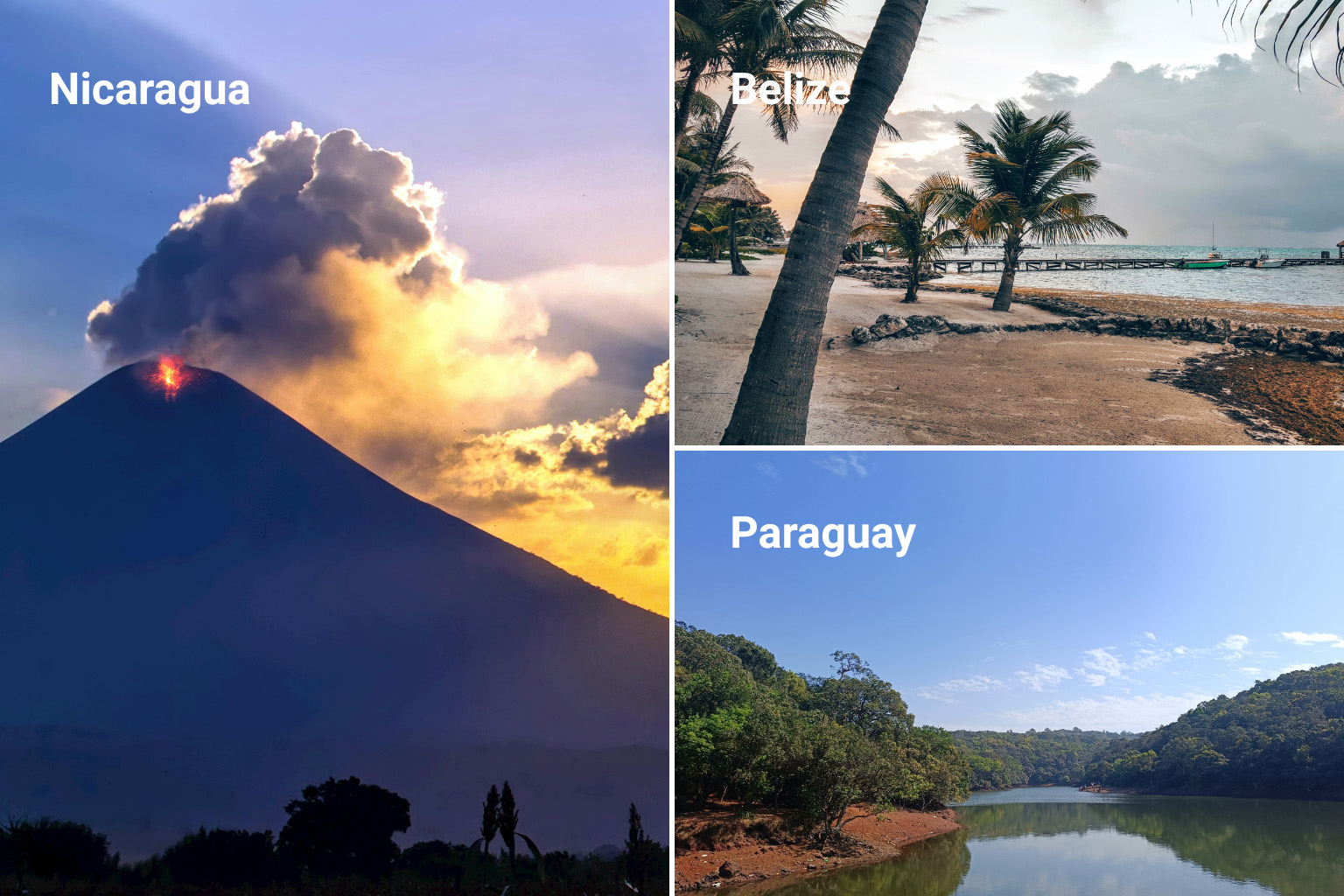
Nicaragua, Belize, and Paraguay each offer different safety profiles—crime rates, governance, and cost of living all matter.
Nicaragua vs Paraguay vs Belize Safety 2026
If you’re researching safety between Nicaragua, Paraguay and Belize, the comparison must go beyond headlines.
All three countries attract expats for different reasons—but their risk profiles are not the same.
Below is a structured 2026 comparison to help you evaluate where your tolerance and priorities align.
| Metric (2026) | Nicaragua | Paraguay | Belize |
| Primary Risk | Administrative/political scrutiny | Petty urban theft | Urban violent crime/gangs |
| Violent Crime Rate | Low (~6/100k) | Moderate (urban) | Higher (urban) |
| Political Freedom | Low (dissent risks) | High (stable, low interference) | Moderate (English-speaking) |
| Tax on Foreign Income | Territorial (often 0%) | Territorial (0%) | Worldwide (higher effective) |
| Cost of Living | Lowest | Low | Highest |
| Healthcare Access | Limited (Managua best) | Moderate | Moderate |
| Residency Ease | Paperwork-heavy | Straightforward | Moderate |
Nicaragua vs Paraguay safety: Nicaragua lower crime/cost, Paraguay more freedom/stability. Nicaragua vs Belize safety: Nicaragua safer regarding street crime, Belize better legal familiarity but higher violence/costs.
Is Nicaragua safer than Paraguay or Belize?
- Safer than Belize in terms of violent crime rates in most expat areas.
- Lower violent crime than many parts of Paraguay—but with higher political scrutiny.
- The cost of living in Nicaragua is one of the lowest among these countries.
Bottom Line: There is no perfect country—only trade-offs.
- If your top priority is minimizing violent crime and maximizing financial flexibility, Nicaragua ranks competitively in 2026.
- If your priority is broader expressive freedom with moderate urban crime risk, Paraguay may feel more aligned.
- If your priority is English-language governance and legal familiarity—even at higher cost and higher urban crime exposure—Belize remains an option.
Safety is not just about crime statistics. It is about alignment between your values, risk tolerance, and lifestyle structure.

In 2026, some expats ask: how much visibility is too much? Political neutrality remains a practical strategy.
Before choosing where to live, use our Latin America Residency Map to compare residency requirements across multiple countries and find the easiest path that fits your situation.
The Real Trade-Offs in 2026
When deciding—is Nicaragua safe in 2026?, understanding trade-offs is critical. This table summarizes the key advantages and caution areas for expat families, retirees, and remote workers.
| Category | Nicaragua Wins | Caution Required |
| Cost of Living | Ultra-low living costs; $1,200–$2,000/month comfortable for singles; $2,000–$3,000/month for couples | High-end or imported goods may increase monthly budgets |
| Violent Crime | Low nationwide; minor petty theft in urban areas; safer than Belize & some areas in Paraguay | Nighttime precautions with recommended awareness in some urban pockets |
| Tax System | Territorial taxation; foreign income often untaxed locally | Requires strict residency documentation to maintain benefits |
| Administrative Enforcement | Structured bureaucracy is predictable if paperwork is organized | Paperwork-heavy system; missed deadlines can cause legal complications |
| Political Expression | Neutral, low-profile life reduces scrutiny | Public criticism or activism carries risk; avoid political commentary online or in public |
| Healthcare | Private hospitals in Managua are adequate for routine and mid-level care | Specialist care limited; rural areas lack advanced facilities; evacuation insurance recommended |
| Lifestyle Flexibility | Low cost allows financial freedom | Low-profile, apolitical lifestyle required; less expressive freedom than Paraguay |
What this table shows:
- Why Nicaragua is attractive for low-cost living and financial flexibility yet requires administrative discipline and lifestyle adjustments.
- For retirees or remote workers prioritizing affordable, low-crime living, Nicaragua ranks highly.
- For those valuing full expressive freedom or first-world medical access, alternatives like Paraguay or Belize may be safer overall.

Well-lit streets during holiday seasons in residential zones can feel calm and family-friendly, especially in established neighborhoods.
Who Thrives Here? Safety by Community
If you’re researching is Nicaragua safe in 2026, the answer depends heavily on who you are and how you plan to live.
Safety for retirees looks different from safety for families. Safety for remote workers looks different from safety for investors.
Let’s break it down clearly.
Is Nicaragua Safe for Retirees?
For retirees, the question is often less about street crime and more about financial stability and healthcare reliability.
- From a financial perspective, Nicaragua remains one of the most affordable countries in Central America. For retirees living on pensions or investment income, this creates breathing room.
- When asking is Nicaragua safe to live health-wise as a retiree, proximity to Managua matters.
- Private hospitals in Managua provide adequate routine and mid-level care.
- Rural and coastal areas have limited specialist access.
- Evacuation insurance is strongly recommended for major procedures.
- Retirees with complex medical needs should evaluate this carefully before committing long term.
Retirement in Nicaragua works best if you:
- Accept a lower-intensity lifestyle
- Avoid political commentary
- Choose secure neighborhoods
- Stay organized with paperwork
For retirees seeking low cost and warm climate, Nicaragua can be stable and comfortable—if expectations are realistic.
Is Nicaragua Safe for Families?
Families evaluate safety differently. Schools, healthcare, and neighborhood quality matter more than tax systems.
- International school options exist in Managua and some larger cities, though they are limited compared to larger Latin American hubs. Families must research curriculum standards and language of instruction carefully.
- When families ask is Nicaragua safe for expats with children, the answer depends heavily on location. Safer family-oriented zones typically include:
- Gated communities along Carretera a Masaya, Managua
- Established residential neighborhoods in Granada
- Controlled-access coastal developments
Choosing the right neighborhood significantly reduces exposure to petty theft and infrastructure gaps. Find out where expats live in Nicaragua to help you make the right decision for your lifestyle.
For families with young children:
- Living near Managua provides stronger hospital access.
- Pediatric care is available in private clinics.
- Emergency evacuation insurance is strongly recommended.
Families in rural or island locations must understand that serious emergencies may require travel.

Clear rules—and clear enforcement—are part of Nicaragua’s 2026 safety environment.
Is Nicaragua Safe for Remote Workers?
Remote professionals tend to prioritize stability, infrastructure, and banking access.
- Internet is generally reliable in: Managua, Granada, León, and living in San Juan del Sur
- Fiber is available in many urban zones. However:
- Rural areas may experience outages.
- Storm season can disrupt connectivity.
- Remote workers relying on real-time video calls should choose housing with proven connectivity and backup options.
If you’re asking is Nicaragua safe for remote workers in 2026, understand this:
- Nicaragua is comfortable for remote income earners—if you remain low-profile.
- Avoid public political discussions.
- Ensure visa/residency compliance.
- Keep income documentation structured.
The country does not target remote workers—but visibility and activism increase risk:
- Banking can be slower and more documentation-heavy than in Western countries. Remote workers should:
- Maintain offshore or home-country accounts.
- Understand local banking requirements.
- Avoid informal cash-heavy practices if residency documentation is required.
Territorial taxation can be advantageous—but only when structured correctly.
Final Thoughts: Is Nicaragua safe in 2026?
For street crime and affordability—yes, it is one of the best in the region. Low violent crime, low costs are unbeatable, territorial taxes are ideal for escaping Western burdens. However, political scrutiny, administrative hurdles, limited healthcare, and expression limits create real trade-offs.
If financial maximization and low-profile living fit your priorities, Nicaragua delivers. If broader freedoms matter more, consider Paraguay. Always check official sources and consult professionals for up-to-date information.
FAQ – Is Nicaragua Safe in 2026?
Is Nicaragua safe in 2026?
Physically yes (low violent crime ~6/100k); reconsider per US Level 3 advisory for arbitrary enforcement/political risks.
Is Nicaragua safe for expats and retirees?
Yes, in secure areas with paperwork discipline, territorial taxes help, but evacuation insurance is essential.
What is the Nicaragua crime rate 2026?
Low violent; petty theft primary expat concern.
Nicaragua vs Paraguay safety – which Country wins?
Nicaragua lower crime/cost; Paraguay more political stability/freedom.
Is Nicaragua safe to retire in 2026?
Affordable/calm if low-profile and have a health plan.
Recent Government changes?
Dual nationality eliminated January 2026 (non-retroactive); dengue elevated per PAHO/CDC.
If you’re seriously considering a move, explore your options with our Latin America Residency Map to quickly see which countries you actually qualify for.