

17 min read
Renting vs buying in Paraguay comes down to how long you plan to stay, how well you know the market, and the risk you’re willing to take. While buying offers long-term upside and low ownership costs, renting gives you flexibility in a market that you still need local knowledge to be successful.
……………………………..
So, you’ve discovered Paraguay — the low-tax, affordable, quietly underrated gem of South America. Maybe you’re a digital nomad, a retiree looking to stretch your pension, or an investor hunting for emerging-market upside before anyone else.
If you’re still in the early research phase, the expat guide to living in Paraguay will help you get the full picture first. But if you’re already sold on Paraguay and facing the classic crossroads — should you rent to test the waters or buy property and plant your flag? — you’re in the right place.
It’s not a simple answer — and anyone who tells you it is probably has something to sell you.
The renting vs buying in Paraguay decision depends on your timeline, goals, risk tolerance, and how well you actually know the country yet.
It’s also worth understanding the cost of living in Paraguay before you run any numbers, since the low cost of living changes the rent-vs-buy equation compared to most Western countries.
In this guide, we’re going to break it all down: real 2026 costs backed by current data, the pros and cons of each path, a practical break-even analysis, and the hard-won lessons from expats who’ve already been through it.
Whether you’re brand new to Paraguay or you’ve been here a while and are finally ready to commit, this comparison will help.
Table of Contents
Renting vs Buying in Paraguay: The Quick Comparison
If you’re trying to quickly understand the renting vs buying in Paraguay decision, this is where things become clear. While both options benefit from the country’s low cost of living, they serve completely different strategies.
Renting vs Buying in Paraguay: Side-by-Side Comparison
The table below breaks down the real-world differences between renting and buying in Paraguay—from upfront costs to long-term upside—so you can see where each option makes the most sense based on your situation.
| Aspect | 🔑Renting | 🏠 Buying |
| 💰Upfront Costs | 1–2 months deposit + first month | ~2–3% closing costs + full purchase price (usually cash) |
| 💵Monthly Costs (1BR Asunción center) | $450–$620/month | Equivalent mortgage rare; mostly cash purchases |
| 🏡Monthly Costs (3BR family home) | $700–$1,200+/month | Ownership costs: taxes + maintenance (~1–2% of value/year) |
| 💲Property Tax | N/A (landlord’s responsibility) | Very low — ~0.1% of assessed value annually |
| 🔄Flexibility / Liquidity | High — move anytime with notice | Low — illiquid market, can take months/years to sell |
| 📈Equity & Returns | None | Potential appreciation + gross rental yields of 6–12% |
| 🔧Maintenance Responsibility | Minimal (landlord handles most) | Fully yours — budget 1–2% of value per year |
| 🛂Visa / Residency Impact | No direct impact | $200k+ real estate investment qualifies for fast-track residency (2026) |
| 🎯Best For… | New arrivals, short-term stays, those still exploring | Long-term settlers, investors, retirees with capital |
What this comparison shows is simple: renting is about flexibility and minimizing risk, while buying is about control, stability, and long-term positioning.
Before you decide on renting vs buying in Paraguay, it’s worth seeing how Paraguay compares to other residency options across the region—the Latin America Residency Map gives you the full picture in one place.
Renting gives you flexibility—especially while you’re still figuring out where and how you want to live.
Renting vs Buying in Paraguay: Is Renting the Better Option?
Why Renting Makes Sense (Especially at First)
Let’s be real:
The rental market in Paraguay has a learning curve.
The neighborhoods vary wildly, the real estate market lacks transparency, and what looks like a dream location on Google Maps can feel very different after six months of living there.
Renting gives you the freedom to figure all of that out without a six-figure mistake hanging over your head.
Here’s why so many expats choose to rent first:
• Flexibility is king. Not sure if you want to be in Asunción’s bustling Villa Morra neighborhood, the cooler lakeside vibe of San Bernardino, or a smaller quieter area? Paraguay has more variety than most people expect — the best neighborhoods in Asunción alone each have a very different feel and price point. Renting vs buying in Paraguay often comes down to this: renting lets you try before you buy — and many expats end up living somewhere completely different from where they first landed.
- Low upfront commitment. You’re typically looking at a deposit of one to two months’ rent plus your first month — that’s it. Compare that to the all-cash purchases that dominate Paraguay’s property market and the math is obvious.
- Minimal maintenance headaches. Landlords handle most repairs (in theory, anyway — more on that below). You’re not on the hook for a new roof or a failing septic system.
- Works for any visa stage. Whether you’re on a tourist visa, working through your residency application, or just scoping things out, renting doesn’t require any legal standing as a property owner.
The Downsides of Renting
No equity. That’s the big one. Every month you pay rent; you’re building someone else’s investment — not your own. In a country where property values are steadily rising and rental yields are strong, that opportunity cost adds up.
Beyond that:
- Rent increases happen. Paraguay’s inflation is modest but real, and landlords can and do raise rents at renewal time — especially as the expat community grows and demand picks up in desirable areas.
- Contract quality varies enormously. Some landlords are professional and reliable; others… are not. Actionable requests can be ignored for months. Lease terms are sometimes vague or poorly enforced.
- Inventory can be limited outside of Asunción. If you want to rent in a smaller town or lakeside area long-term, you may find very few options — and the ones available aren’t always great quality.

The real cost of renting in Paraguay goes beyond the monthly price—understand the full picture.
What Does Renting Actually Cost in 2026?
Here’s a realistic breakdown by location, based on current data from Numbeo, ExpatSettle, and the Buenos Aires Herald’s August 2025 real estate report:
Asunción (city center / Villa Morra / Carmelitas / Recoleta):
- 1-bedroom apartment: $450–$620/month for a modern, well-maintained unit with AC and security
- Up to $750+ in premium high-rise buildings with amenities
- 2–3 bedroom apartment or house: $700–$1,200+/month
- Utilities typically not included (budget $80–$150/month extra for electricity, water, and internet)
Note: The Buenos Aires Herald (Aug 2025) cites $500–$700/month as typical for standard apartments, confirming the $450–$620 range for the majority of the market.

Your location choice matters just as much as your rent or purchase decision.
Outside Asunción center / suburban neighborhoods (Trinidad, Fernando de la Mora):
- 1-bedroom: $300–$450/month
- Family homes: $500–$900/month range
- These areas offer genuine value with easy access to the center — popular with cost-conscious expats
San Bernardino and lakeside towns:
- Pricing here is seasonal and highly variable. A nice house can run $1,500–$3,500+/month, especially during summer and holiday seasons when Argentine and Brazilian demand spikes. If you’re seriously considering this area, the full guide, living in San Bernardino Paraguay for expats is worth reading before you commit to any lease — long-term rental supply is thinner than people expect.
Smaller towns and rural areas:
- The cheapest options in the country — often $200–$400/month for decent housing. The tradeoff is limited inventory and fewer amenities.
Practical Tips for Renting in Paraguay
Where to find rentals:
Facebook & WhatsApp groups are genuinely one of the best resources here — search for expat community groups and Paraguay real estate groups. Local agencies like RE/MAX and Century 21 operate here but their listings can be inconsistent. Word of mouth in the expat community is often the most reliable source.
Contracts:
Always get a written lease — verbal agreements are a bad idea. Watch for: lease duration (6 or 12 months is standard), deposit terms (should be refundable with conditions clearly stated), who pays utilities, and how notice is given.
Asking your lawyer to review a lease before signing can be cheap insurance — the same legal contacts covered in our buying property in Paraguay for foreigners guide can typically help with rental agreements too.
Red flags to watch for:
- A written contract is not provided
- Unusually low prices that seem too good to be true (often means hidden issues)
- Pressure to pay several months upfront in cash with no receipt
- Properties with unclear ownership or shared titles
Use a relocation service or local contact if you’re brand new to Paraguay. Paying a small fee for help navigating the rental market is well worth it compared to ending up in a bad situation.
What is the most common story you hear from expats who’ve been in Paraguay a while?
They’re glad they rented first.
“I thought I wanted to be in Villa Morra but after six months I realized Mburucuay was a much better fit for how I actually live here.”
Testing the market — and testing yourself — before buying is consistently the advice from people who’ve made the full journey.
The complaints are equally consistent: landlords who disappear when something breaks, properties that look great in photos but need work, and the occasional nightmare lease situation that required a lawyer to resolve. Paraguay is improving in this area, but it’s not a fully professionalized rental market yet.
Not Sure Where Paraguay Fits in Your Bigger Plan? If you’re comparing Paraguay to other residency options in Latin America, you need to see the full landscape. The interactive Latin America Residency Map breaks down the easiest countries to get residency, visa timelines, and what it actually takes to stay long-term—so you don’t make a decision in a vacuum. Explore your options and find the path that fits your lifestyle best.

Buying can bring stability—but only when the timing and location are right.
Renting vs Buying in Paraguay: Is Buying Property Worth It in 2026?
Why Buying Can Be a Smart Move
Paraguay has some genuinely compelling arguments for property ownership — especially if you’re planning to stay for the long term.
- Foreigners have strong ownership rights on urban property. Unlike many countries, Paraguay doesn’t restrict foreign ownership of city or town properties. You have the same rights as a Paraguayan citizen when it comes to buying, owning, and selling urban real estate.
- Property taxes are remarkably low. We’re talking roughly 0.1% of assessed value per year — one of the lowest rates in the world. If you own a $150,000 property, you’re paying about $150/year in property taxes. That’s not a typo.
- Rental yields are genuinely attractive. This is one of the strongest arguments for buying in Paraguay rather than renting.
- According to some statistics, gross rental yields in Asunción’s key neighborhoods — Villa Morra, Carmelitas, the corporate hub — run 7–12% annually, driven by sustained demand from professionals, remote workers, and regional migrants.
- PropiedadesPY, a local real estate firm, cites a 6–10% range, while destination-paraguay.com’s 2026 guide puts net yields at 6–9% after expenses.
- Net yields in practice (after maintenance, occasional vacancy, and management) are typically in the 5–8% range — still very strong by international standards.
- For context, mature markets like Madrid or Barcelona rarely exceed 4% net after taxes and expenses.
- Short-term rental income is also viable. AirDNA data (July 2025–July 2026) shows Asunción’s Airbnb and short-term rental market averaging 57% occupancy and $5.7K in annual revenue per listing — about 208 booked nights per year. Asunción ranks as an emerging high-growth market in South America.
- The $200k residency pathway. As of 2026, investing $200,000 or more in Paraguayan real estate is one of the qualifying routes for Paraguay’s fast-track residency program. If that’s part of your plan, our Paraguay residency guide explains exactly what’s involved and what the 0% tax benefits actually mean in practice — it’s a meaningful incentive for investors who want both a property and legal status in one move.
- Long-term cost stability. Once you own, your housing costs become far more predictable. No rent increases, no landlord issues — just low property taxes and your own maintenance budget.
Not all properties are equal—what you buy in Paraguay depends heavily on your due diligence.
The Real Risks of Buying
Let’s not sugarcoat this section — there are real pitfalls.
It’s a mostly cash market.
Mortgages for non-residents are extremely difficult to get, and the local mortgage market is thin even for residents. Most expat property purchases happen with cash or overseas financing. That means you need significant capital ready to go.
Illiquidity is a real concern. Paraguay’s property market is not London or Miami. Selling can take time — sometimes a long time — especially in less desirable locations or during slow market periods. Don’t buy anything you might need to liquidate quickly.
Title fraud and scams exist. This is the one that has burned expats who moved too fast without proper due diligence. Always — always — verify title through the public registry (Registro Público) with a qualified local lawyer. Unregistered agents and informal deals are common; not all of them are above board.
The border restriction is strictly enforced. Foreign nationals cannot own rural land within 50km of Paraguay’s borders — and as of 2026, this restriction is being enforced more carefully than in previous years. Stick to urban properties or inland rural land if you’re buying outside the city.

Building or buying? Costs vary more than most expats expect.
What Does Buying Actually Cost in 2026?
Here’s the data, sourced from The Wandering Investor’s 2026 Asunción market guide, and the Buenos Aires Herald (Aug 2025):
Apartments in good Asunción neighborhoods (Villa Morra, Carmelitas, Recoleta):
- $1,500–$2,000/m² in premium areas (The Wandering Investor, 2026)
- $1,200–$1,500/m² in solid but less central neighborhoods
- The Buenos Aires Herald (Aug 2025) cites $1,600–$2,000/m² as the current range for Asunción city center
- A comfortable 80m² apartment in a good neighborhood: roughly $100,000–$160,000
Decent family homes in Asunción suburbs:
- $95,000–$250,000 is the common expat range — more for larger plots or premium finishes
Encarnación (“Pearl of the South”):
- A modern 1,080 sq ft apartment runs around $90,000 — notably cheaper than Asunción
Lakeside / San Bernardino / lifestyle properties:
- Highly variable — from $100,000 for a basic property to $500,000+ for quality lakefront. Summer rental demand (especially from Argentinians and Brazilians) is strong, with peak rents reaching $2,500/month. If you’re drawn to this lifestyle, living in Paraguay’s lakeside and riverfront towns each have very different price points and tradeoffs worth understanding before you buy.
Luxury / high-end Asunción:
- $1 million+ for premium penthouses or estate properties
Closing costs: Budget approximately 2–3% of purchase price for buyer-side costs (legal fees, transfer taxes, notary).
Annual property tax: Approximately 0.1% of assessed value — on a $150,000 property, that’s roughly $150/year.
Ongoing costs: Maintenance budget 1–2% of value per year, plus any condo/HOA fees if applicable.
What to expect during the buying process
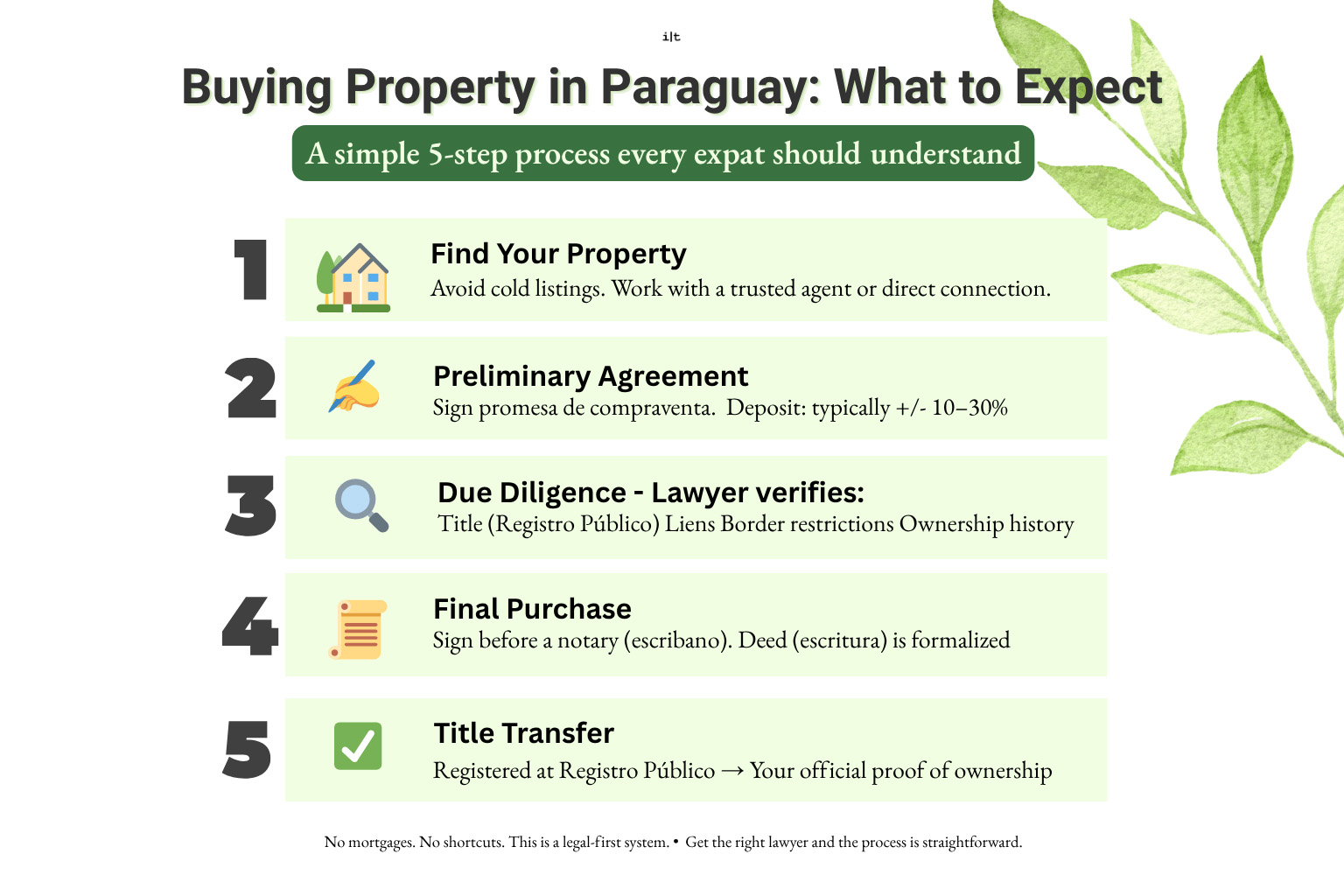
The buying process in Paraguay is straightforward—but only if you follow each step properly.
- Find your property — ideally with a recommended agent or direct connection, not a cold listing
- Sign a preliminary purchase agreement (promesa de compraventa) with a deposit (typically 10–30%)
- Due diligence — your lawyer confirms no boarder zone issue, verifies the title at the Registro Público, checks for liens, and reviews the seller’s ownership history
- Final purchase before a notary public (escribano), with the deed (escritura) registered
- Title transfer — registered at the Registro Público, which is your official proof of ownership
The whole process typically takes 4–8 +/- weeks for a clean transaction.
Building vs. buying existing: Some expats opt to buy land and build custom — this can deliver better value but adds complexity, timeline risk, and requires reliable local contractors.
It’s not for first-timers.
What Expats Say About Buying
The success stories are real: expats who bought in Asunción five to eight years ago have seen solid appreciation, enjoy dramatically lower housing costs than they would have renting the equivalent property, and some have built genuine rental income streams.
The regrets are equally real. The most common themes — and if you want the unfiltered version, the expat regrets in Paraguay guide gives honest realities about moving to Paraguay — include buying too soon without properly testing the market through renting first, overpaying because they didn’t understand local price norms, choosing poor locations based on aesthetics rather than practicality, and dealing with title complications that a lawyer could have caught in due diligence.
The Bottom Line: buyers who took their time, used good legal counsel, and rented first almost universally feel they made good decisions. Buyers who rushed, skipped due diligence, or listened to the wrong people much more often have regrets. It’s the same story you hear again and again in the renting vs buying in Paraguay conversations.
The right choice depends on your timeline, capital, and risk tolerance.
What Expats Say About Buying
The central question in any renting vs buying in Paraguay decision is this:
After factoring in upfront costs, ongoing expenses, opportunity cost of your capital, and potential property appreciation, when does owning start to make more financial sense than continuing to rent?
Instead of rigid formulas, think in terms of your personal timeline and goals. Paraguay’s market — with relatively low property taxes, solid rental demand in expat-friendly areas, and moderate appreciation potential — often favors a longer-term view for buyers.
General Break-Even Considerations:
- Renting typically involves lower upfront commitment and better short-term cash flow.
- Buying requires significant initial capital (property price + closing costs) but can build equity over time through appreciation and rental income potential if you decide to leave or travel.
In desirable locations like Asunción or San Bernardino, gross rental yields for well-chosen properties often fall in the 5–10% range, while annual appreciation in growing neighborhoods has historically averaged 3–6% (higher in emerging hot spots).
When appreciation, rental income, and very low ongoing ownership costs (especially property tax) are factored in, the true break-even point for many expats lands somewhere between 7–12 years, though this varies widely by location, property type, and market conditions.
Practical Timeline Framework:
| Your Expected Stay | Recommendation | Why |
| 1–3 years | Rent | Minimal commitment, maximum flexibility, avoids tying up capital |
| 3–7 years | Hybrid / Case-by-case | Possible in high-yield areas with strong appreciation potential, but requires careful due diligence and an exit strategy |
| 7+ years or retirement | Buying usually stronger | Equity buildup, lower long-term housing costs, lifestyle stability, and residency/investment benefits |
Factors That Often Tip the Scales Toward Buying:
- You plan to stay long-term or retire in Paraguay
- You want to use real estate as a path toward residency (e.g., via investment thresholds)
- You aim to generate rental income (long-term or short-term)
- You have available capital that would otherwise earn low returns elsewhere
- You’re interested in building or customizing a home at attractive construction costs
- You value the stability and control of ownership in a low-tax environment
Key Takeaway: For short-term testing of life in Paraguay, renting is almost always the smarter move. For those committed to staying longer, buying can offer strong financial and lifestyle rewards — especially when paired with the country’s favorable tax structure and growing demand from expats and digital nomads.
Pro Tip: Run your own numbers using current listings in your target neighborhoods, or consult a local lawyer and real estate agent familiar with expat transactions. The market evolves, so personalized analysis beats general rules of thumb.
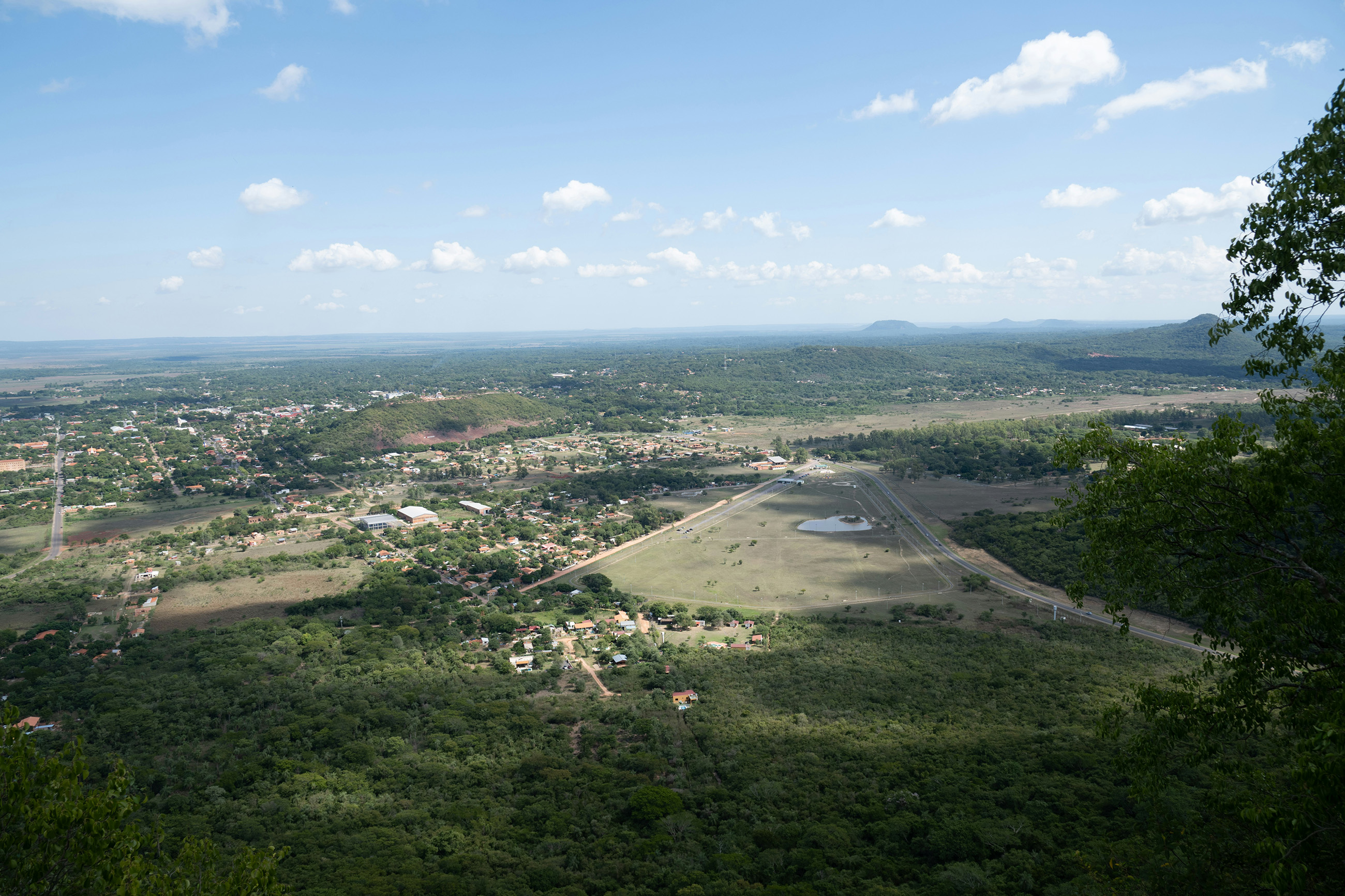
Paraguay offers space and opportunity—but it rewards long-term thinking.
Renting vs Buying in Paraguay: 2026 Market Trends
The renting vs buying in Paraguay landscape is shifting in 2026, favoring those focused on stability, long-term value, and alignment with broader expat or retirement goals—not quick wins.
Improved international credit standing has brought quiet confidence to the real estate sector.
This raises a key question: could Asunción follow other Latin American cities that saw steady appreciation after similar upgrades? For patient buyers, this suggests measured growth without extreme volatility.
Demand is also evolving. Regional migration is strengthening rental markets in expat-friendly areas, creating optionality for owners who may want future income—not just a place to live.
A major shift is the formalization of real estate as a pathway to residency. Property investment can now support permanent status, turning a home purchase into both a lifestyle and legal strategy.
At the same time, rules are tightening. Border zone restrictions (within 50km) are being enforced more consistently, reinforcing the need for due diligence and careful location selection.
Infrastructure improvements are making daily life easier in key areas, though gaps remain outside major centers—forcing a trade-off between convenience and affordability.
Takeaway: Paraguay’s market rewards alignment. Rent first to test, or buy with a long-term view. The upside is real—but only if your decision matches your timeline, risk tolerance, and lifestyle priorities.
Renting vs Buying in Paraguay: Final Recommendation Based on Your Situation
After breaking down the numbers, the renting vs buying in Paraguay decision comes down to timing, clarity, and risk tolerance.
Rent first if:
- You’ve been in Paraguay less than 12 months
- You’re still figuring out where to live
- You don’t have capital ready for a cash purchase
- Your plans are uncertain beyond 3–5 years
- You’re wary of illiquid investments
After breaking down the numbers, the renting vs buying in Paraguay decision comes down to timing, clarity, and risk tolerance.
Buy if:
- You know where you want to live
- You can purchase in cash without stretching
- You plan to stay 7+ years or long-term
- You want residency and/or rental income
- You’ve done proper due diligence with a local lawyer
The approach most expats take: Rent for 6–18 months, learn the market, build contacts, then buy with real knowledge. It’s not exciting—but it avoids costly mistakes.
Whatever you choose, don’t skip legal due diligence. Paraguay rewards prepared buyers and punishes rushed decisions.
Ready to Make Your Move?
Paraguay might be the right choice—but it’s not the only one.
Before you commit to renting or buying, get a clear view of every viable residency option across the region.
Download the FREE Latin American Interactive Map
✔No Spam
✔Instant Access
✔ Free Download
FAQ: Renting vs Buying in Paraguay
Is it better to rent or buy in Paraguay?
It depends on your timeline and experience in the country. Renting is usually the smarter move short-term, giving you flexibility while you learn the market. Buying makes more sense once you understand local pricing, neighborhoods, and plan to stay long-term.
Can foreigners buy property in Paraguay?
Yes—foreigners can legally buy and own property in Paraguay with the same rights as locals. There are minimal restrictions, but due diligence is critical to avoid title or zoning issues.
How much money do you need to buy property in Paraguay?
Entry-level properties can start as low as $30,000–$50,000 USD, while modern homes or prime locations can range from $80,000 to $250,000+. You should also budget an additional 5–10% for legal fees, taxes, and transaction costs.
Is Paraguay real estate a good investment?
Paraguay can offer strong value due to low property prices, low taxes, and growing interest from expats. However, it’s still an emerging market—so success depends on location, long-term outlook, and understanding local dynamics rather than expecting quick returns.