
15 min read
Buying property in Paraguay opens the door to a lifestyle of real freedom—low costs, minimal red tape, and plenty of room to breathe. With abundant unspoiled land perfect for self-sufficient living, safe neighborhoods, and that rare sense of privacy and tranquility that’s becoming harder to find in today’s world, it’s one of the few places left where you can build the life you actually want without constant interference.
……………………………..
If you’re researching buying property in Paraguay as a foreigner in 2026, you’re part of a rapidly growing wave of expats, retirees, digital nomads, and investors discovering one of South America’s best-kept secrets. Paraguay stands out for its exceptionally open approach to foreign ownership. In most cases, you can buy land, houses, apartments, or raw acreage with nothing more than a passport—no residency required upfront. Minor border-zone limitations for Brazilians and Argentines exist (typically ~31 mi (50 km) from borders, mainly on rural land) but rarely affect most foreign buyers. Live and Invest Overseas on Paraguay investment rules; Jarnias Cyril on foreign property regulations in Paraguay
This openness, combined with exceptionally low property costs, abundant unspoiled land, and a stable yet under-the-radar economy, has made buying property in Paraguay increasingly attractive. Whether you’re seeking a primary residence, a strategic base in Latin America, or long-term land security, Paraguay offers a level of accessibility that is becoming rare globally. For the complete picture on residency benefits that pair perfectly with property ownership, check our detailed Paraguay Permanent Residency Guide.
Table of Contents
Why More Foreigners Are Buying Property in Paraguay in 2026
In 2026, global uncertainty—from rising taxes and regulations in Western countries to regional economic instability—is driving more foreigners to seek freedom, privacy, and low-cost living in Paraguay. The country offers vast rural land for homesteads, productive farmland for $50–$10,000 per hectare, and affordable lakeside homes or modern apartments in Asunción for those seeking urban infrastructure without inflated prices.
Property remains far cheaper than in Argentina, Brazil, Uruguay, or much of Europe and North America, with closing costs around 3–5% and annual taxes just 0.5–1%. This guide walks serious buyers through the legal process, realistic costs, due diligence, risks, and the best locations—helping you move forward informed, prepared, and confident. Expatra on living in Paraguay
Can Foreigners Buy Property in Paraguay? (Laws & Restrictions 2026)
Yes—foreigners can legally buy property in Paraguay, and the rules remain among the most permissive in Latin America. In 2026, Paraguay continues to allow full private ownership of land and real estate by non-citizens, with no requirement to partner with a local, form a company, or obtain residency before purchasing. For buyers used to layered restrictions, hidden approvals, or nationality-based limits elsewhere, Paraguay’s framework is refreshingly direct. PYG Real Estate FAQ; Live and Invest Overseas on investing in Paraguay
That said, “open” doesn’t mean “unregulated.” Understanding the few boundaries that do exist—and how they’re applied in practice—is essential before buying property in Paraguay.
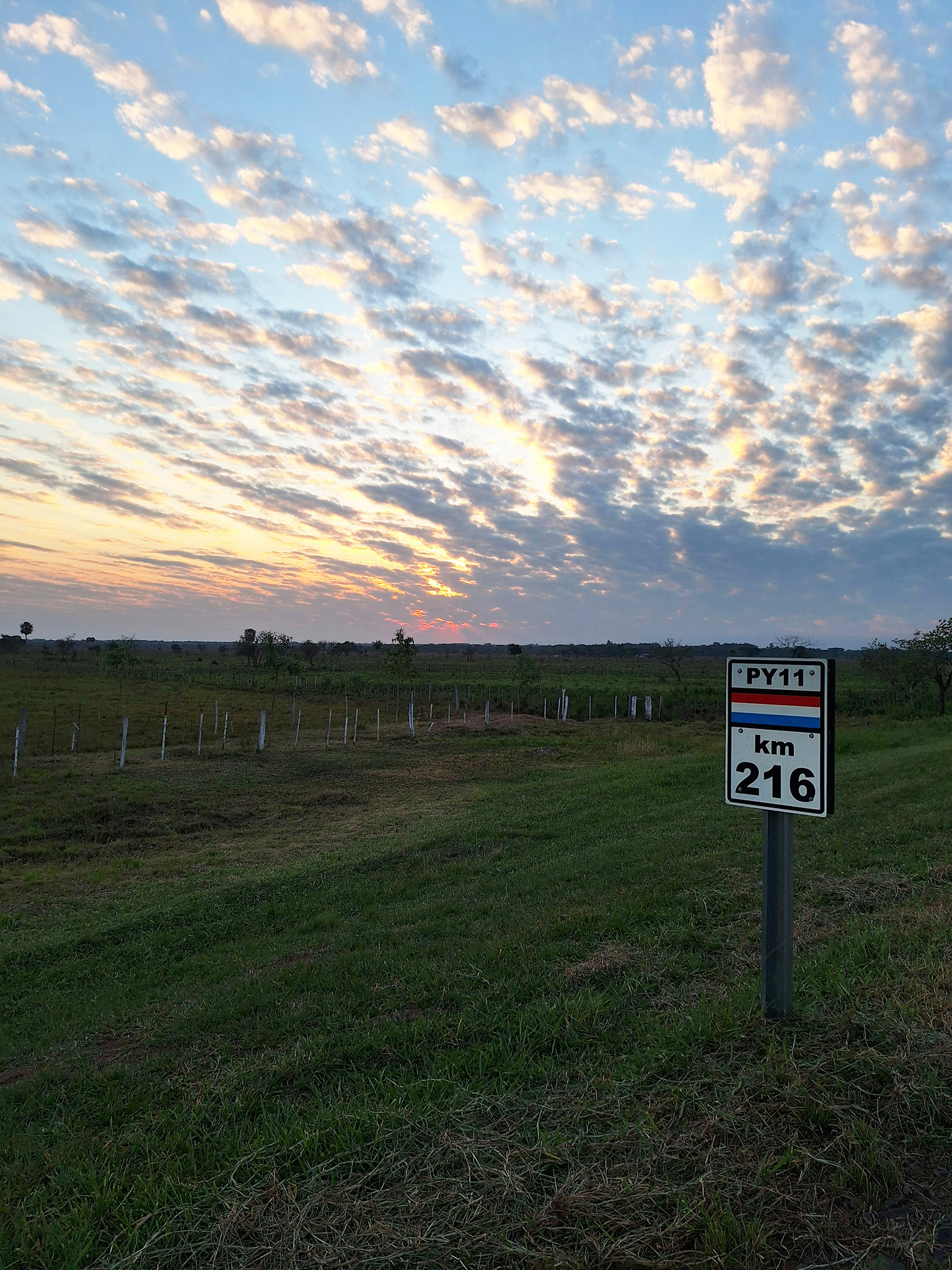
Navigate Paraguay’s rural roads with ease: PY11 sign marking access to quiet, low-cost land perfect for expats buying property in Paraguay.
Can Foreigners Buy Property in Paraguay Without Restrictions?
For most foreigners, restrictions are minimal.
Foreign buyers can purchase:
• Urban property (houses, apartments, commercial units)
• Rural land and farmland
• Vacant lots and large acreages
• Properties held under clear private title
The primary legal limitation involves border security zones. Under Paraguayan law, foreign nationals from neighboring countries—specifically Brazil and Argentina—may face restrictions on purchasing land within a defined distance of national borders. In practice, this rarely affects buyers targeting cities, towns, lakeside areas, or interior farmland. Non-border nationals are generally unaffected.
There are no caps on:
- Property size
- Number of properties owned
- Property value
- Resale or inheritance rights
Once purchased, foreigners hold the same ownership rights as Paraguayan citizens, including the right to sell, lease, transfer, or pass property to heirs. Jarnias Cyril on foreign property regulations in Paraguay
Do You Need Residency to Buy Real Estate in Paraguay?
No. Residency is not required to buy property in Paraguay.
Foreigners can complete a real estate purchase using only:
- A valid passport
- A local tax identification number (RUC), obtained through the notary process
- A registered public notary to formalize the deed
This distinction matters. In many countries, residency is a prerequisite to ownership or required shortly after purchase. Paraguay separates the two entirely. You can buy first, then decide later whether residency makes sense for your long-term plans.
That said, many buyers eventually pursue permanent residency because property ownership creates a natural economic tie and simplifies long-term stays, banking, utilities, and taxation. But legally speaking, buying property in Paraguay does not obligate you to become a resident. Harper Greene on citizenship through investment in Paraguay 2026
Key Laws and Recent Changes (2026)
As of 2026, Paraguay has made no major legal changes restricting foreign property ownership. This stability is part of what continues to attract buyers.
Key legal principles to understand:
- Property transfers must be executed through a licensed Paraguayan notary
- Title registration with the public registry is mandatory for ownership to be legally recognized
- Due diligence focuses on clear title history, unpaid taxes, and boundary accuracy
- Property rights are protected under Paraguay’s civil code, not discretionary administrative approval
While there has been increased attention on land registry modernization and anti-fraud procedures in recent years, these changes are administrative—not restrictive. They are intended to improve title clarity and reduce historical issues tied to improperly registered rural land, not to limit foreign participation.
The bottom line: In 2026, Paraguay remains one of the easiest countries in the region for foreigners buying property, provided the transaction is handled correctly and proper due diligence is performed.
Keys to your new life: House model on a signed contract, representing straightforward ownership when buying property in Paraguay.
Step-by-Step Guide: How to Buy Property in Paraguay as a Foreigner
Buying property in Paraguay as a foreigner is legally straightforward—but execution matters. Most problems arise not from the law itself, but from poor due diligence, informal shortcuts, or relying on the wrong people. Below is the exact step-by-step process foreigners should follow in 2026 to buy property safely, legally, and with full ownership rights in Paraguay.
Step 1: Find the Right Property in Paraguay
The first step in buying property in Paraguay is understanding where listings actually exist—and where they don’t.
Unlike North America or Europe, Paraguay does not have a centralized MLS system. Property listings are fragmented, pricing is inconsistent, and many legitimate deals never appear online.
Common ways foreigners find property:
- Local real estate agents (vary widely in professionalism—vet carefully)
- Facebook groups and expat forums
- Word-of-mouth through expat and local networks
- On-the-ground scouting (especially for rural land)
- Regional listing platforms with Paraguay coverage
Expect pricing to be negotiable. Asking prices—particularly for land—are often inflated, with significant room for reduction once serious interest is shown.
If you’re buying rural land, always visit the property in person or send a trusted local representative. Photos and GPS pins alone are not sufficient in Paraguay. Sweet Home Paraguay buying guide
Step 2: Perform Thorough Due Diligence (Non-Negotiable)
Due diligence is the most critical step when buying property in Paraguay—and the one most often rushed.
Before any money changes hands, your notary must verify:
- Clear title history (no breaks or unresolved transfers)
- Proper registration in the public property registry
- No outstanding property taxes or liens
- Accurate land boundaries and surface area
- Seller’s legal authority to sell
This is especially important with older rural properties, inherited land, or properties subdivided informally. Paraguay has strong property rights—but only if the paperwork is clean.
Never rely solely on the seller’s documents. Independent verification through a licensed notary is essential. PYG Real Estate FAQ
Step 3: Sign the Purchase Agreement (Promesa de Compra-Venta)
Once due diligence is complete, both parties typically sign a promesa de compra-venta (purchase promise agreement).
This document:
- Locks in the agreed purchase price
- Sets payment terms and timelines
- Defines conditions for final transfer
- Protects both buyer and seller legally
At this stage, a deposit is often paid, though the amount varies by transaction. Funds should only be released once the agreement is notarized and all conditions are clearly stated.
While some transactions skip this step and move directly to the deed, using a purchase agreement is strongly advised for foreigners—especially for higher-value or rural properties.
Step 4: Notary Process and Property Registration
All real estate transfers in Paraguay must be completed through a licensed public notary. The notary is not optional; they are the legal authority that validates and registers ownership.
During this stage:
- The public deed (escritura pública) is drafted
- Buyer and seller identities are verified
- Taxes and fees are calculated
- The deed is submitted to the public registry
The notary also facilitates the creation of a local tax number (RUC) for the buyer if needed. Registration timelines vary, but ownership rights are legally established once the deed is properly filed.
Choosing an experienced, independent notary—rather than one suggested by the seller—is one of the most important decisions you’ll make when buying property in Paraguay.
Step 5: Transfer Ownership and Pay Applicable Taxes
Final ownership transfer occurs once:
- The deed is signed
- Registration is completed
- Applicable taxes and fees are paid
Typical costs include:
- Transfer tax
- Notary fees
- Registry fees
Closing expenses typically amount to about 3–5% of the purchase price, which is comparatively low by regional standards. Ongoing property taxes are also modest and generally remain below 1% per year.
Not sure if Paraguay is your best option? Use our Latin America Residency Map to quickly discover which countries you qualify for.
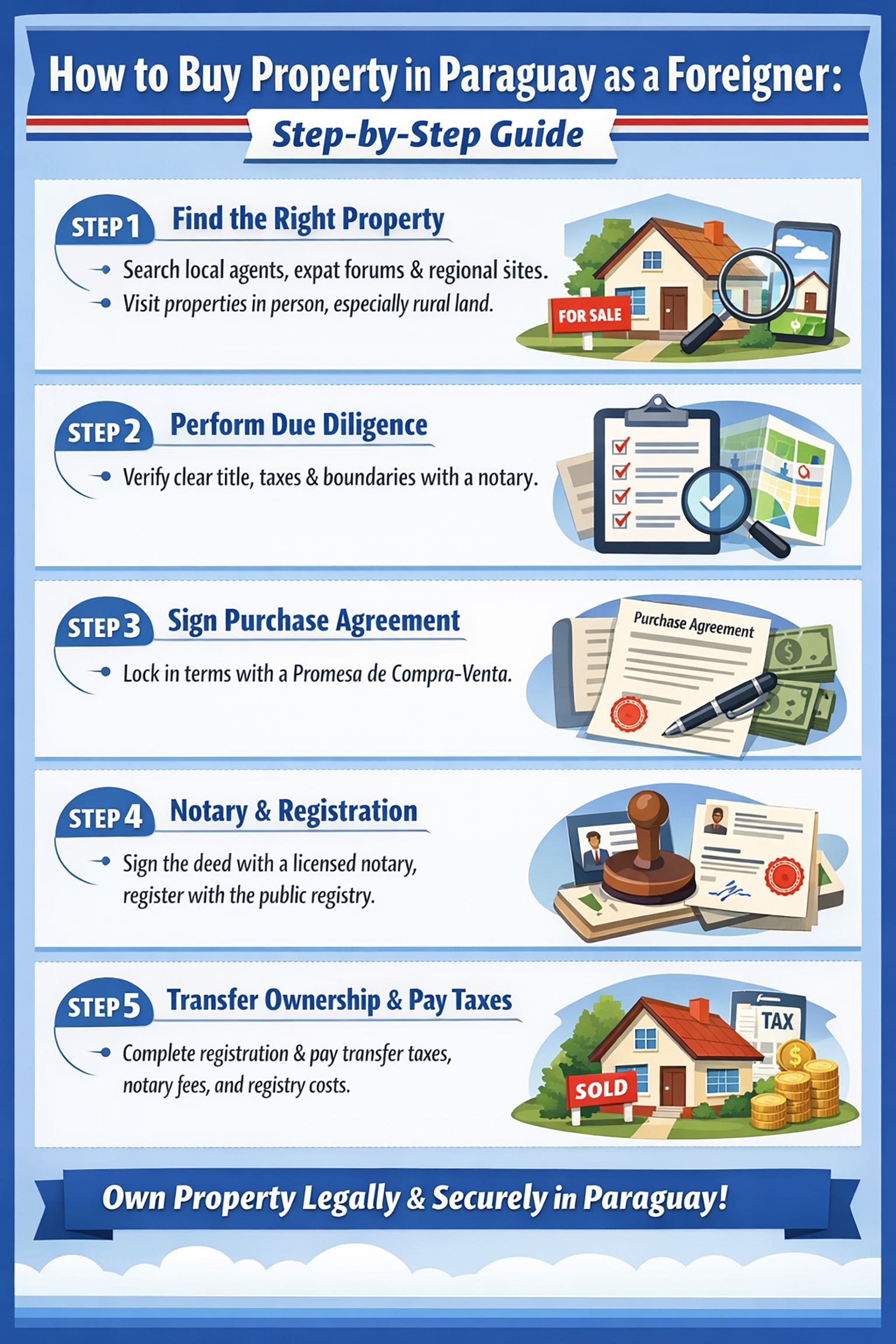
Your roadmap to ownership: Clear 5-step infographic for foreigners buying property in Paraguay in 2026 – from search to full title.
Costs and Fees When Buying Property in Paraguay
Along with a low cost of living in Paraguay, the biggest advantage of buying property is how inexpensive the transaction costs remain—especially when compared to North America, Europe, or even neighboring South American countries. In 2026, total closing costs are typically 3–5% of the purchase price, with no surprise luxury taxes or punitive foreign-buyer surcharges.
That said, understanding exactly where the money goes is essential so you can budget accurately and avoid being overcharged.
Notary Fees When Buying Property in Paraguay (0.75%–2%)
Notary fees are the single largest closing expense when buying property in Paraguay. All real estate transactions must be executed through a licensed public notary, who prepares the public deed (escritura pública), verifies title history, and submits the transaction for registration.
In most cases, notary fees range between 0.75% and 2% of the declared property value, depending on:
- Property price
- Complexity of the transaction
- Urban vs rural location
- Number of prior title transfers
Fees are typically calculated on the officially declared sale value, not necessarily the negotiated price—an important distinction to clarify upfront. PYG Real Estate FAQ; Sweet Home Paraguay
Transfer Tax, Stamp Duty, and Registration Fees
In addition to notary fees, buyers should budget for mandatory government charges tied to ownership transfer.
These usually include:
- Property transfer tax, paid to the tax authority
- Stamp duty, applied to the public deed
- Public registry fees for recording ownership
Combined, these costs are relatively modest and often amount to 1–2% of the purchase price. Compared to countries that impose layered municipal, provincial, and federal taxes, Paraguay’s system remains refreshingly simple.
All taxes and fees must be paid before the property can be fully registered in the buyer’s name.

Sealing the deal: Handshake over scattered dollars, typical for cash transactions when buying property in Paraguay.
Lawyer, Agent Fees, and Other Closing Costs
While not legally required, many foreigners choose to hire a lawyer or real estate professional to oversee the transaction—especially when buying rural land or higher-value property.
Typical optional costs include:
- Legal review or representation
- Buyer-side real estate agent fees
- Translation services (if documents are in Spanish)
- Land surveys or boundary verification
The seller usually pays agent commissions, but this can vary. Always confirm who is responsible for which fees before signing any agreement. When combined, these additional costs are usually modest but should still be factored into your total budget.
Annual Property Taxes in Paraguay (Exceptionally Low)
Annual property taxes are one of the most overlooked benefits of buying property in Paraguay. In most municipalities, annual property tax rates range between 0.5% and 1% of the assessed value—often far less in practice due to conservative valuation methods. Rural land, in particular, is taxed at extremely low levels, sometimes amounting to little more than a symbolic fee.
There are no recurring wealth taxes, no foreign-owner surcharges, and no annual reporting burden for holding property. For long-term holders, homesteaders, and investors alike, this dramatically reduces the true cost of ownership.
Closing Costs Breakdown
| Fee Type | Typical Percentage | Notes / 2026 Estimate |
| Notary Fees | 0.75% – 2% | Largest expense; based on declared value + VAT |
| Transfer Tax | ~1% | Paid to tax authority |
| Stamp Duty & Registry | 0.5% – 1% | For deed recording |
| Total Closing Costs | 3% – 5% | Significantly lower than neighboring countries |
| Annual Property Tax | 0.5% – 1% | Often symbolic for rural land |
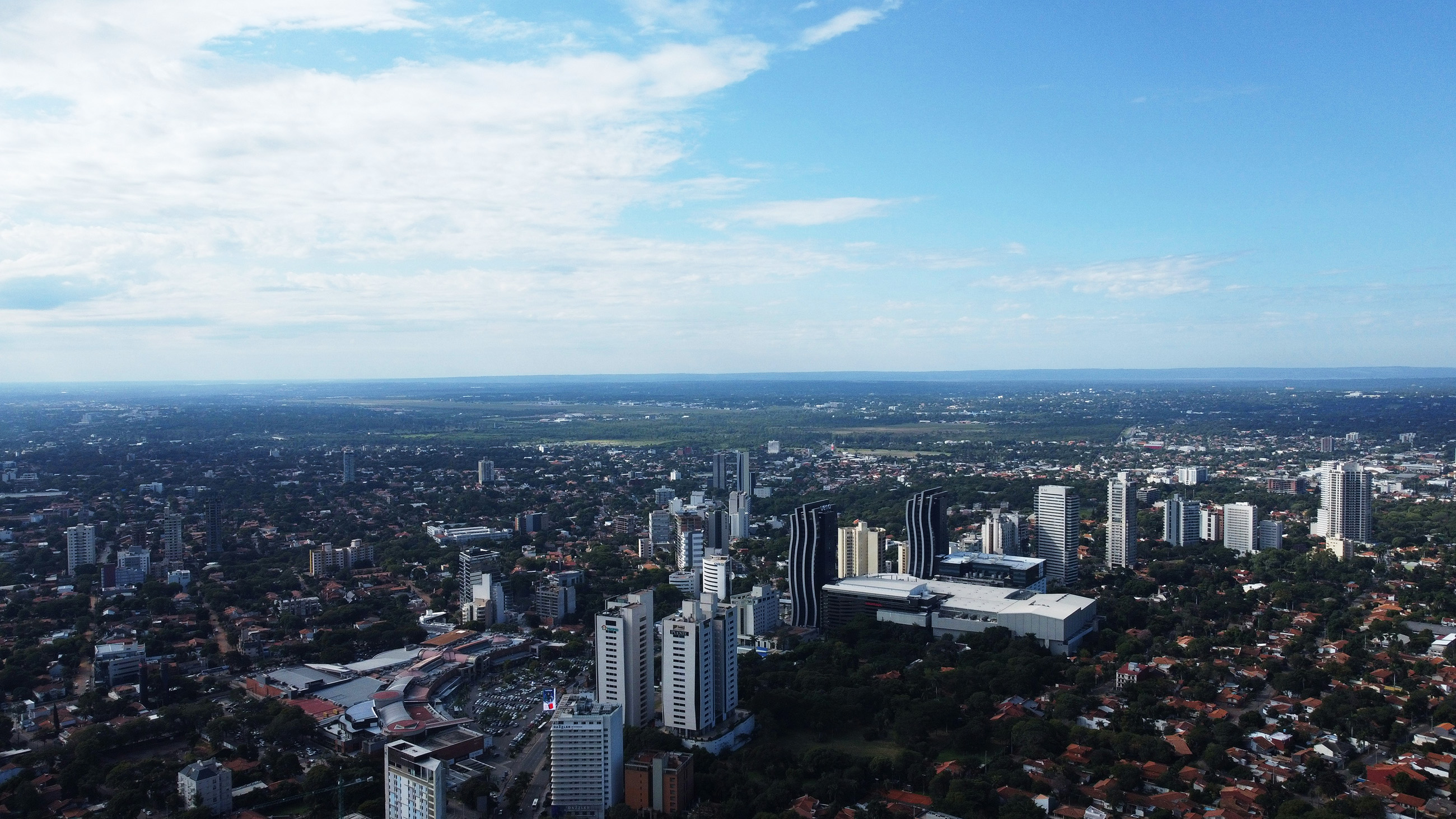
Asunción at a glance: Modern skyline and river views, offering the best infrastructure when buying property in Paraguay.
Where Expats and Foreigners Are Buying Property in Paraguay
Choosing the right location is just as important as understanding the legal process when buying property in Paraguay. In 2026, foreign buyers generally focus on either convenience and services or affordability and space.
Below are the locations that consistently attract expats—and why. For a more detailed overview of Paraguay’s top destinations, see our Best Places to Live in Paraguay.
Asunción remains the top choice for foreigners seeking reliable infrastructure, healthcare, international schools, and rental opportunities. Modern apartments, gated communities, and established neighborhoods make it ideal for a “soft landing” in Paraguay.
Property prices are the highest in the country, though still lower than many Latin American capitals. See our guide for a full breakdown of Living in Asunción Neighborhood Guide.
Top Locations Outside Asunción (2026)
Encarnación offers waterfront living along the Paraná River, walkable areas, and modern apartments at lower prices than Asunción. It is especially popular with retirees and lifestyle-focused expats seeking a relaxed, riverside environment.
Villarrica appeals to buyers seeking extremely low property prices and long-term rents around USD $200/month, combined with a compact city layout and easy access to nature. Its slower pace and higher standard of living make it ideal for budget-conscious expats.
These Cordillera towns feature rolling hills, cooler evenings, and larger plots, attracting foreigners who value tranquility and green surroundings while still enjoying a small but growing expat community.
Areguá is known for its historic charm, colonial architecture, proximity to Lake Ypacaraí, and strawberry fields (known as the “City of Strawberries”). It draws creatives, families, and long-term expats looking for character, lifestyle, and easy access to Asunción.
Choosing the Right Location: No single “best” location fits every buyer. Infrastructure seekers gravitate toward Asunción, lifestyle buyers often choose Encarnación, budget-focused expats may prefer Villarrica or Cordillera towns, and creatives/families often select Areguá. Align your goals with the location for the best long-term experience. For a complete guide to Paraguay’s top towns and cities for expats, check out our 10 Best Places to Live in Paraguay: The Ultimate Guide.
What Can Go Wrong When Buying Property in Paraguay — and How to Stay Safe
The process of buying property in Paraguay for foreigners is one of the easiest in the region—but that simplicity can create a false sense of security. Most serious problems don’t come from the law itself; they come from poor due diligence, informal deals, or assuming the system works like it does “back home.”
If you understand where the risks are—and how to neutralize them—Paraguay is a very safe market to buy in.
Most Common Property Scams Targeting Foreigners
The vast majority of Paraguayan property transactions are legitimate, but foreigners are sometimes targeted because they’re unfamiliar with local practices and paperwork.
Common risks include:
- Unclear or defective titles: Properties passed through generations without proper registration or subdivided informally can appear legitimate but lack clean title history.
- Selling land without legal authority: A family member, caretaker, or intermediary claims ownership but does not have the legal right to sell.
- Boundary and size discrepancies: The land on paper does not match what exists on the ground, especially with rural properties.
- Pressure tactics and “today only” pricing: Artificial urgency is used to push buyers into skipping due diligence.
- Informal agreements & deposits without notarization: Handshake deals or private contracts not executed through a public notary are not legally enforceable.
None of these are unique to Paraguay—but they are more likely when buyers try to shortcut the formal process.

Step inside comfort: A spacious, stylish condo ready for expat life.
Essential Due Diligence Checklist When Buying Property in Paraguay
Due diligence is not optional when buying property in Paraguay—it is the difference between secure ownership and long-term legal problems.
Before committing to any purchase, ensure the following are verified by an independent professional:
- Clear, continuous title registered in the public registry
- No outstanding property taxes, liens, or encumbrances
- Seller’s legal authority to sell the property
- Accurate land boundaries and surface area
- Proper access rights and easements
- Zoning and land-use compatibility with your intended purpose
For rural land, additional checks should include:
- Survey validation
- Road access legality
- Utility availability or feasibility
Never rely solely on documents provided by the seller. Independent verification is the foundation of safe property ownership in Paraguay.
Recommended Professionals for Buying Property in Paraguay
Trying to save money by skipping professionals is one of the most expensive mistakes foreigners make when buying property in Paraguay.
At minimum, your transaction should involve:
- Public notary – Mandatory for drafting and registering the public deed (escritura pública); they verify legal ownership and execute the transfer.
- Independent lawyer – Optional, but strongly recommended for reviewing documents, contracts, and protecting your interests.
- Licensed surveyor – Essential for rural land to confirm boundaries, size, and access rights.
Paraguay’s real estate agent profession remains largely unregulated, with no mandatory national licensing or government registration—meaning anyone can legally operate as an agent. Quality varies widely, from experienced, bilingual professionals (sometimes affiliated with groups like the Asociación Paraguaya de Agentes Inmobiliarios) to informal operators with minimal standards. For this reason, foreigners should vet agents carefully and always pair any agent with an independent notary and lawyer to protect their interests when buying property in Paraguay.
Choose professionals who are independent of the seller, experienced with foreign buyers, and willing to explain the process clearly. If a seller insists on using “their” notary, lawyer, or agent, or discourages outside review, treat it as a major red flag. PYG Real Estate FAQ
Bottom Line: Is it safe buying property in Paraguay?—If You Do It Right
Buying property in Paraguay is not inherently risky. The system works when you follow it. Problems arise when buyers rush, rely on informal assurances, or attempt to operate outside the notarial and registry framework.
Do the checks. Use professionals. Ignore pressure. If a deal can’t withstand scrutiny, it’s not a deal worth doing.
Conclusion: Buying Property in Paraguay in 2026
Paraguay remains one of the most attractive destinations for foreigners buying property in Latin America.
Key advantages include:
- Minimal restrictions: Foreigners can buy land, houses, apartments, or rural property with just a passport—no residency required upfront.
- Low costs and taxes: Closing costs are typically 3–5%, with annual property taxes under 1%, making long-term ownership extremely affordable.
- Variety of locations: From Asunción’s modern infrastructure to riverfront Encarnación, scenic Cordillera towns, and creative hubs like Areguá, there’s a place for every lifestyle.
- Lifestyle and investment potential: Rural and small-town properties offer privacy, space, and long-term value; urban apartments and houses provide convenience, connectivity, and rental opportunities.
- Straightforward legal process: Clear property rights, mandatory notary oversight, and transparent registration protect buyers when proper due diligence is followed.
For serious buyers, property ownership can also tie directly into Paraguay permanent residency, unlocking territorial tax benefits and a low-cost, high-quality lifestyle. Explore our complete Paraguay Permanent Residency Guide to understand the requirements and process for obtaining long-term residency.