
19 min read
Living in Argentina offers a unique blend of experiences—from world-class cities full of culture and energy to charming scenic towns and breathtaking natural landscapes.
……………………………..
Argentina is quickly becoming a top destination for expats seeking adventure, culture, and an affordable lifestyle.
With world-class cities, breathtaking natural landscapes, and warm, welcoming communities, the country offers something for everyone—from digital nomads and remote workers to retirees and long-term travelers.
And in 2025, Argentina is gaining even more attention.
Recent efforts by the government to stabilize the economy—such as easing currency controls and securing a $20 billion IMF agreement—are creating new optimism among investors and expats alike.
While inflation is still a concern, it has begun to slow, and cost of living remains significantly lower than in much of North America and Europe, especially outside the capital.
Whether you’re dreaming of a fast-paced cosmopolitan lifestyle or a quieter, rural escape, there’s a place for you in Argentina.
In this guide, we’ll explore 12 of the best cities and towns for expats—each offering its own unique mix of lifestyle, affordability, safety, and opportunities.
Before diving into Argentina’s regions, check the Latin America Residency Map to see if you qualify for residency — it’s a game-changer for planning your move.
Table of Contents
NORTHERN ARGENTINA — Diverse Cities to Live in Argentina
Northern Argentina is where history, culture, and modern city life converge.
If you’re considering living in Argentina, this region offers a variety of options, from cosmopolitan hubs to colonial towns, each with its own unique charm.
Here’s a detailed look at the top northern destinations.
1. Buenos Aires: Big City Life, Global Energy
👤Who It’s Best For:
Buenos Aires is best suited for remote professionals, digital nomads, and expats who thrive in a vibrant, international city.
It also appeals to culture lovers, foodies, and those who want strong connectivity for both travel and business.
Families who want top schools and amenities will find good options here, though at higher costs.
🏙️Overview:
The capital and cultural heart of Argentina, Buenos Aires offers European architecture, tango in the streets, and a lifestyle that blends tradition with cosmopolitan energy.
It’s a massive metropolis with 15 million people in the greater area, so expect the buzz of big-city living — late-night cafés, thriving arts, diverse neighborhoods, and global connections.
🌤️Climate & Lifestyle:
Buenos Aires has four distinct seasons, with hot summers, mild winters, and a humid subtropical feel.
Outdoor life revolves around plazas, markets, and weekend strolls through neighborhoods like Palermo, San Telmo, and Recoleta.
The café culture and nightlife are legendary, with options from hole-in-the-wall milongas to sleek rooftop bars.
🏥Amenities & Infrastructure:
Buenos Aires has the most advanced infrastructure in Argentina.
Healthcare is excellent and affordable, with both public and private hospitals accessible.
International schools, co-working hubs, and fast internet make it highly livable for expats.
Transport includes buses, the Subte (subway), and easy flights to regional and international destinations.
💰Cost of Living:
Buenos Aires is one of the pricier cities in Argentina but still cheaper than most Western capitals.
Rent for a one-bedroom apartment ranges from $350–$700 USD, depending on the neighborhood.
A single person can expect monthly expenses between $1,200–$1,800 USD, while families spend more depending on schooling and housing.
Daily expenses (groceries, dining, services) remain relatively low by North American or European standards.
One-bedroom $350–$700 | Single monthly $1,200–$1,800 | Family-friendly but pricier
⭐Why It’s a Good Place to Live in Argentina: If you want global connectivity, culture on tap, and the energy of a world-class city at Latin American prices, Buenos Aires stands out.
It’s the most international option in Argentina, making it easier to transition while still offering the flavor and charm of South America.
Buenos Aires often ranks among the top 5 best cities to live in South America thanks to its energy, nightlife, and cultural diversity.
2. La Plata: A University Town and Affordable Place to Live in Argentina
👤Who It’s Best For:
La Plata is ideal for families or students seeking a relaxed city near Buenos Aires without living inside its chaos.
It’s also a great fit for students, academics, or budget-conscious professionals who prefer a local, youthful city.
🏙️Overview:
La Plata, the capital of Buenos Aires Province, is often called a “planned city” thanks to its organized grid layout and diagonals.
Known for its major university, it’s vibrant, youthful, and deeply tied to academia.
Compared to Buenos Aires, it’s smaller, more relaxed, and more affordable while still offering a rich cultural and social life.
🌤️Climate & Lifestyle:
With a humid subtropical climate, La Plata shares Buenos Aires’ four seasons but in a less intense environment.
Green spaces, plazas, and a slower rhythm make it attractive for those who want a livable city without the overwhelming sprawl of the capital.
Social life often revolves around university events, local markets, and cultural centers.
Humid subtropical with four mild seasons | Green spaces and relaxed pace make it ideal for families and students seeking livable city life without the capital’s chaos.
🏥Amenities & Infrastructure:
La Plata offers solid healthcare and schooling options, though not as extensive as Buenos Aires. Internet is reliable, and the city is well-connected by road and rail to the capital (about an hour away).
It has its own cultural scene, with theaters, museums, and a surprising number of cafés and bookstores.
💰Cost of Living:
La Plata is 25–35% cheaper than Buenos Aires. Rent for a one-bedroom apartment runs around $250–$450 USD, and monthly living expenses for a single person can be managed on $800–$1,200 USD.
Families find it more affordable while still maintaining access to big-city amenities nearby
⭐Why It’s a Good Place to Live in Argentina:
La Plata offers the best of both worlds: close access to the opportunities of Buenos Aires while providing a calmer, more affordable living environment.
For expats seeking community, culture, and education without the capital’s intensity, La Plata delivers.
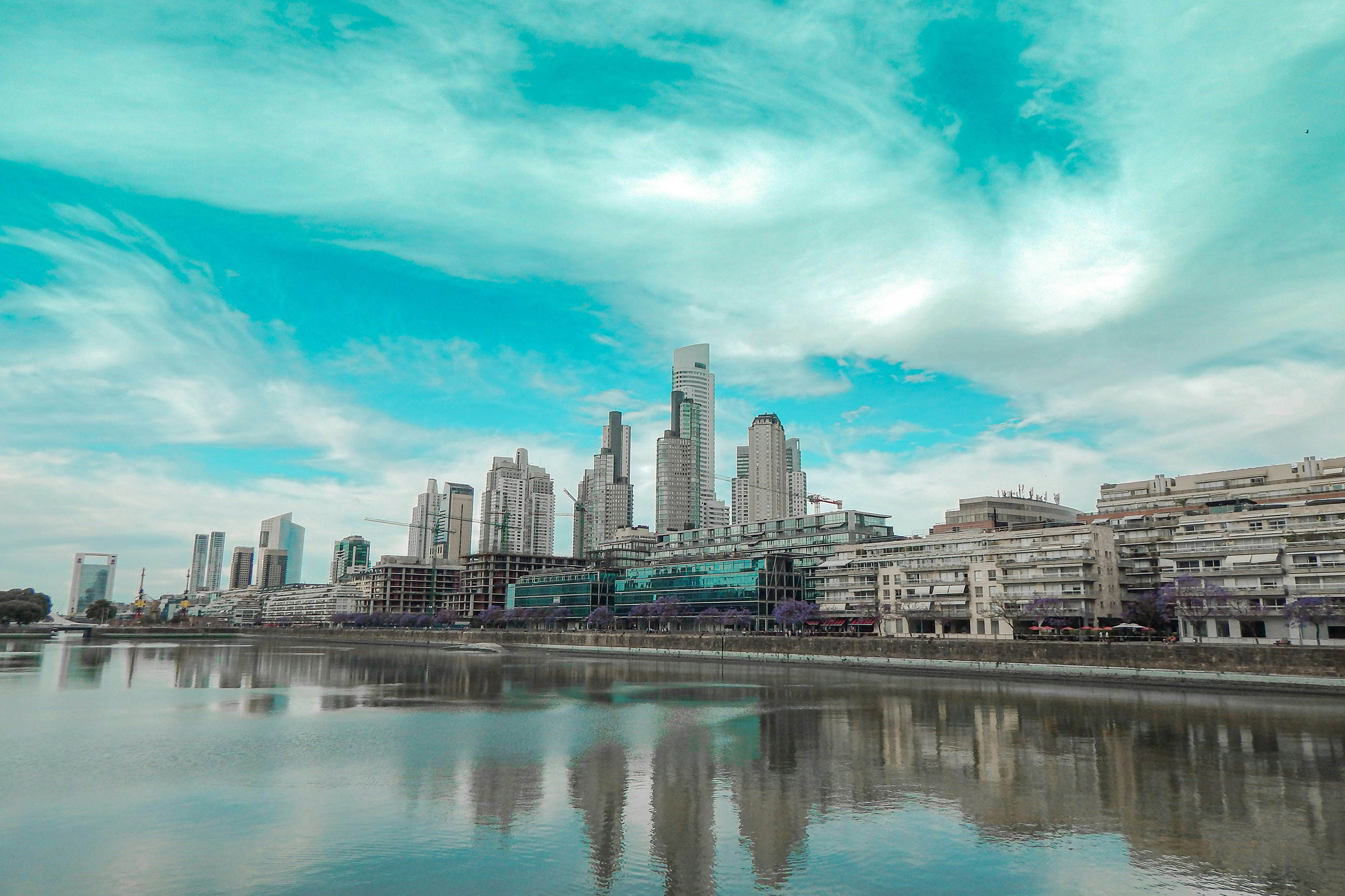
You can enjoy urban living by the waterfront in Buenos Aires, a perfect place to live in Argentina.
3. Rosario: Riverfront Lifestyle and Urban Living in Argentina
👤Who It’s Best For:
Rosario is ideal for remote professionals and families who want a strong cultural scene, decent walkability, and an affordable cost of living while avoiding the intensity of Buenos Aires.
It’s also attractive for younger expats who value nightlife, music, and university-town vibes.
🏙️Overview:
Argentina’s third-largest city, Rosario sits along the Paraná River and blends big-city amenities with a more relaxed pace than Buenos Aires.
It’s known for its leafy boulevards, art galleries, and as the birthplace of both Lionel Messi and Che Guevara — two figures that tell you something about its proud, independent spirit.
Rosario has a strong local identity and feels less international than Buenos Aires, which is both a strength and a challenge for newcomers.
Hot summers, mild winters | Riverfront strolls, lively cafés, and cultural events make it perfect for young professionals and families seeking a vibrant yet manageable city.
🌤️Climate & Lifestyle:
The city has hot summers and mild winters, with river breezes that help ease the heat.
Outdoor life centers around the Paraná’s riverfront, with sandy beaches and green spaces for walking, cycling, and social gatherings. Rosario also boasts a thriving music scene, theater culture, and lively cafés that spill into the streets.
🏥Amenities & Infrastructure:
As a university city, Rosario offers good educational options, reliable internet, and a strong healthcare network.
Public transport includes buses, though many locals rely on bikes or walking within central neighborhoods.
It’s not as international as Buenos Aires, so finding imported goods can be hit-or-miss.
💰Cost of Living:
Rosario tends to be 20–30% cheaper than Buenos Aires.
Rent for a modern one-bedroom apartment ranges between $250–$450 USD per month, and a comfortable lifestyle for a single person might run $800–$1,200 USD monthly, depending on housing choice.
Families often find Rosario more affordable while still offering a full range of urban conveniences.
⭐Why It’s a Good Place to Live in Argentina:
Rosario offers a balanced lifestyle: large enough to have cultural energy and opportunities, yet small enough to avoid the chaos of the capital.
For those seeking authenticity, affordability, and community without giving up city perks, Rosario makes a strong case.
4. Salta: Colonial Charm and Mountain Living in Northern Argentina
👤Who It’s Best For:
Salta appeals to retirees or cultural explorers who value slower-paced life and access to the Andes. It’s also great for families who value outdoor living and a safe, small-city environment.
🏙️Overview:
Known as Salta la Linda (“Salta the Beautiful”), this city sits in Argentina’s northwest and serves as a gateway to the Andes.
With its preserved colonial architecture, vibrant plazas, and lively folk traditions, Salta feels worlds apart from Buenos Aires.
Life here is slower, and community ties run deep.
🌤️Climate & Lifestyle:
Salta enjoys a mild climate with warm summers and cool winters.
Unlike the humid regions of Argentina, the air here is drier, making it pleasant year-round.
Outdoor enthusiasts will love easy access to mountain trekking, wineries in Cafayate, and colorful desert landscapes.
Some expats compare Salta’s Andean culture and affordability with living in Ecuador, which also offers a mix of mountain towns and low cost of living.
🏥Amenities & Infrastructure:
While not as developed as major cities, Salta offers quality healthcare, schools, and modern conveniences.
Internet speeds are improving but can lag behind big-city standards.
The airport provides connections to Buenos Aires and other major hubs, making travel manageable.
Reliable healthcare, schools, and improving internet | Small-city infrastructure with easy access to the Andes suits retirees and culture-focused expats
💰Cost of Living:
Salta is significantly cheaper than Argentina’s larger cities.
Rent for a one-bedroom apartment can range from $200–$350 USD per month, and a monthly budget for a couple might average $700–$1,000 USD, depending on lifestyle.
Imported goods and tech can be pricier, but local food, housing, and services are highly affordable.
⭐Why It’s a Good Place to Live in Argentina:
Salta offers a blend of affordability, charm, and proximity to incredible landscapes.
For expats seeking a slower, more traditional Argentina — where you can connect with local culture and still enjoy modern comforts — Salta is one of the top contenders
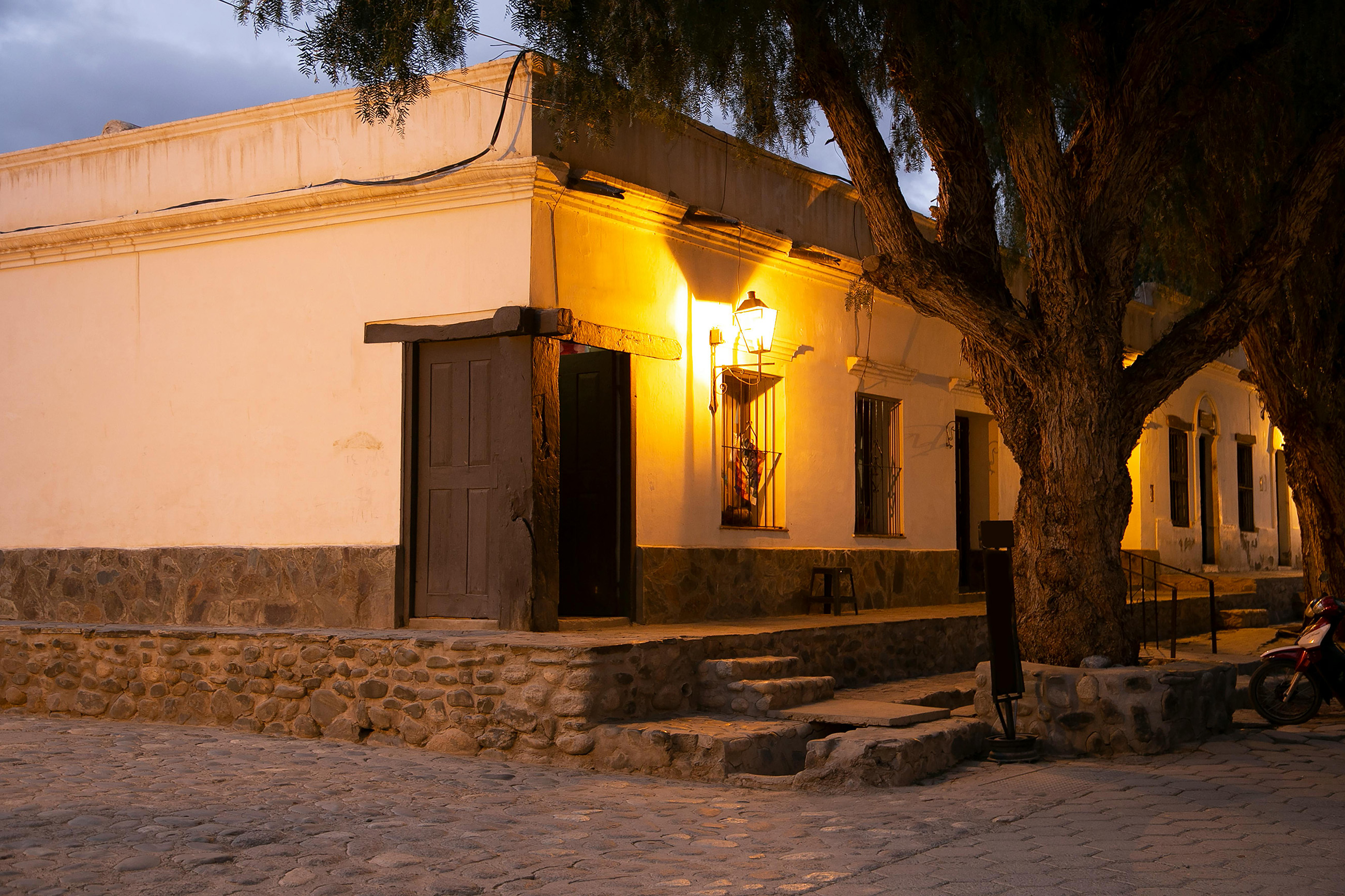
A charming house at the corner of a street in Salta, offering a glimpse of local life.
5. Tucumán: Cultural Energy for Those Considering Living in Argentina
👤Who It’s Best For:
Tucumán suits retirees or nature-focused families seeking history and mountain-adjacent living.
🏙️Overview:
San Miguel de Tucumán, Argentina’s fifth-largest city, is often called the “Garden of the Republic” due to its fertile landscapes and role in Argentina’s independence history.
While smaller than other urban centers, it has a lively cultural scene and serves as a base for exploring the surrounding mountains, valleys, and subtropical forests.
Historical city surrounded by mountains and fertile valleys | Strong local identity and abundant outdoor opportunities
🌤️Climate & Lifestyle:
Tucumán has a subtropical climate — hot, humid summers and mild winters.
Outdoor life is abundant, with trekking, horseback riding, and trips to nearby Tafí del Valle, a popular highland retreat.
Daily life is more relaxed compared to Buenos Aires or Córdoba, with a strong local identity.
🏥Amenities & Infrastructure:
The city has good healthcare options, reliable internet, and universities that keep the student population high.
While amenities are not as extensive as Córdoba or Buenos Aires, expats will find most essentials available.
Transportation connections are decent, with flights to Buenos Aires and bus routes to northern Argentina.
💰Cost of Living:
Tucumán is highly affordable. Rent for a one-bedroom apartment runs $200–$350 USD, and a single expat can live comfortably on $700–$1,000 USD monthly.
Imported goods may be limited, but day-to-day expenses remain very low.
⭐Why It’s a Good Place to Live in Argentina:
Tucumán balances affordability with natural beauty and history.
For those who want to live in Argentina surrounded by mountains and tradition while still accessing modern conveniences, it’s an underrated choice.
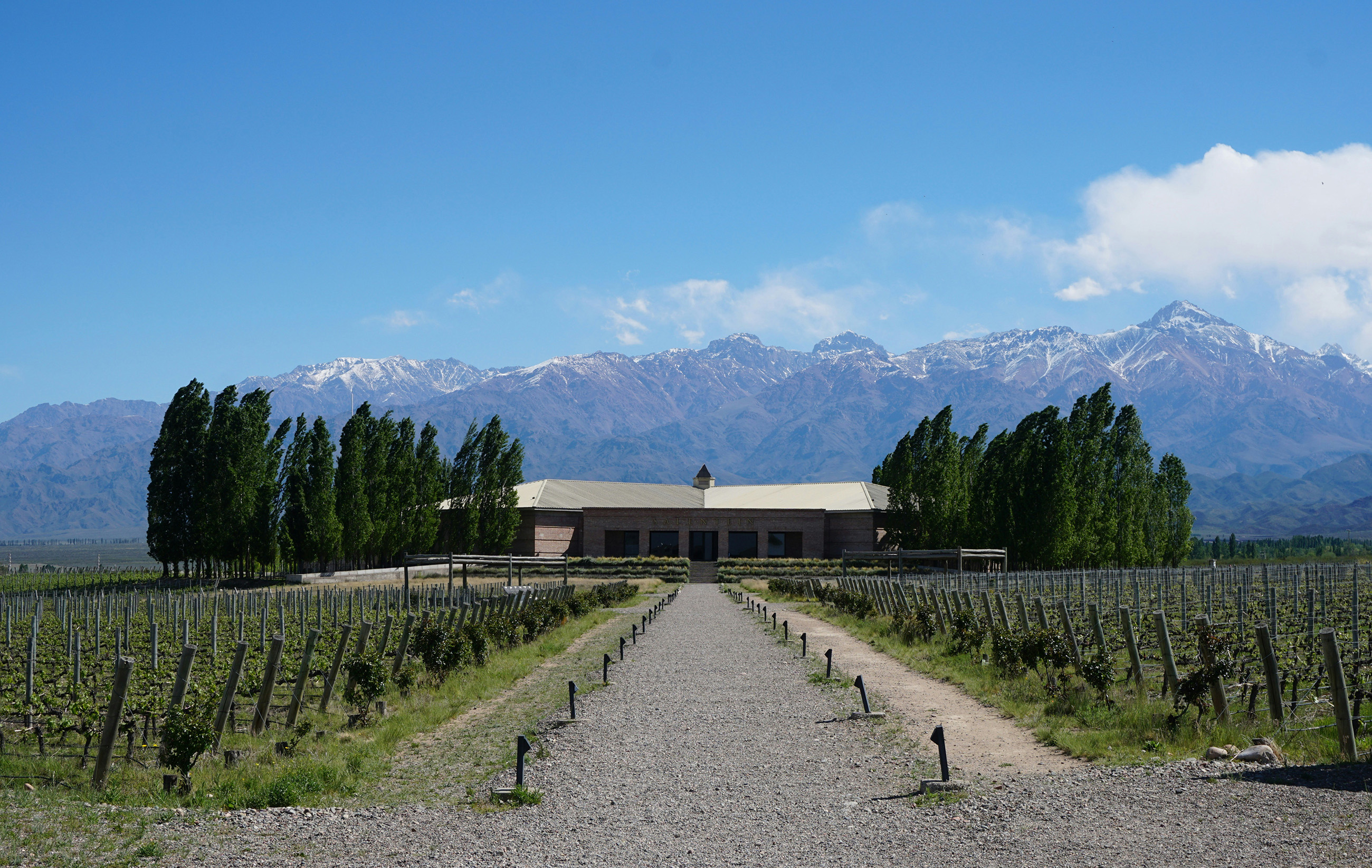
A charming house at the corner of a street in Salta, offering a glimpse of local life.
6. Córdoba: History and Student Vibes in One of the Best Cities to Live in Argentina
👤Who It’s Best For:
Córdoba is perfect for digital nomads or young professionals wanting urban culture with nearby nature escapes.
It’s also appealing to those who don’t want to live in Buenos Aires but still want a cosmopolitan environment.
🏙️Overview:
Argentina’s second-largest city, Córdoba is known for its colonial architecture, large student population, and central location.
The city blends old and new — from historic cathedrals to modern tech hubs — making it a lively and forward-looking place to live.
🌤️Climate & Lifestyle:
Córdoba enjoys hot summers and mild winters, with a semi-arid climate that means plenty of sunny days.
Locals balance work and study with weekend trips to the Sierras de Córdoba, popular for hiking, lakes, and small towns.
The city’s youthful energy comes from its universities and vibrant nightlife.
Semi-arid, sunny, and warm | Vibrant student city with easy access to nearby nature escapes
🏥Amenities & Infrastructure:
Córdoba offers excellent healthcare, schools, and internet infrastructure.
It has Argentina’s second-largest airport, with domestic and limited international flights.
Public transport is extensive, though the city is best navigated with a mix of buses, taxis, and walking in central areas.
💰Cost of Living:
Rent for a one-bedroom apartment ranges from $250–$450 USD, and monthly living expenses for a single person average $900–$1,300 USD. It’s cheaper than Buenos Aires but with many of the same urban comforts.
⭐Why It’s a Good Place to Live in Argentina:
Córdoba provides the energy of a big city without the overwhelming sprawl of Buenos Aires.
With its universities, cultural life, and easy escapes into nature, it’s one of the best-rounded cities for expats who want balance.
If you’re thinking beyond Argentina — The Latin America Residency Map shows you which countries you may qualify for residency in — Argentina included.
7. Mendoza: Wine Country and Outdoor Lifestyle in Argentina
👤Who It’s Best For:
Mendoza is ideal for lifestyle-driven expats or retirees seeking wine country, mountains, and a laid-back pace.
🏙️Overview:
Nestled against the Andes, Mendoza is Argentina’s wine capital and a gateway to Aconcagua, the highest peak in the Americas.
The city has a laid-back, sophisticated vibe with tree-lined streets, plazas, and a strong café and wine culture.
Unlike Buenos Aires, life here feels smaller, slower, and tied closely to nature.
Wine country city with mountain backdrop | Outdoor adventure, cafés, and leisure-driven lifestyle
🌤️Climate & Lifestyle:
Mendoza has a dry desert climate with hot summers, mild winters, and over 300 days of sunshine each year.
Locals spend time outdoors, whether exploring wineries, rafting, or skiing in the nearby Andes.
The lifestyle emphasizes leisure, food, and connection to the land.
🏥Amenities & Infrastructure:
Mendoza has good healthcare, reliable internet, and a growing expat community.
While not as developed as Buenos Aires or Córdoba, it offers enough infrastructure for comfortable living.
The airport connects to major cities in Argentina and limited international routes.
💰Cost of Living:
Rent for a one-bedroom apartment costs $250–$450 USD, and a monthly budget for a single person falls between $800–$1,200 USD.
Dining and local wine are extremely affordable, though imported goods are pricier.
⭐Why It’s a Good Place to Live in Argentina:
Mendoza offers a lifestyle-driven choice: world-class wine, breathtaking mountain scenery, and a calm, sunny environment.
For expats who want to live in Argentina with nature and leisure at their doorstep, Mendoza is a standout.
| 🏙️ City | 👤 Best For | ⭐ Why It’s Good | 💰 Approx. Monthly Costs (USD) |
|---|---|---|---|
| Buenos Aires | Remote professionals, culture lovers | Global connectivity, vibrant culture, European feel at Latin American prices | Single: $1,200–$1,800; Family: higher depending on schooling & housing |
| La Plata | Families, budget-conscious expats | Calm, affordable city close to Buenos Aires with cultural and educational opportunities | Single: $800–$1,200; Family: more depending on housing |
| Rosario | Young expats, families | Balanced lifestyle: cultural energy, affordability, and riverfront living | Single: $800–$1,200; Family: more depending on housing |
| Salta | Retirees, cultural explorers | Colonial charm, Andean scenery, slower pace, and affordable living | Single/Couple: $700–$1,000 |
| Tucumán | History lovers, retirees | Affordable, small city with mountains and strong local identity | Single: $700–$1,000 |
| Córdoba | Digital nomads, young professionals | Cosmopolitan city with universities, cultural life, and nature escapes | Single: $900–$1,300 |
| Mendoza | Retirees, lifestyle-driven expats | Wine country, Andes views, and calm, sunny environment | Single: $800–$1,200 |
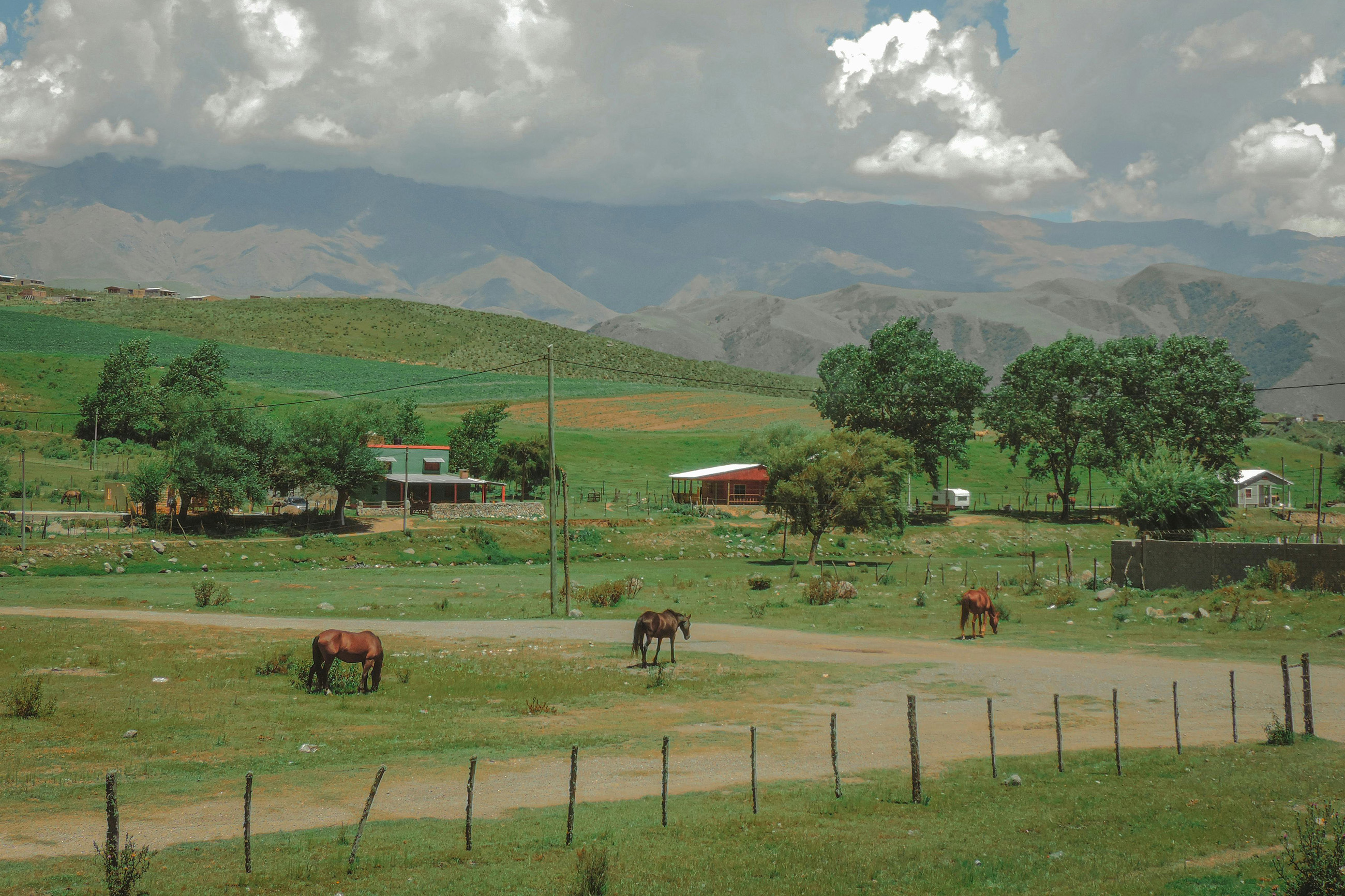
The rural charm of Tucumán, Argentina, with horses grazing on a green field near the majestic mountains – a perfect setting to live in Argentina.
CENTRAL ARGENTINA – Gateway to Patagonia: Cities and Places to Live in Argentina
Central Argentina bridges the livability of the interior with direct access to Patagonia’s lakes, mountains, and outdoor culture.
If you want to live in Argentina but be close to adventure without full isolation, these towns are the sweet spot.
If you want even more budget-friendly options nearby, Paraguay offers low costs and simple residency, making it another expat haven to consider.
8. Neuquén: A Growing City for Professionals Living in Argentina
👤Who It’s Best For:
Professionals and small families seeking career opportunities with weekend access to nature.
🏙️Overview:
Neuquén is a modern regional hub in northern Patagonia, serving as the commercial and administrative center for the province.
Its economy is anchored in energy, agriculture, and services, giving it a more urban, practical feel than many nearby towns.
The city combines modern buildings, shopping centers, and cultural venues with easy access to rivers, reservoirs, and nearby mountains.
🌤️Climate & Lifestyle:
Neuquén has a semi-arid climate with hot summers, cold winters, and generally clear skies.
Residents enjoy outdoor activities like fishing, kayaking, and weekend hikes.
The city has a calm, organized rhythm, ideal for people who want practicality without the chaos of a major metropolis.
🏥Amenities & Infrastructure:
Neuquén offers reliable healthcare, solid schools, and dependable internet.
Public transport is functional, and the city has an airport connecting to Buenos Aires.
Municipal services are well-developed for a mid-sized city, and there’s a growing cultural scene including theaters, galleries, and riverfront recreation.
Good healthcare, schools, and reliable internet | Growing city with career opportunities and nearby river recreation
💰Cost of Living:
One-bedroom apartments typically $250–$400 USD/month. Utilities plus internet average $50–$75 USD/month.
Mid-range meals cost $6–$10 USD, making a comfortable monthly budget for a single person around $700–$1,100 USD.
⭐Why It’s a Good Place to Live in Argentina:
Neuquén offers the perfect mix of city practicality and weekend adventure.
It’s ideal for those seeking a stable home base while keeping Patagonia’s outdoor opportunities within easy reach.
9. San Martín de los Andes: Lake Views and Adventure for Those Who Live in Argentina
👤Who It’s Best For:
Adventure seekers and couples who prioritize lakes, forests, and mountain sports.
🏙️Overview:
Nestled on the shores of Lake Lácar in the Andes, San Martín de los Andes is a postcard-perfect town with alpine-style architecture and a strong tourism-driven economy.
It’s small and close-knit, attracting people who want a community-oriented lifestyle and easy access to outdoor adventures like hiking, mountain biking, skiing, and fishing.
🌤️Climate & Lifestyle:
The town has a cool temperate mountain climate with snowy winters and mild summers.
Daily life revolves around outdoor sports and lakeside recreation, with the local rhythm shaped by seasonal tourism.
Cool mountain climate with snowy winters | Lakes, forests, and ski slopes support an active outdoor lifestyle
🏥Amenities & Infrastructure:
Healthcare and schooling are modest but reliable.
Internet works well in town, though speeds drop in more remote areas.
A small regional airport connects the town to larger hubs during high season.
💰Cost of Living:
One-bedroom rentals $300–$500 USD/month. Utilities and internet $50–$70 USD/month.
Meals range $6–$10 USD, with seasonal fluctuations during peak tourist periods.
⭐Why It’s a Good Place to Live in Argentina:
San Martín de los Andes is ideal for nature-first expats who want adventure at their doorstep without completely sacrificing comfort or services.
If long-term residency is on your radar, the Latin America Residency Map shows how Argentina stacks up against other South American countries.
10. San Carlos de Bariloche: Alpine Beauty and Outdoor Living in Argentina
👤Who It’s Best For:
Families and remote workers seeking alpine scenery with tourist-friendly amenities.
🏙️Overview:
Bariloche sits amid lakes, forests, and ski resorts, blending natural beauty with a lively town center full of restaurants, shops, and cultural life.
Its tourist-driven economy ensures plenty of services and seasonal activities while maintaining a strong local community.
Alpine-style town with lakes, ski resorts, and tourism amenities | Combines adventure, culture, and family-friendly conveniences
🌤️Climate & Lifestyle:
Mountain climate with snowy winters and warm summers.
Residents and visitors alike enjoy skiing, hiking, lake cruises, and forest adventures.
Outdoor life is central to the local culture, complemented by festivals, cafés, and artisanal shops.
🏥Amenities & Infrastructure:
Bariloche offers reliable healthcare, schools, and internet.
The town has domestic flight connections to Buenos Aires and other regional hubs, and public transport is adequate for getting around.
Seasonal services, ski schools, and outdoor guides are plentiful.
💰Cost of Living:
One-bedroom apartments $350–$550 USD/month. Mid-range meals $7–$12 USD.
Utilities plus internet $60–$85 USD/month.
Overall, slightly higher than smaller towns but still affordable compared to Buenos Aires.
⭐Why It’s a Good Place to Live in Argentina:
Bariloche provides a well-rounded balance of urban conveniences, cultural life, and unparalleled outdoor access — perfect for families or remote workers who want alpine adventure without giving up services.
| 🏙️ City | 👤 Best For | ⭐ Why It’s Good | 💰 Approx. Monthly Costs (USD) |
|---|---|---|---|
| Neuquén | Professionals, small families | Practical city with jobs, services, and quick access to rivers and mountains | Single: $700–$1,100; Family: $1,200–$1,800 |
| San Martín de los Andes | Adventure seekers, couples | Cozy mountain town with lakes, skiing, and year-round outdoor lifestyle | Single: $800–$1,200; Couple/Family: $1,300–$2,000 |
| Bariloche | Families, remote workers | Alpine city with strong expat presence, good schools, and 4-season recreation | Single: $900–$1,400; Family: $1,500–$2,500 |
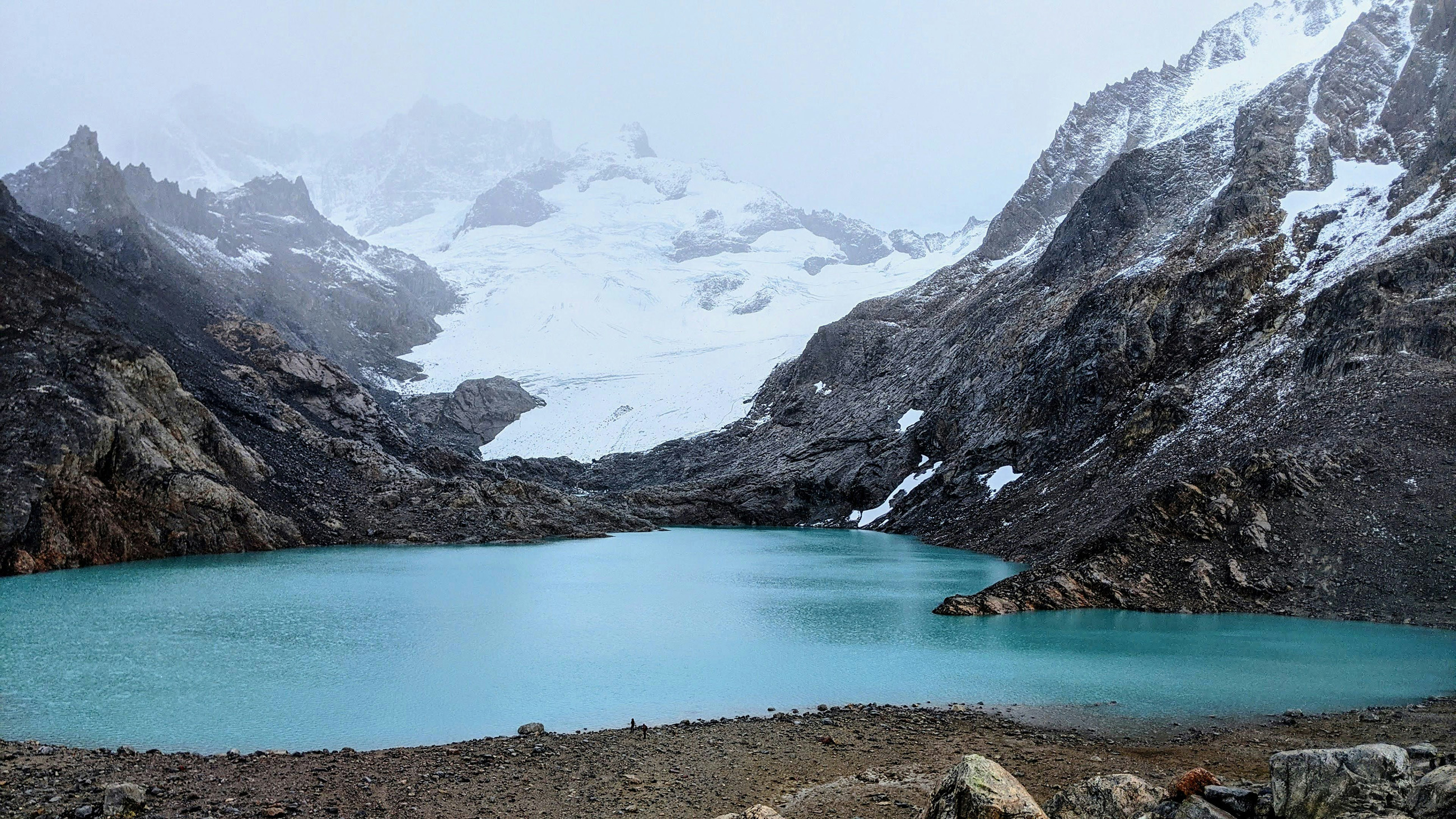
Live in Argentina and embrace nature’s beauty with an emerald-colored lake surrounded by stunning mountains and a glacier in El Chaltén.
SOUTHERN ARGENTINA — Remote Landscapes and Unique Places to Live in Argentina
11. El Chaltén: Hiking Capital and Outdoor Haven for Living in Argentina
👤Who It’s Best For:
Outdoor adventurers and retirees seeking small-town mountain life.
🏙️Overview:
Known as Argentina’s hiking capital, El Chaltén is a tiny Patagonian village located within Los Glaciares National Park.
Surrounded by iconic peaks like Mount Fitz Roy, the town is a hub for trekking, climbing, and exploring untouched landscapes.
Life is quiet and seasonal, with a strong focus on nature and community.
Small mountain village in Los Glaciares National Park | Trails, peaks, and hiking define life in this adventure-focused town
🌤️Climate & Lifestyle:
Cool and windy, with short, mild summers and long, cold winters.
Weather can change quickly, requiring flexibility and adaptability.
Outdoor activities dominate daily life, from hiking to climbing and sightseeing.
🏥Amenities & Infrastructure:
Limited amenities — basic healthcare, small schools, and modest internet service.
Closest airport in El Calafate, three hours away. Life here is about living simply in a remote environment.
💰Cost of Living:
One-bedroom $350–$600 USD/month.
Groceries and dining out are more expensive than in cities due to transportation costs.
Monthly expenses for a single person average $1,000–$1,500 USD.
⭐Why It’s a Good Place to Live in Argentina:
El Chaltén is unmatched for those prioritizing nature and adventure over city comforts, offering a unique Patagonian lifestyle.
Those drawn to dramatic landscapes often weigh Argentina’s south against Ecuador, which offers mountains plus easier access to the Pacific coast.
12. Ushuaia: The End of the World and a Unique Place to Live in Argentina
👤Who It’s Best For:
Adventurers and remote workers wanting a unique, bucket-list location with basic city services.
🏙️Overview:
Ushuaia is the world’s southernmost city, located on the Beagle Channel with mountains behind.
Tourism, Antarctic cruises, skiing, and trekking shape its economy and culture.
The city has a small but functional urban core with shops, schools, hospitals, and a university campus.
🌤️Climate & Lifestyle:
Sub-polar oceanic climate — long, snowy winters and cool, short summers.
Residents enjoy skiing, hiking, sailing, and Antarctic tourism activities.
Life here is adventurous, yet structured enough to support daily living.
🏥Amenities & Infrastructure:
Hospitals, schools, and decent internet. Airport connects to Buenos Aires and Chile.
Local shops provide basic goods, though imported items are limited.
Hospitals, schools, and decent internet | Adventure hub with skiing, hiking, and Antarctic cruises for residents
💰Cost of Living:
One-bedroom $400–$650 USD/month.
Monthly expenses for a single person range $1,200–$1,700 USD.
Prices are higher due to shipping, but wages and tourism offset costs.
⭐Why It’s a Good Place to Live in Argentina:
Ushuaia combines frontier adventure with livable city infrastructure, making it ideal for expats seeking extreme landscapes without fully giving up modern comforts.
| 🏙️ City | 👤 Best For | ⭐ Why It’s Good | 💰 Approx. Monthly Costs (USD) |
|---|---|---|---|
| El Chaltén | Outdoor adventurers, retirees | Argentina’s trekking capital, surrounded by stunning Patagonia landscapes | Single/Couple: $700–$1,200 |
| Ushuaia | Adventurers, remote workers | World’s southernmost city, unique lifestyle with decent services and Antarctic gateway vibe | Single: $900–$1,400; Family: $1,500–$2,200 |
CONCLUSION — Choosing Where to Live in Argentina
Argentina offers a range of cities and towns offering an ideal mix of adventure, freedom, and affordability, making them perfect for those seeking a balanced lifestyle.
Cities like Mendoza, Córdoba, Rosario, and Buenos Aires provide a combination of culture, outdoor activities, and amenities, with the opportunity to live in areas that are not remote yet still offer an adventurous, active lifestyle.
Whether it’s the wine country in Mendoza, the mountains of Bariloche, or the remote beauty of El Chaltén and Ushuaia, each destination provides a unique mix of natural beauty, adventure, and affordability.
Choosing the right part of Argentina is only step one in your journey. The Latin America Residency Map can help you see where Argentina fits in compared to other countries.